
 November 13, 2026
Each year at River Partners, we reach more milestones, break new ground, and create key partnerships—and 2026 was no different.
River Partners’ President Julie Rentner guides the organization with tenacity, courage, and heart, daring to view California’s enormous river restoration needs through a lens of promise and hope. With a growing staff, regulatory obstacles, and a changing climate, undertaking the state’s largest restoration projects could be too much for some—but not for River Partners.
What moved faster than you expected in 2026 and what moved slower?
Rentner: Our team’s growth in size and talent happened faster than expected. People who’ve been here for 20 years are building teams with folks who joined in 2026, bringing skills in large-scale logistics, community engagement, public funds administration, communications, restoration science and monitoring, and native seed farming. Growing a team is a risk. You have to be sure the lands and dollars will be there. But the caliber of these people melts that fear away. Our science team has completed enough plans and permits to implement more than 6,000 acres of floodplain restoration in the San Joaquin Valley. That’s thousands of shovel-ready acres that will help balance groundwater supplies under the Sustainable Groundwater Management Act.
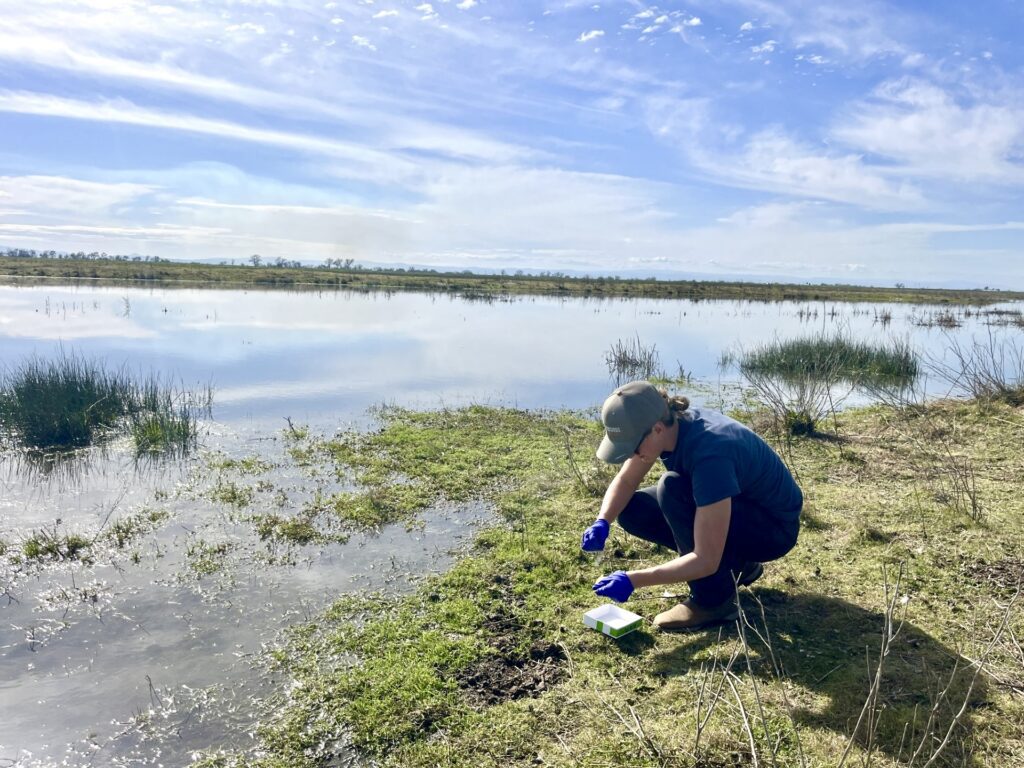
Our ability to break ground is always slower than we’d like. Some projects are held up by administrative challenges. Working with government partners, like a local open space district, reclamation district, or new state grant program, takes much more time. But it yields more durable and robust ecosystem restoration than private investment can accomplish alone.
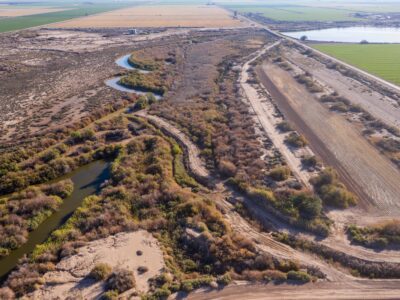
This summer, River Partners and partners breached a 1950s-era levee at Great Valley Grasslands State Park, reconnecting more than 220 acres of floodplain to the San Joaquin River for the first time in 70 years. What did you learn along the way?
Rentner: Great Valley Grasslands was already in our crosshairs when I was hired almost 20 years ago. In 2015, working with American Rivers, I listed every permit we’d need to breach that levee. The big lesson is that we spent eight or nine years slowly advancing through that permitting matrix. That wasn’t for lack of action. We needed more energized people to push the proposals, more time for the idea to ripen locally, and more communication about what the state would gain. American Rivers put capacity behind it and drove it to completion.
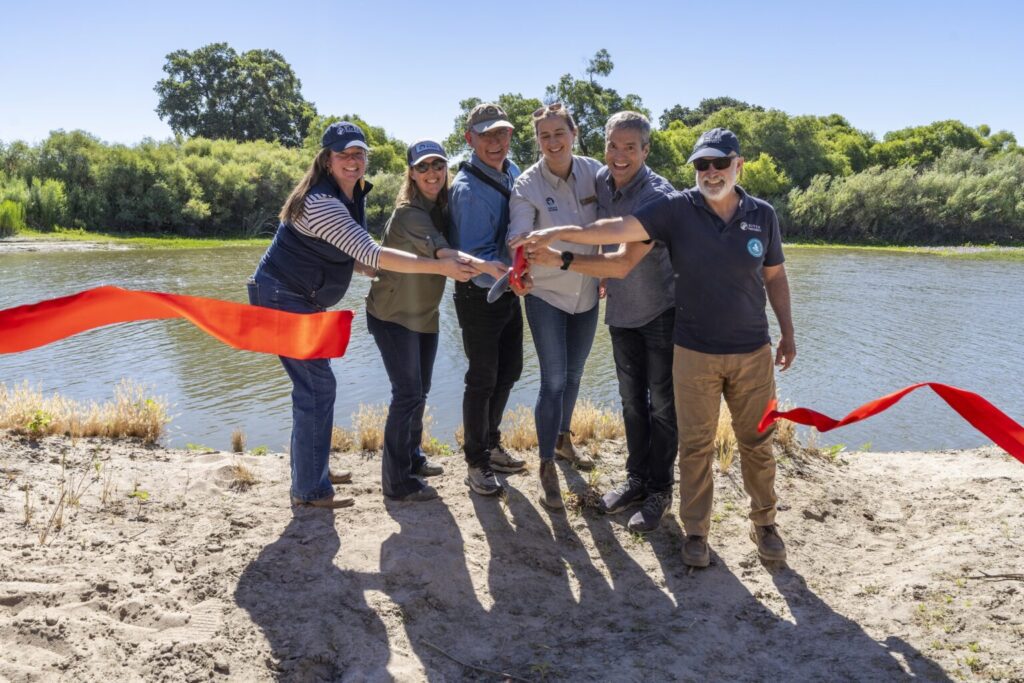
The second lesson came from surprises. Modifying a flood control levee takes enormous engineering analysis, and partway through we learned the levees we assumed were federally authorized weren’t. It’s hard to permit a project when you can’t pin down the authority behind the system. Partnership from California State Parks, the Central Valley Flood Protection Board, and the Lower San Joaquin Levee District, with amazing coordination by American Rivers, got us to an implementable project.
How did Tribal partnership and cultural restoration grow in importance at River Partners in 2026?
Rentner: Native Californians and our restoration hearts have finally found one another. River Partners Director of Tribal Engagement Austin Stevenot and his mom, Kimberly, were incredible connectors. Now we are developing programs and tools to work with dozens of Tribes at the intersection of ecology and culture.
This year we completed a land-back deal along the Sacramento River, transferring ownership of Willow Bend Preserve, almost 200 acres of reconnected floodplain, to a Tribe with deep cultural ties to the area for permanent guardianship, and we’re working on more. We’re also deepening relationships with the Shingle Springs Band of Miwok Indians and the Indigenous Futures Society. The goal is for Tribes and conservationists to deliver conservation of the valley’s rivers and wetlands together, at scale.
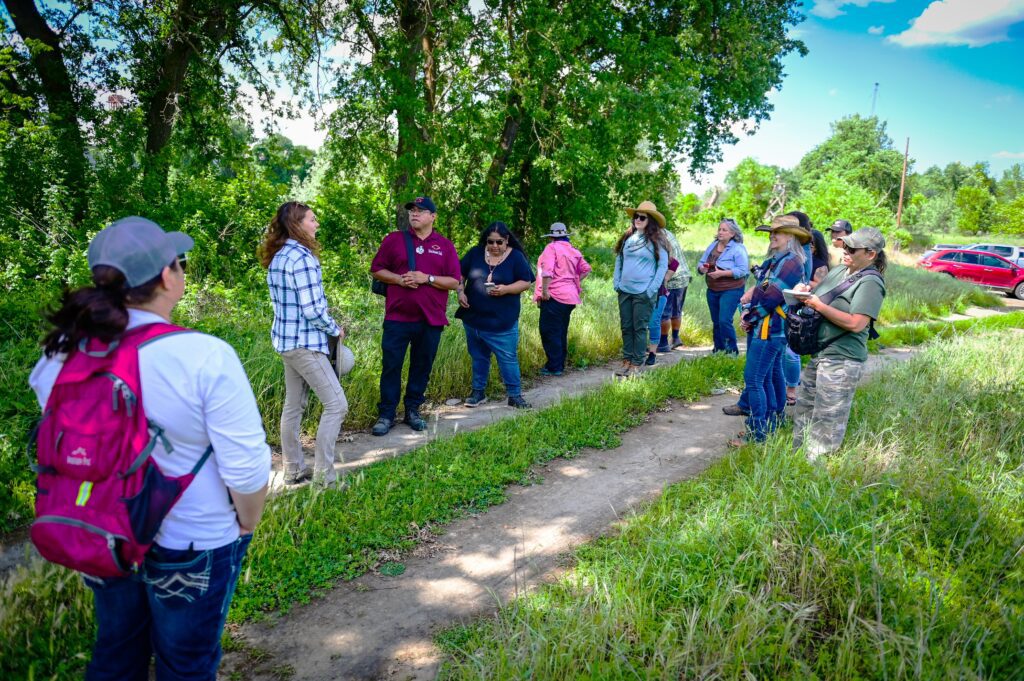
We’ve gained ecological knowledge, too. We used to wonder why native plants thrived in one field and not the next. Now we know one reason: people tended that riverside land for thousands of years, purposefully cultivating the plants that support California’s biodiversity. That changes how we think about restoring it.
What new partnerships and programs helped River Partners grow in 2026?
Rentner: For years, I’ve said we need to get bigger, and 2026 brought some incredible and surprising scaling partners.
One highlight is native seed. Our nonprofit native seed farm, Heritage Growers, produced more locally adapted, source-identified native seed than ever before. Over 40,000 pounds of pure live seed are in inventory, and we’re selling it to restoration projects across the state. We grow more than 200 ecotypes and carefully protect their genetics, which lets native ecosystems adapt to California’s fluctuating climate. Seed without locally adapted genetics might grow for a year or two, but after one drought or prolonged flood, it is gone. That makes projects cost more and perform poorly.

The other surprise has been non-traditional funders. We’ve met sustainability officers at some of the world’s largest corporations who want to invest in on-the-ground river and ecosystem recovery. The Gordon and Betty Moore Foundation has generously supported that work, helping us connect projects with real funding needs to corporations whose industries rely on water. That’s been a big win.
In September 2026, California reported that 27.1% of its land was conserved under its 30×30 initiative. What are your thoughts on that progress, and where does River Partners fit in closing the gap?
Rentner: 30×30 is an ambitious target that has galvanized conservationists across the state to think bigger about connected landscapes. This progress feels almost like a proof of concept: we all dreamed we could get there, and now it looks possible. Beyond acres, it has built a community of practice and changed how people work together.
River Partners’ contribution is scale inside our heavily regulated and complicated water system. Our large projects don’t just change the vegetation next to the river. They change how migration corridors function, which is a huge part of the biological benefit of conserving 30% of our land and waters. 30×30 was never just about acres. It’s about conserving California’s irreplaceable biodiversity and linking resilient freshwater and coastal ecosystems, from the snowpack through our rivers and out to the coastal estuaries.
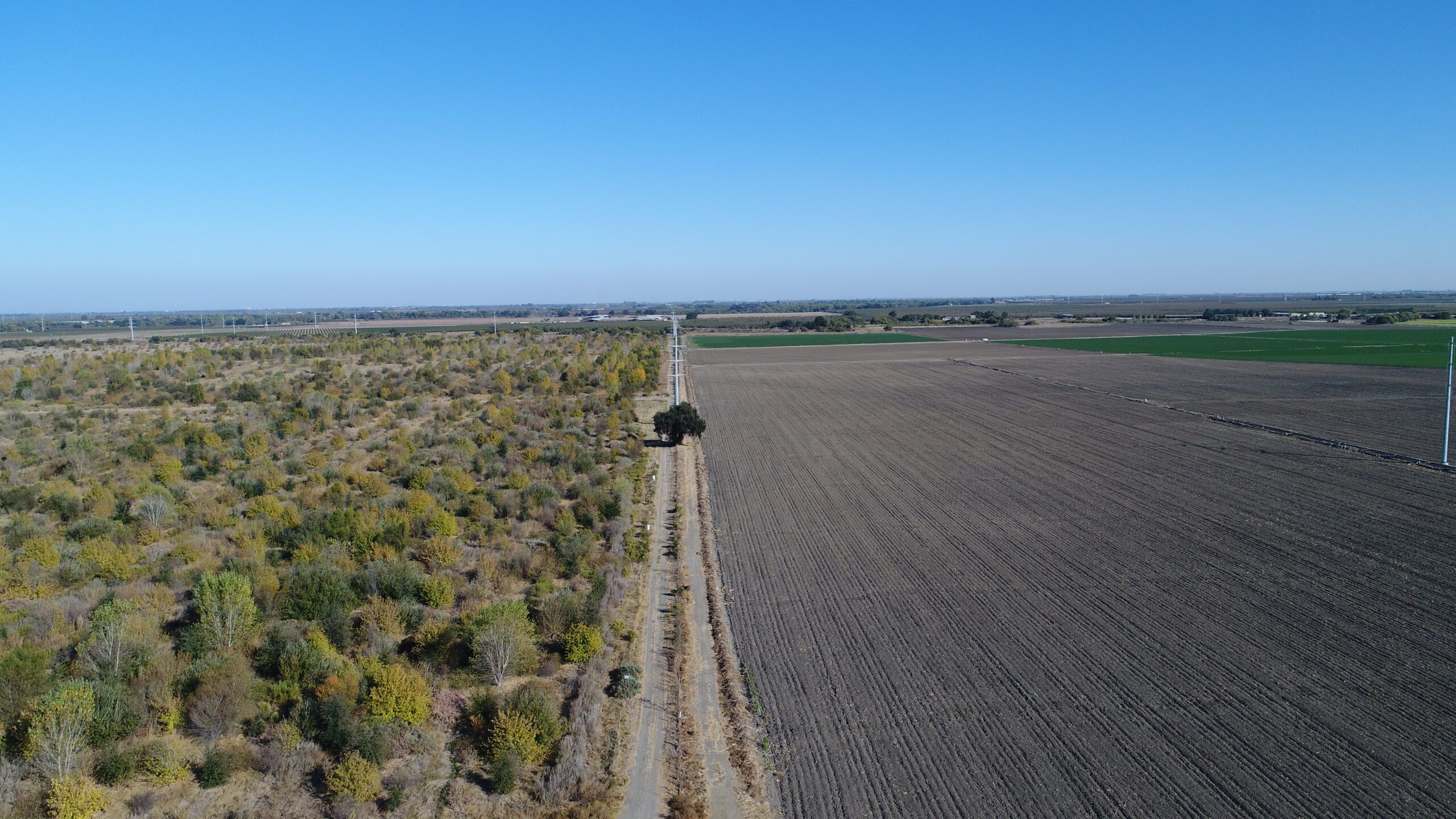
But the Central Valley still lacks connectivity, and our agricultural valleys need deeper investment to raise both acreage and impact. Our job now is to get 30×30 investment to support more river restoration projects.
What are you most proud of so far?
Rentner: I’m proud that elected officials in the San Joaquin Valley say what we’re doing is the most sane thing happening in California water, and they want to see us grow. They ask why every valley town can’t have a place like Dos Rios State Park, or safe flood corridors, or a river clean enough to swim in and eat the fish from. Congressman Adam Gray has been a huge supporter. Senator Melissa Hurtado championed prioritizing Proposition 4 dollars for the Tulare Basin, with bipartisan support and powerful allies like the Tachi Yokut Tribe and Allensworth Progressive Association. Her reasoning was that floodplain restoration is a durable water solution, relying on nature and gravity instead of expensive pumps and constant levee maintenance.

I’m also proud of a team centered in humility and community that rejects the either/or. We’re not saying my oak trees are better than your cornfield. Both have a place here, and we need to stay in constant dialogue.
Where do River Partners and hope intersect for you?
Rentner: Gosh, where don’t they? My second job interview at River Partners nearly 20 years ago was a field tour. I’d been doing small mitigation projects in the Bay Area, watching giant oaks come down to make room for houses, and negotiating how many new oaks would need to be planted to “replace” the loss. Stephen Sheppard, now our Senior Director of Restoration, showed me thousands of acres of restored forests and wetlands I’d never heard of. I thought, “There are people crazy enough to think you can recover lost nature at a scale where it persists and asserts itself on the landscape instead of just replacing what we might take out today?” That changed everything. River Partners has always been hope for me. It gives me hope that people WANT ecological uplift, not just environmental mitigation, and that we are capable of large-scale nature recovery in all of its various forms, including how it works for us.