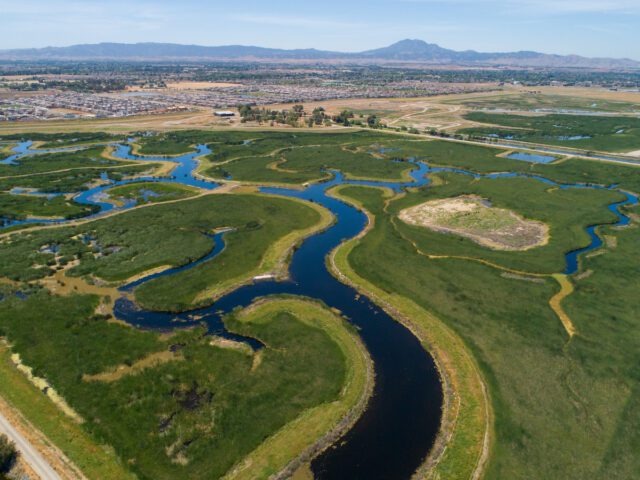

The Walnut Creek watershed is the largest in Contra Costa County, draining more than 150 square miles and supporting eight cities and over 300,000 residents. At its most downstream reach—known as Lower Walnut Creek—the channel widens into a trapezoidal earth corridor bordered by levees and flanked by expansive marshlands.
But decades of sediment accumulation reduced the channel’s ability to carry floodwaters—and this increased flood risk to the nearby communities, like Martinez, Vine Hill, and Pacheco. Traditional sediment removal is costly, temporary, and destructive to habitat. A new, sustainable solution was needed—one that could safeguard communities while revitalizing wildlife habitat and one that River Partners has decades of experience delivering.
Project Impact
300 acres restored
31,000 native trees and vegetation planted
6 priority species protected
PLUS
nearly 2,000 pounds of seed added
About Lower Walnut Creek
Lower Walnut Creek had become heavily impacted by sedimentation, weakening the channel’s flood capacity and putting nearby communities at risk. Simply removing the sediment would destroy habitat and fail to address long-term sustainability, as sediment would inevitably return. So, large-scale restoration efforts offered a better solution—one that could restore ecological function and ensure reliable, lasting flood protection.
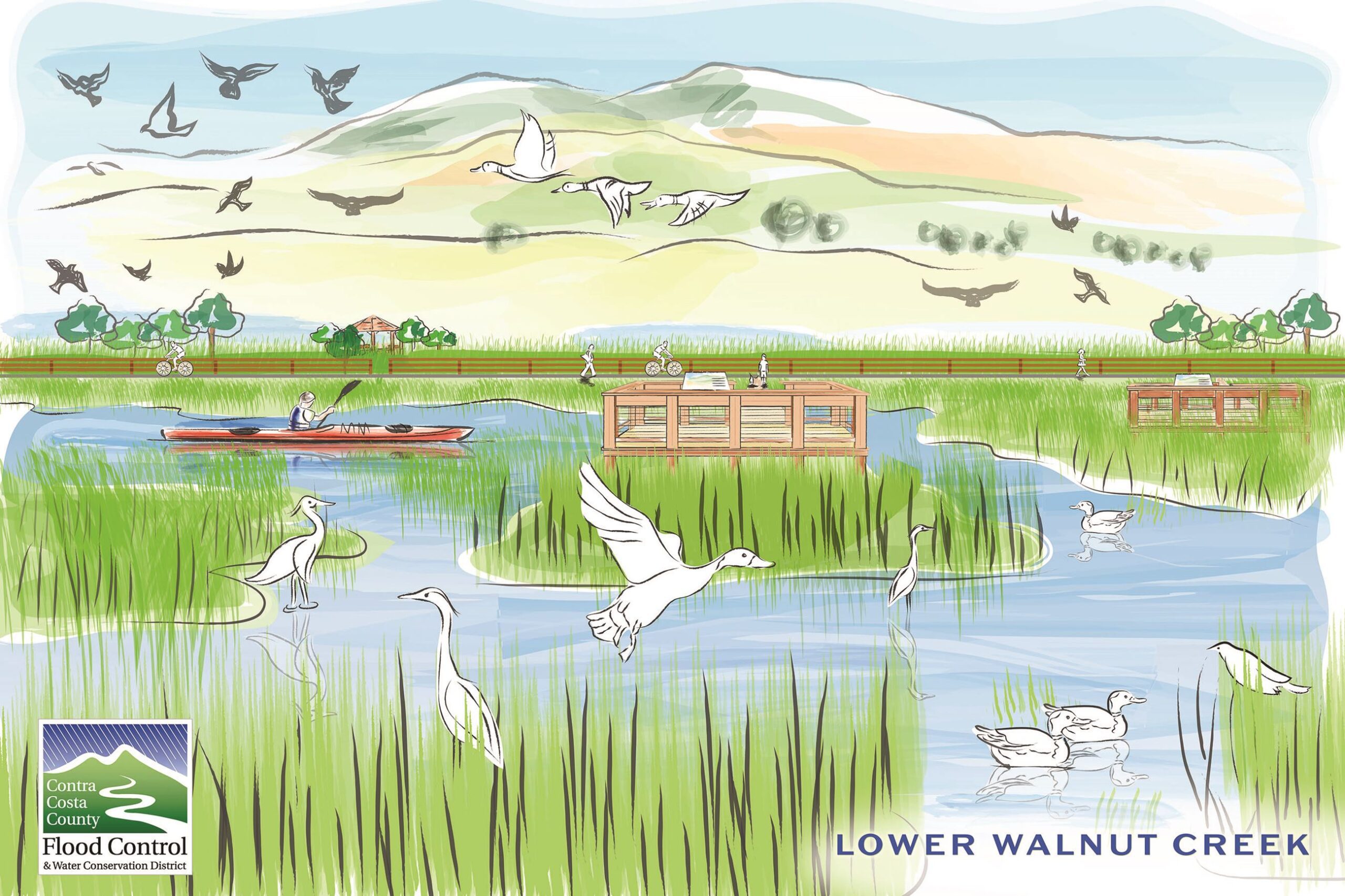
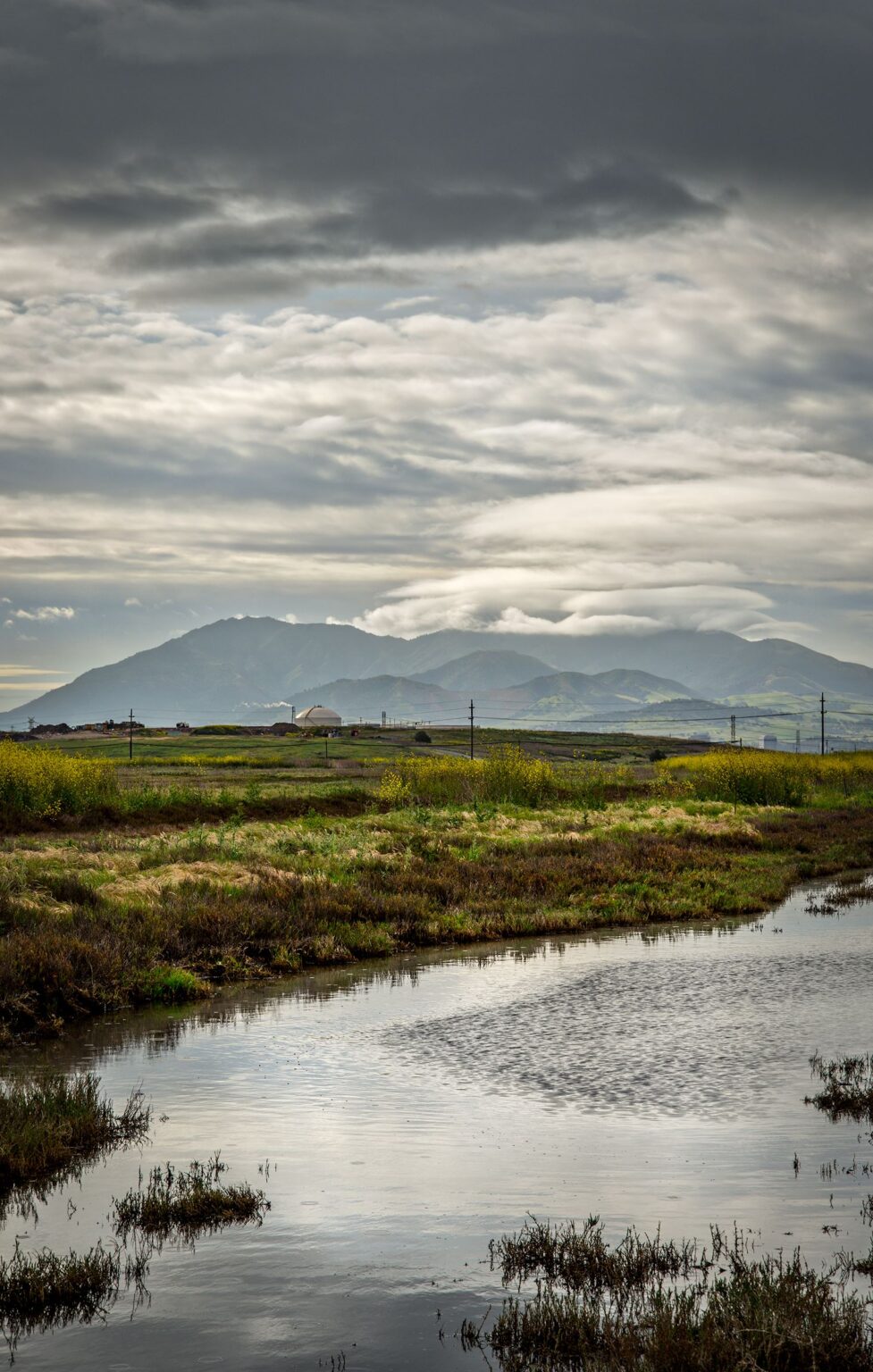
River Partners, in collaboration with the Contra Costa County Flood Control and Water Conservation District and a team of dedicated partners, restored over 300 acres of vital habitat at Lower Walnut Creek, transforming the landscape into a resilient, thriving ecological corridor. The restoration effort created a diverse range of tidal and non-tidal wetlands, grasslands, transitional zones, and upland habitat. These improvements strengthen flood protection, boost wildlife diversity (like invertebrates and imperiled Chinook salmon in new tidal channels, as well as migratory birds along the 10,000-mile Pacific Flyway), and expand opportunities for public access, including a new trail and boat ramp for recreation.
The restoration efforts also restored ecological functions in Lower Walnut Creek, from new tidal wetlands powering carbon sequestration and water quality filtration to biological connectivity, allowing land mammals and birds to move safely along the coast without crossing nearby industrial zones.

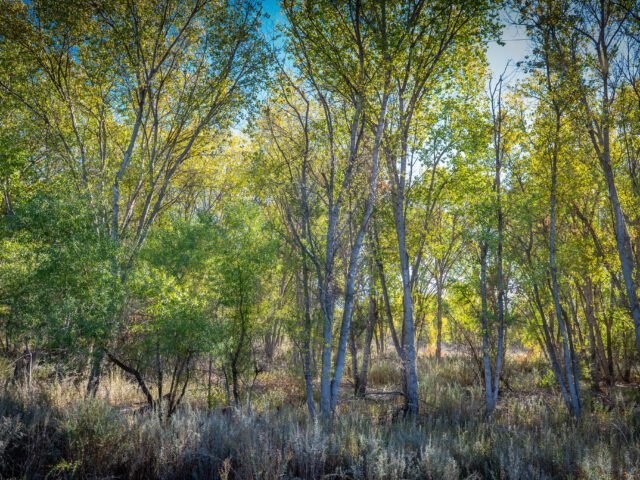
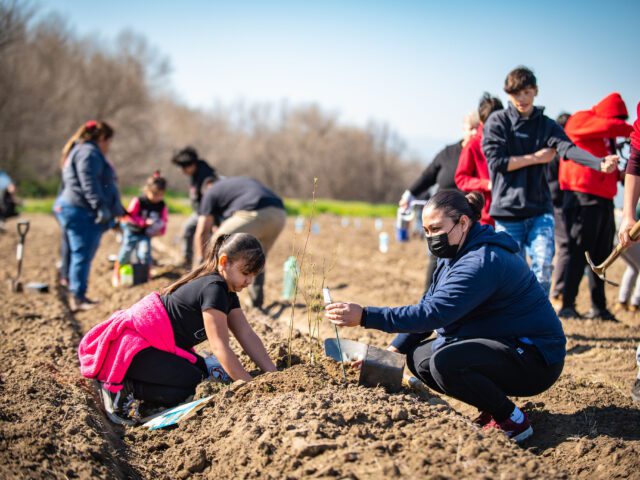
Planting efforts, which began in February 2022, established 31,242 native plants and 1,992 pounds of native seed, forming the backbone of diverse habitat communities that continue to flourish. Since monitoring and maintenance wrapped up in December 2024, the restored landscape at Lower Walnut Creek is thriving.
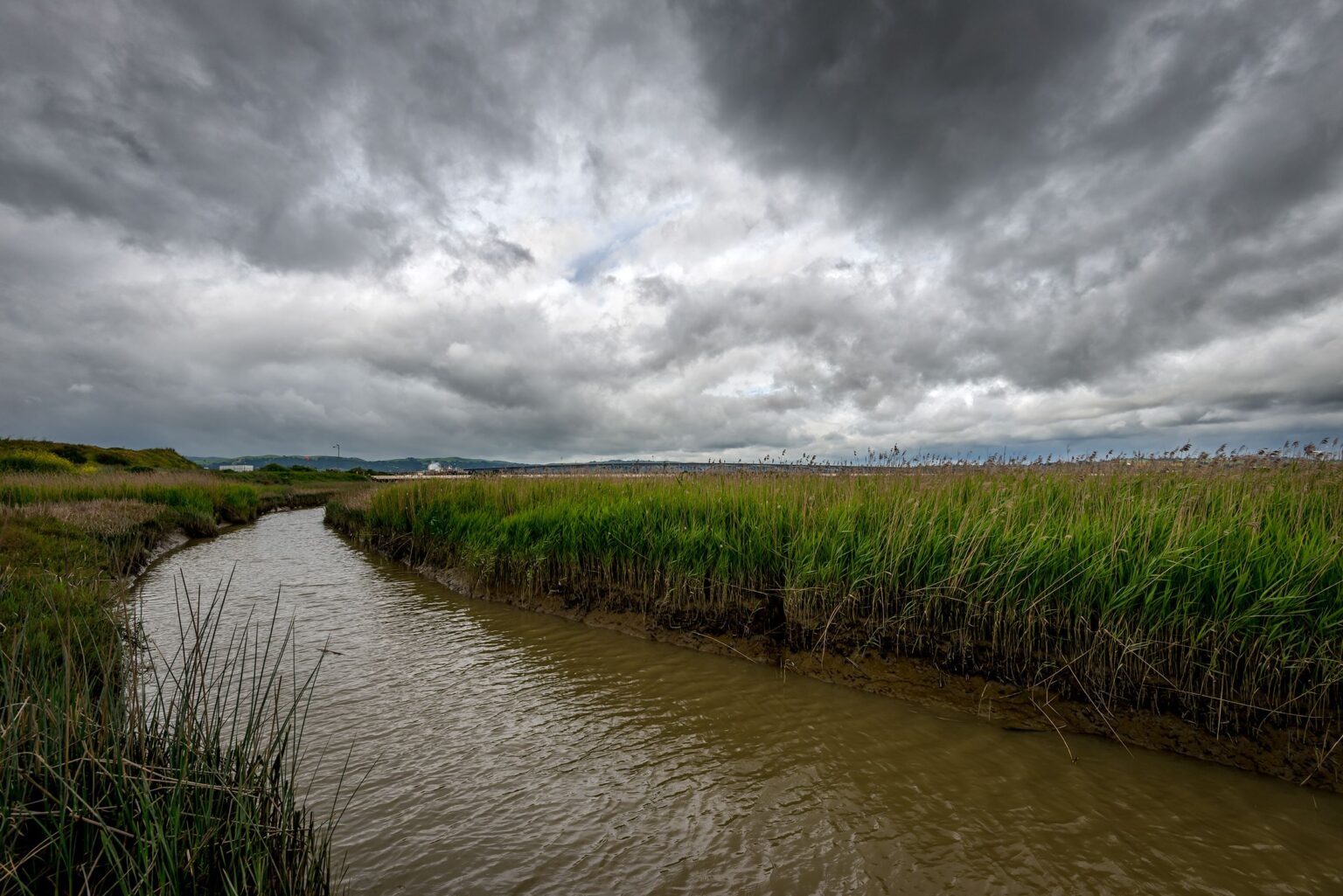
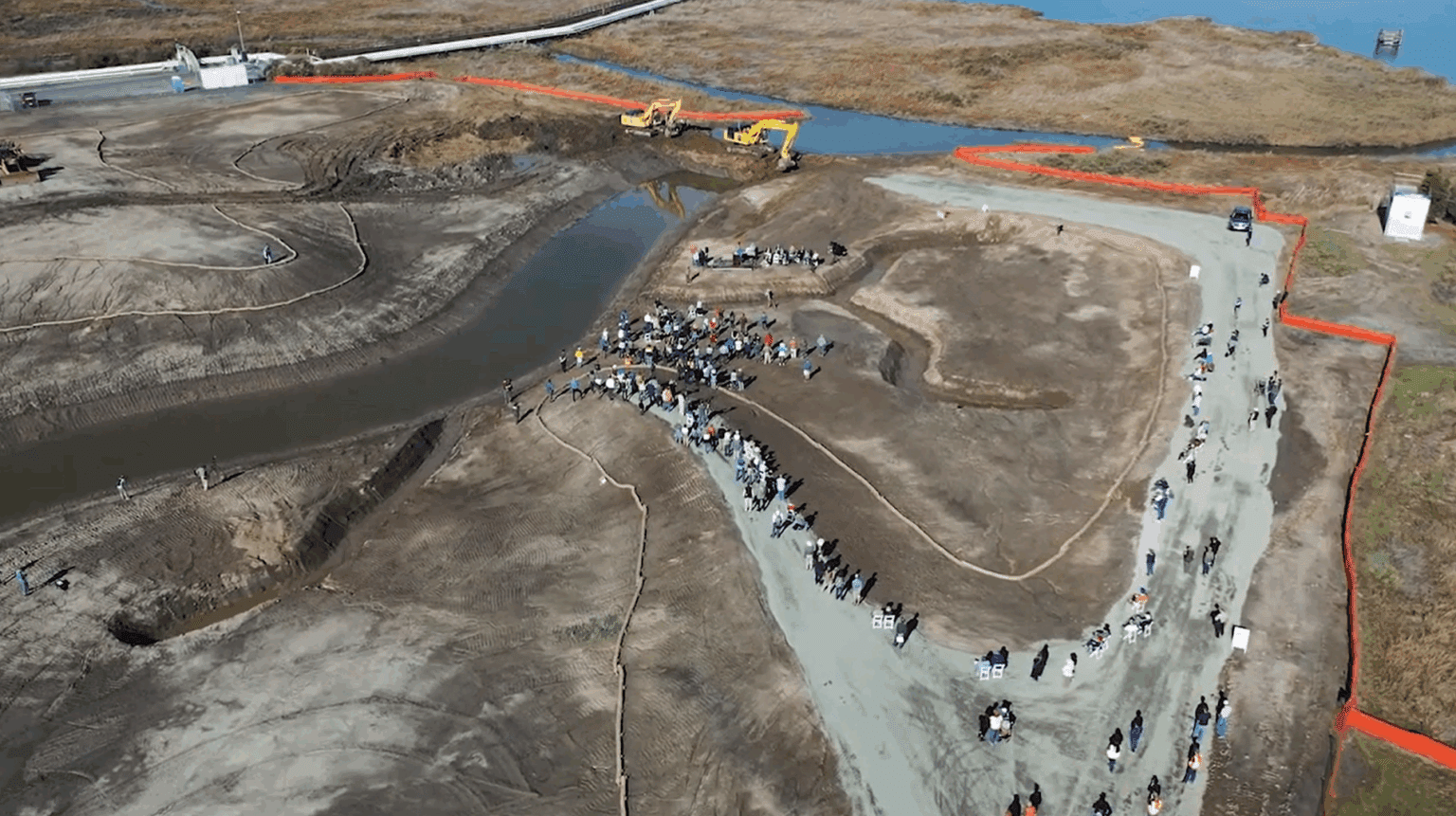
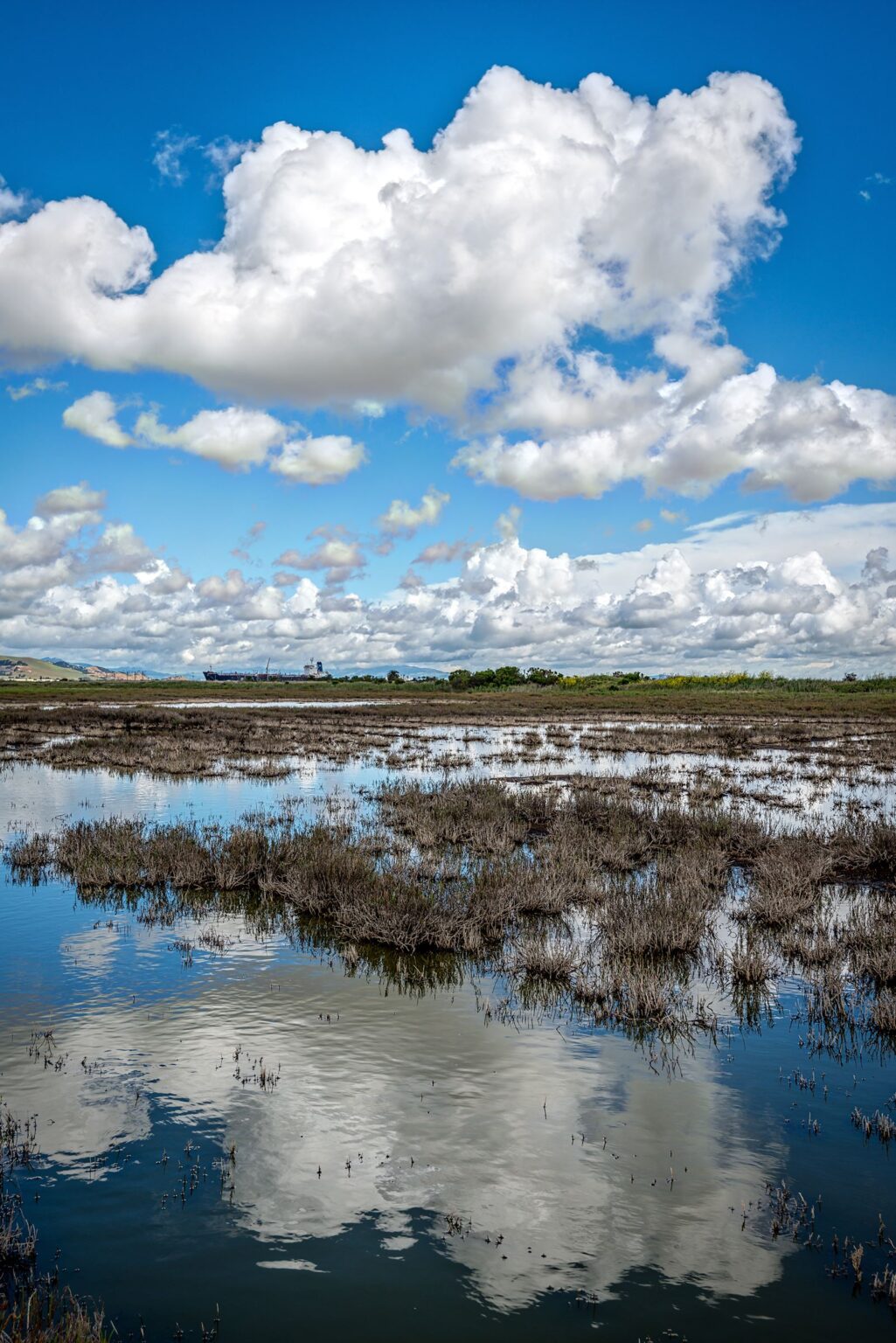
Photos top to bottom, left to right:
- The Lower Walnut Creek Restoration project created more than 6.5 miles of new tidal channels
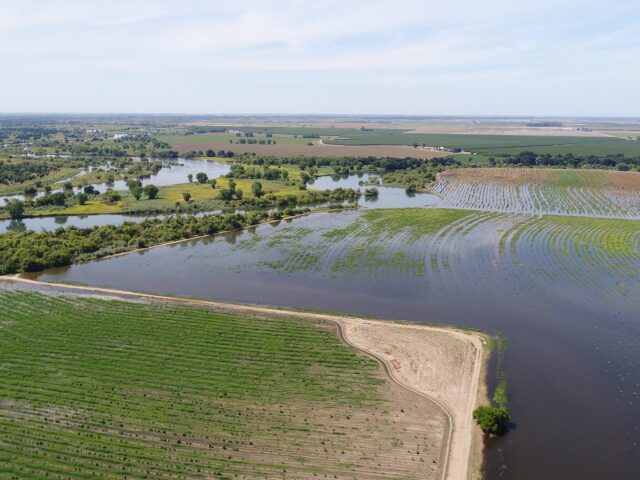
- Dozens of supporters showed up for the intentional Pacheco Marsh levee breach in October 2021, reconnecting the Walnut Creek channel to its historical floodplain (photo courtesy of the John Muir Land Trust).
- Tidal waters have returned to Pacheco Marsh in Martinez to increase flood protection for nearby communities.
- Landowners John Muir Land Trust helped make this transformation possible as a strategic partner and long-term steward in the restoration of the Walnut Creek channel.
Photos courtesy of the Contra Costa County Flood Control and Water Conservation District