
 October 1, 2026
The Colorado River provides annual water allocations for seven western states, dozens of Tribal nations, and Mexico—and it is in serious trouble.
The Colorado River Basin is embroiled in a decades-long drought. Last month, after the states that receive water allocations failed to reach a long-term consensus agreement, the federal government stepped in and released its own two-year plan for this vital waterway. According to the U.S. Bureau of Reclamation, Nevada, California, and Arizona (all Lower Basin states) received mandatory cuts for the next two years (a 1.25-million acre-foot reduction in Lower Basin deliveries), with cuts potentially increasing in the coming years.
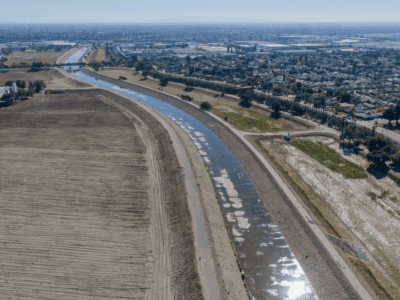
The Salton Sea will feel those cuts. California’s largest lake gets most of its water from Imperial Valley farm runoff, which drains into the Alamo and New Rivers and flows north to the Sea. Those farms run on Colorado River water delivered by the Imperial Irrigation District (IID), which holds the biggest share of California’s allocation. Less water on the fields means less water reaching a lake that’s been shrinking for decades.
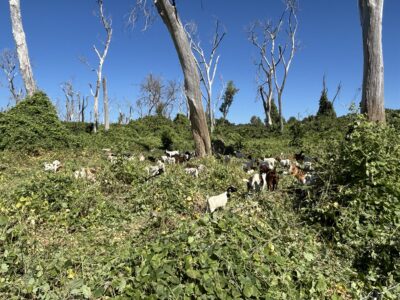
River Partners has been working for years to restore the rivers that feed the Sea. We’re currently restoring approximately 1,500 acres along the Alamo River in the Imperial Valley Finney-Ramer Unit, creating restoration plans for the 54-acre Holtville Alamo River Parkway project, and hoping to lead even more restoration along the Salton Sea in the future—all of which could be impacted by the cuts.
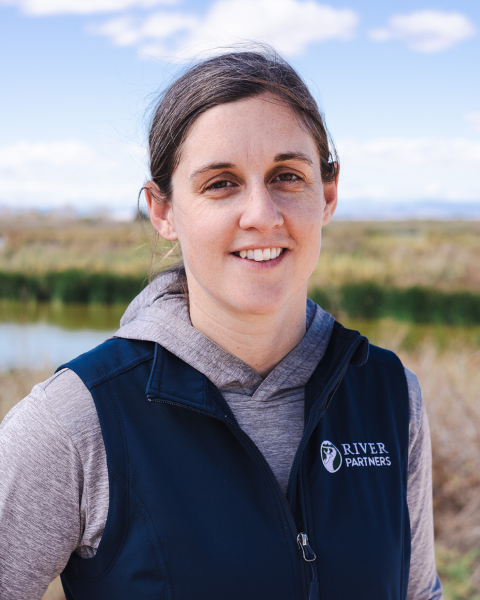
We asked Director of Restoration Science Emma Havstad what the cuts mean for the Sea, the valley, and River Partners’ ongoing work here—and why Californians should care about this region and its future.
Why should people care about the Salton Sea?
Havstad: There’s a narrative that the Salton Sea isn’t natural, that it was created by an engineering disaster in 1905, so if it dries up, that’s just resolving a long-standing mistake. That ignores its real history: The lake used to fill and drain naturally as the Colorado River shifted, as rivers do, between flowing south into Mexico and north into what’s now the Salton Sea.
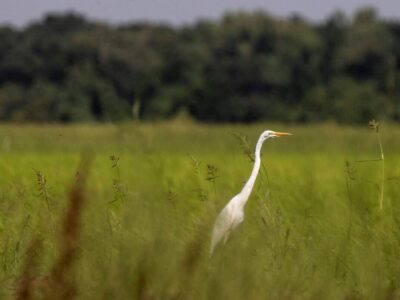
The Salton Sea is hugely important to a wide variety of birds, it’s deeply important for the migratory pathway of lots of species, and it’s a large, critical wetland stop along the Pacific Flyway. If we let it dry, there’s nowhere else for those birds to go. There are health impacts, too. If you want to live in a world where people aren’t exposed to toxic dust and suffering extremely high rates of pulmonary disease, that’s reason enough.
“As Californians, we all carry a picture of Lake Tahoe, for example, as something we automatically value. We haven’t told that same story about the Salton Sea.”
It mostly gets its water today from the agricultural drains of Imperial Valley farms, so the sediment, pesticide, and fertilizer residue in that runoff has been settling at the lake bottom for over a century, and it’s now being exposed as the shoreline recedes. On a windy day, that dust can blow all the way to Los Angeles, and it’s likely the main reason the Imperial Valley has one of the highest asthma rates in the nation. In a sense, having the Salton Sea flooded caps that toxic dust. Pulling water from alfalfa fields to save water would leave us with an exposed toxic lakebed and no wetlands for birds across a large stretch of the West Coast. There’s no easy answer here.
What’s the big picture with these cuts to Colorado River allocations?
Havstad: Since colonization and development in the Southwest, the allocation of the Colorado River water has always been out of balance. The Southwest has always been a dry place, and demand on the river has always exceeded what it could reliably supply. In recent decades, that gap has only widened—demand up, supply down. The basin is getting hotter and drier under climate change, and it’s also become more populated and home to more industry, including agriculture.
Who’s most impacted by these cuts?
Havstad: California has always gotten the biggest allocation from the river, and of that, IID gets the largest portion for agriculture. The Imperial Valley has received a lot of negative attention for growing a lot of water-intensive alfalfa, but the Imperial Valley is also the largest source of winter vegetables in the country—about 80% of the nation’s winter vegetables are grown there. A reduction in Imperial Valley agriculture would affect farm profits, but it would also hit agricultural workers, who are probably more vulnerable than the farm owners. But other regions are also disproportionately reliant on the Colorado and will therefore also be impacted, perhaps more, by cuts.
How could this affect River Partners and ongoing Imperial Valley restoration?
Havstad: What River Partners has been doing there is essentially reconciliation ecology, working with a managed system that moves water through agricultural fields into drains and along the Alamo River to the Salton Sea. It’s not natural hydrology, but it’s hydrology that supports native riparian vegetation that’s otherwise limited in the region and important to a wide variety of wildlife. Our projects along the Alamo River acknowledge that this is the reality of where humans are sending water, and that we can create habitat within the margins of that system.
We’re already using agricultural drain water rather than pure Colorado River water on our projects, with the exception of certain wildlife areas along the Alamo River with their own water allocations. So, I don’t expect the cuts to have a huge immediate impact on the projects we currently have planned.
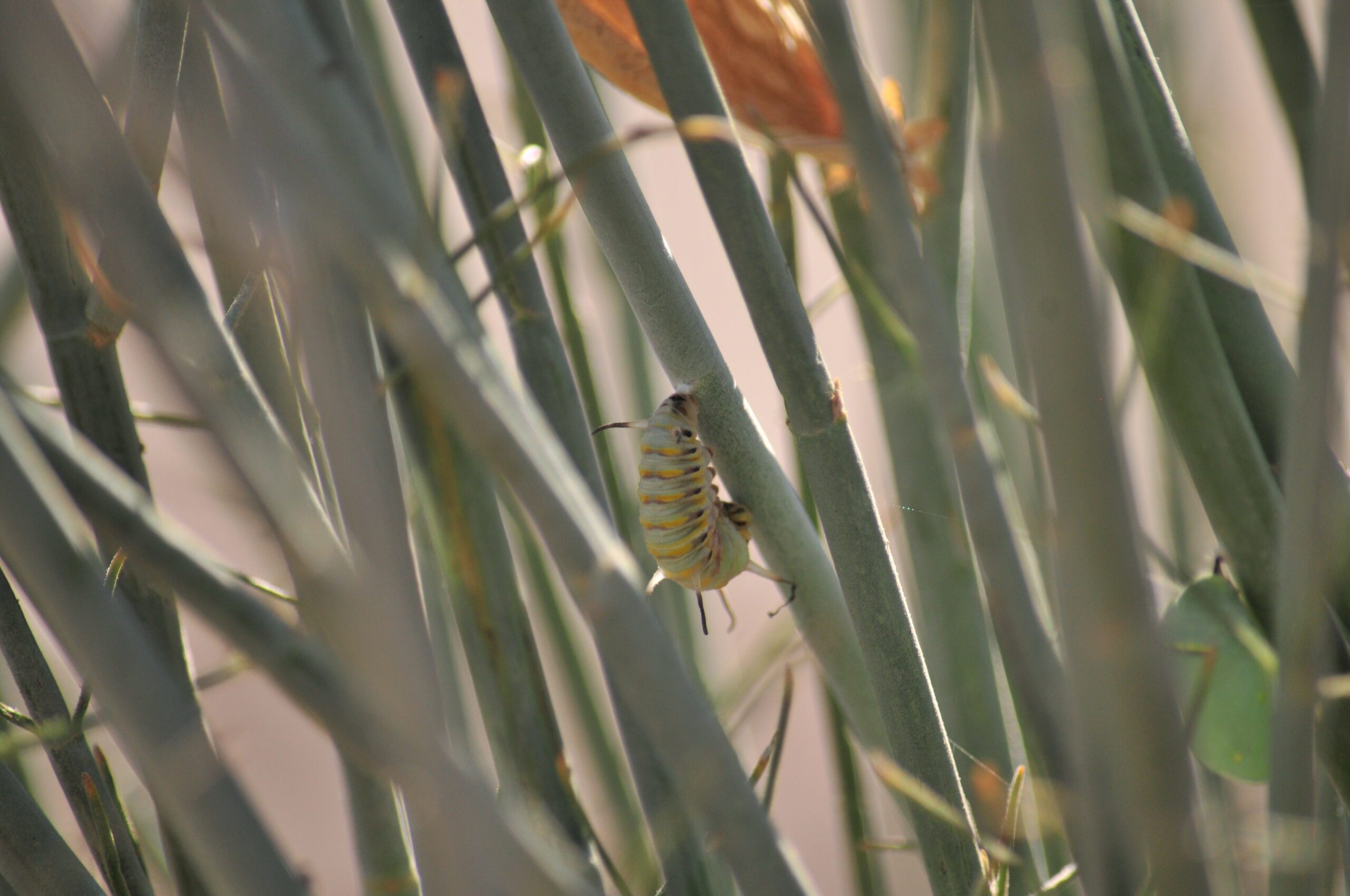
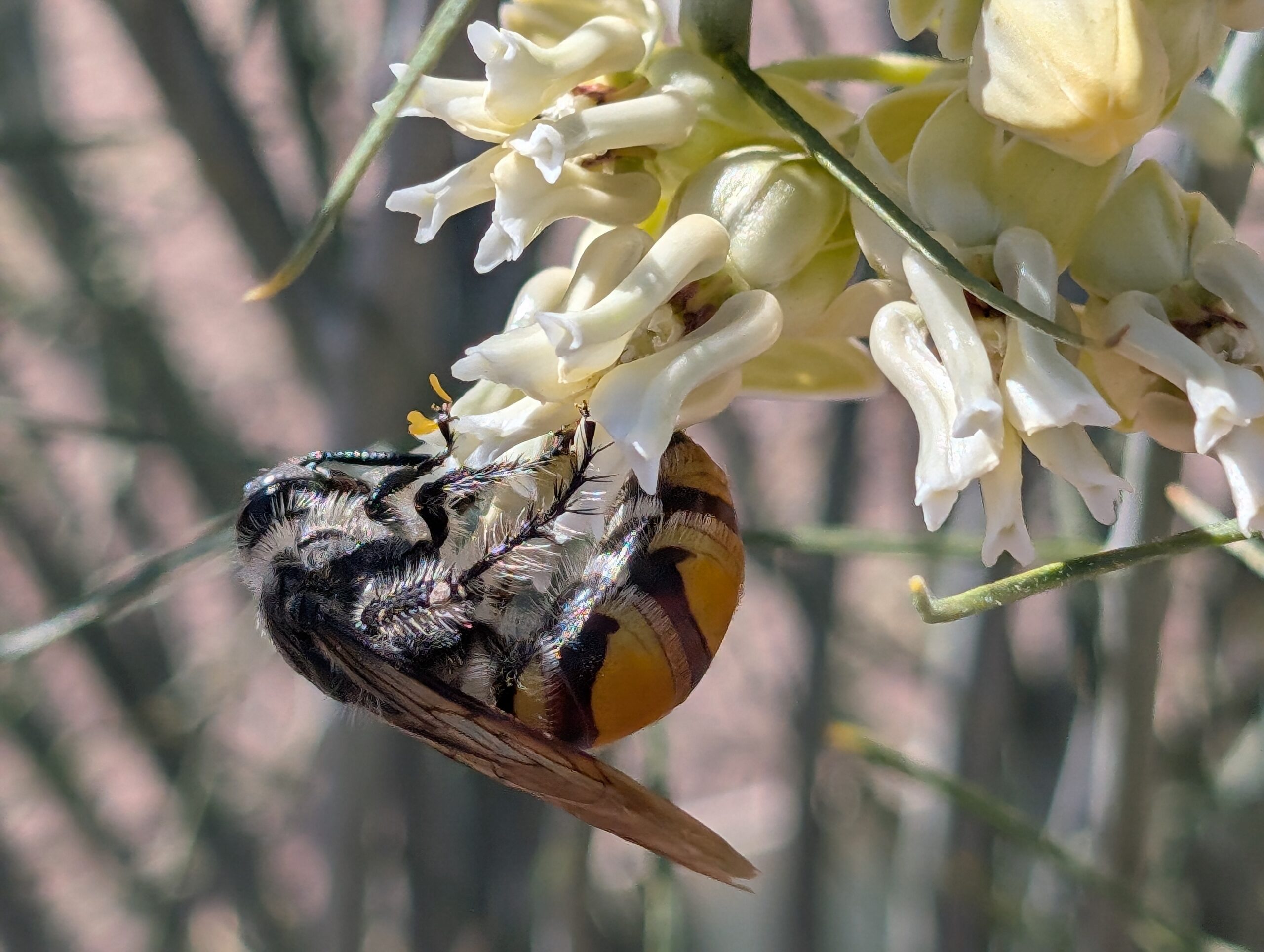
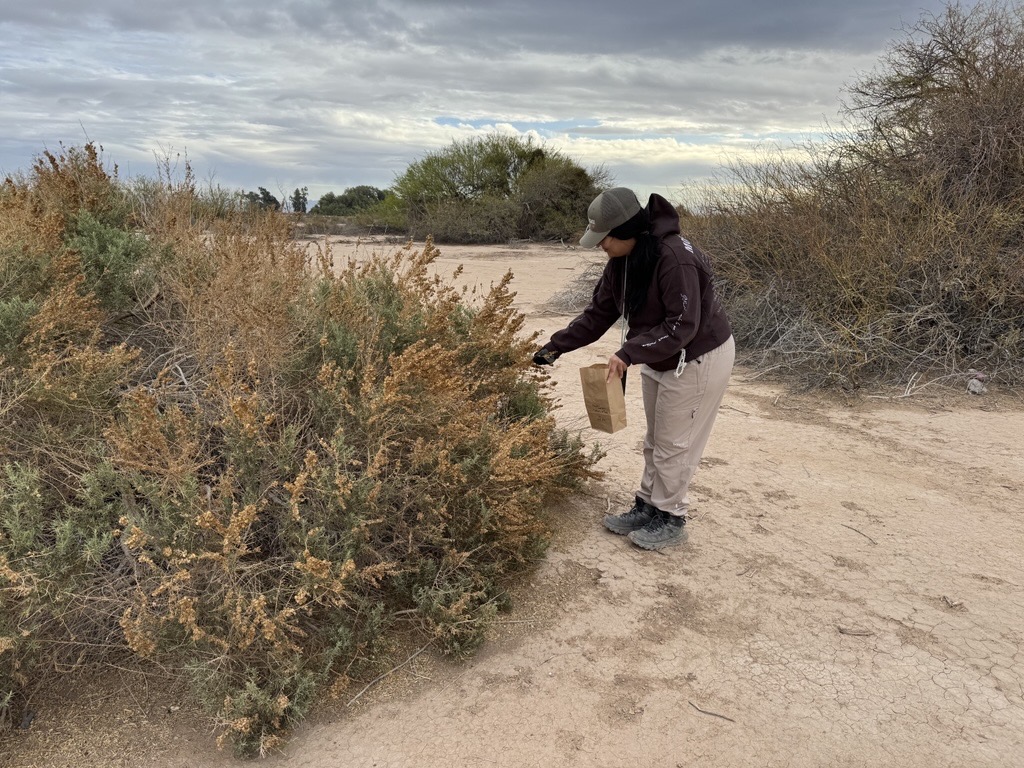
But if IID’s allocation drops drastically over time, there may be less water moving through that agricultural system to work with. We may need to innovate toward using even less water during vegetation establishment and start doing projects based on capturing the small amount of natural rainfall the valley gets—similar to the seed-based restoration we’ve been doing in the dry Tulare Lake Basin in the southern San Joaquin Valley. We may need to transition into more dryland, seed-based restoration and rethink which plant communities we try to establish.
I think we can say with near certainty that some Imperial Valley farmland will be retired from agriculture if major cuts keep happening over time—farmers will be forced to, in much the same way the Sustainable Groundwater Management Act is transitioning land out of agriculture in the San Joaquin Valley. Our role in the Imperial Valley could end up looking a lot like our role in the southern Central Valley. If this land doesn’t stay in agriculture, is it possible to make it something good for wildlife and people, economically and efficiently, rather than leaving it vacant or weedy?
If allocations keep dwindling, what happens to a project like the Holtville Alamo River Parkway?
Havstad: The Holtville project is actually an exception. When we implement that project, we’ll probably draw water off the city hydrant rather than from agricultural drains. That’s still Colorado River water, just delivered to the city for its use rather than through farm drains, so its source is a little more insulated than most of our other projects in the valley, though still tied to the same river. Our project would use that water sparingly, just for the short period while native plants get established. One advantage of working in the Imperial Valley is the long growing season, meaning that we may need even less time, and less water, to get native forests established.
We’re also hoping to participate in restoration for the exposed Salton Sea lakebed, and that already has contingencies built in for a shrinking lake. If it shrinks faster than expected, there’s simply more area to restore—an already mind-boggling number of acres becomes an even bigger one.
Will these cuts impact any other River Partners’ projects in the region?
Havstad: In 2011, we finished restoring 55 acres at the 18,444-acre Cibola National Wildlife Refuge, which straddles California and Arizona and is separated by the Colorado River. We planted over 13,000 native trees, shrubs, grasses, and forbs. Since the Refuge is fed largely by the Colorado River, we chose a diverse mix of drought-resistant vegetation that doesn’t require much water.
I don’t expect water cuts to have much impact at all on that fully mature restoration. While some restoration groups on the lower Colorado River designed their work to have very long-term irrigation, River Partners decided instead to design our project and select a plant palette that required less than two years of initial irrigation. The vegetation grew in and is robust and healthy, even though the plants have not received any irrigation water in 15 years or so.
For any future work, we would ideally have those same initial one to two years of irrigation water to make a successful project. If the Colorado River cuts impact the amount of water available for the Refuge, we’ll pivot to dryland restoration techniques.

In five or 10 years, if cuts keep happening, what does River Partners’ work in the Imperial Valley look like?
Havstad: It could be that we have much more work, and harder work, if we’re trying to do it all without irrigation water. Dryland techniques could mean the projects end up simpler in some ways, since we’d be working with fewer species able to establish without irrigation. Or the decision could go in a different direction entirely, and that retired farmland could become solar farms or data centers instead of restoration at all.
Working without irrigation means getting native plants to establish mostly from seed, since a container plant’s root ball needs water to survive, and we’d potentially use techniques like drift fences or structures that capture seed behind a protected wind barrier. It’s similar to what’s happening in the Tulare Lake Basin, where the goal is to establish San Joaquin Valley desert species without irrigation.
Mostly, it comes down to seeding at the right time, keeping weed competition down, and hoping for a good rain year. It’s hard to predict—you have to plan for multiple bad rain years while hoping for a good one. And even good rain years in the Imperial Valley result in very little water. By comparison, irrigated restoration in the Central Valley, where River Partners plants thousands of willows and cottonwoods and waters them, is far easier and more successful. That’s one of the key reasons River Partners has been successful there; we’ve developed a formula that’s proven to work.
What initially drew you to the Imperial Valley?
Havstad: I didn’t know anything about it until I started at River Partners and someone tasked me with applying for a grant for a project there. I think the story we tell about a place matters enormously. As Californians, we all carry a picture of Lake Tahoe, for example, as something we automatically value. We haven’t told that same story about the Salton Sea. Instead, the story has been that it was an engineering accident, that it’s dirty, that it’s too hot out there to matter anyway. I dislike that that isn’t the true story. All the social issues you see in the Central Valley are magnified in the Imperial Valley, and the people who live and work there need and deserve biodiverse green spaces just as much as anywhere else in the state.