
 July 1, 2026
Tribal voices have historically been excluded from large-scale ecosystem restoration, despite being the original guardians and knowledge-holders of our lands and waterways. Read River Partners’ story map on our Tribal Engagement and Land Guardianship Project, Original Guardians: Restoring Rivers Through Partnerships
For millennia, California’s rivers, creeks, and lakes served as the lifeblood for thriving Tribal communities in the San Joaquin Valley and Tulare Basin, located in the southern portion of the Valley. Where there was water, you’d find populations of people. Water and Tribal identity have forever been inseparable, anchoring language, ceremony, food systems, and ancestral memory.
Simply put, waterways served as cultural lifelines for Tribes thriving in these regions throughout California.
However, the loss of 95% of California’s floodplains and riverside habitat mirrored an equivalent loss of Tribal culture, language, and other essential resources. Rivers and other waterways that once sustained entire cultures have been dammed, fenced off, redirected, and regulated, turning vital cultural access into a painful absence.
“It was a tremendous loss to our community,” said Michelle Pipkin, member of the Yowlumne Yokut. “The waterways are like our veins that flow the blood to our systems, keeping our people flowing and connected.”

Tribal relationships with the few rivers that remain in the Valley are nothing like they used to be. Access can be conditional, and permission may be granted if landowners get something in return or if all parties agree to certain conditions. It can also be dangerous to access areas to gather basket materials, for example.
Women who gather talked about watching their step as they walk to the area, often navigating a steep hill, and sometimes carefully moving over or through barbed-wire fence until they reach their coveted spot. They also talked about hiding from landowners who either don’t understand the cultural importance or downright don’t want them there. Meanwhile, one or more women act as roadside lookouts, often next to the road with traffic speeding feet or inches away, alerting the gatherers of any possible danger.
In other cases, they risk exposure to pesticides sprayed on the very plants they gather and handle, sometimes manipulating them with their mouths. And still other times, they risk trespassing out of necessity.
“Access to us was freedom. Freedom to roam our own land. We don’t have that anymore,” said Julie Tex of the Western Mono Tribe. “Regardless of whether it’s an agency, technology, or private property, we’re not free to go where we want to go and do what we want to do.”
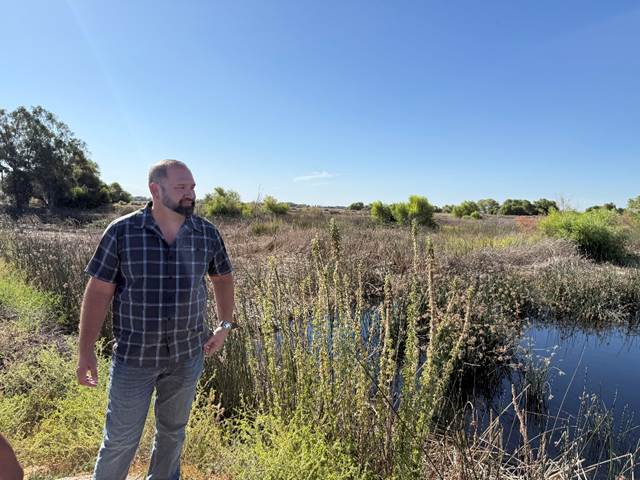
Today, traditional gathering practices (for example, harvesting willow or sedge for basket weaving) have become acts of necessity and resistance, as Tribal participants discussed during the in-person gatherings. Tribal elders and youth face obstacles at every turn, like steep terrain and highway traffic when gathering, as well as bureaucratic hurdles, costly liability insurance, and the threat of trespassing charges just to access ancestral waterways.
A Scaled-Up Response to a Centuries-Long Problem
In response, River Partners has intentionally shifted away from transactional consultation and toward inclusive, reciprocal partnerships with California Tribes — ones that honor Tribal knowledge, priorities, and sovereignty, and that support both ecological integrity and cultural revitalization. Through the Tribal Engagement and Land Guardianship Vision Project, led by Northern Sierra Mewuk and River Partners first Director of Tribal Engagement, Austin Stevenot, we are committing to centering our restoration work in the San Joaquin Valley and Tulare Basin around collaboration with Tribes.
By working alongside the communities that know these lands most intimately, River Partners aims to restore habitats and cultural connections, ensuring that the wisdom of their original guardians guides the revitalization of California’s rivers.
“We don’t want just to check boxes, we want relationships. Co-management isn’t exclusion—it’s access and engagement,” said Stevenot. “It’s our way of supporting the cultural resurgence of the ways of California Native cultures that have been suppressed for the last 200 years.”
This initiative views riparian restoration as environmental recovery and also cultural renewal. When ecosystems heal, Tribal members can safely return to practice ceremonies, gather materials without fear, and pass down generational knowledge.

Through our year-long Tribal Engagement and Land Guardianship Vision Project, we listened to Tribal members from the San Joaquin Valley and Tulare Basin, through in-person gatherings and virtual meetings, about what river restoration means to their cultures. River Partners has been on a transformative journey to build collaborative relationships with the region’s diverse Tribal Nations, from federally and state-recognized Tribes to unrecognized ones, including culture bearers and practitioners.
Since time immemorial, Tribal communities have been the original guardians and knowledge-holders of the lands and waterways that define California. Their deep, generational knowledge of California’s unique ecosystems is needed to scale up the restoration, conservation, and climate resilience of lands statewide.
The centuries-long story of Tribes and safe access to rivers is one of grief, pain, betrayal, and loss. It’s not just a story of the past, it’s still unfolding, which means it’s also a story of resilience and hope. For River Partners, restoration is about more than healthy ecosystems—it’s also about relationships, access, and cultural renewal. Our Tribal Engagement and Land Guardianship Vision Project envisions what it would mean to restore rivers in a way that honors the original guardians of these lands and waterways, and to put what we learn into practice.
River restoration at scale only works when the people who have always known these landscapes are helping to lead it. Read Original Guardians to hear directly from Tribal participants about what true partnership means — and what it’s making possible.