
 May 12, 2026
Last year, River Partners took a step forward to learn more about the ecosystems in our San Joaquin Valley restoration sites—and, according to a 129-page report filled with results, it’s incredible how much life exists in a teaspoon of soil.
Using an innovative research tool called environmental DNA (eDNA), River Partners scientists collected 600 soil samples last year from across more than 15 restoration sites in the San Joaquin Valley. eDNA works by extracting and analyzing DNA that organisms shed naturally—from skin, fur, bones, feathers, plant detritus, fungi, and waste—making it possible to detect hundreds of species, including those that are difficult or impossible to find any other way.
Crucially, eDNA can detect species that haven’t been seen on a landscape in years or decades—offering clues about what once thrived there and guiding restoration efforts.
Scientists sampled in winter and then again in summer to capture how the composition of life shifts across seasons and responds to environmental stress. All 1,200 samples were sent to project partners at CALeDNA (from the University of California, Santa Cruz) and eDNA Explorer for analysis. The results provide a richer picture of the plants, animals, and microbes that walk, fly, swim, and grow on our restoration sites.
“The fact that we can send CALeDNA 600 samples and get thousands of species hits blows my mind,” said River Partners Director of Restoration Science Emma Havstad, “and that they’ve sequenced so many species that they’ll be able to tell us what our little soil samples have in them.”

River Partners recently received the first round of findings in a 129-page report. With expectations of an unprecedented amount of data, the results did not disappoint.
“The results are vast, and there’s a lot to comprehend,” Havstad said. “When you find 3,000 different species in a single sample, what does that all mean?”
This eDNA analysis was made possible through partnerships with the California Wildlife Conservation Board (which funded the research), CALeDNA, eDNA Explorer, and California State Parks.
The results provide a snapshot of biodiversity on our sites, including rare, endangered, and elusive species, as well as invasive vegetation we can act against, and they reveal patterns both above and below the surface—starting with the soil itself.
What’s Beneath the Surface
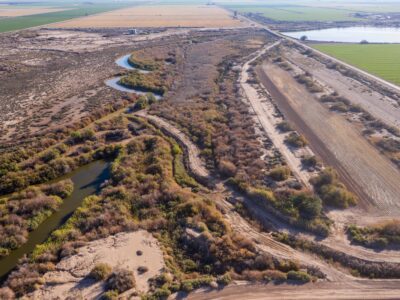
River Partners collected soil samples sites ranging from agricultural operations and completed restoration sites to fallow land and active and future restoration locations. Notable findings from the report include:
Arena Plains

Arena Plains, located within the 26,800-acre San Luis National Wildlife Refuge Complex (SLNWR), was crowned the “ecological gold standard” of all sites tested. It featured the highest native plant species richness and the most integrated soil-plant community (when all organisms function as a connected whole in an ecosystem of all the sites where samples were collected. This is a favored location for Heritage Growers, our nonprofit native seed venture, to collect source-identified native seed for future restoration efforts in the San Joaquin Valley.
Camp Taylor
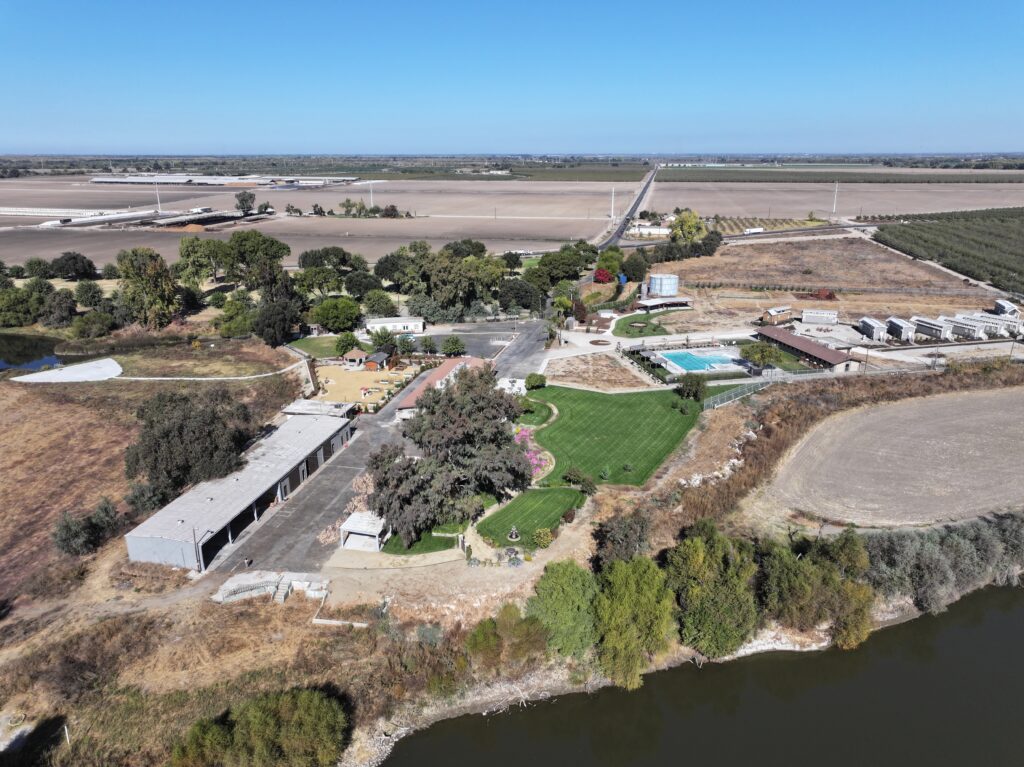
At Camp Taylor, a three‑acre project located along the San Joaquin River outside Modesto, nearly every biological marker increased by one or two levels in overall ecological health between sampling rounds. This project means more to us than just restoring a weedy field, as it serves children with congenital heart disease and supports the community’s connection to the San Joaquin River.
Lower Kern River
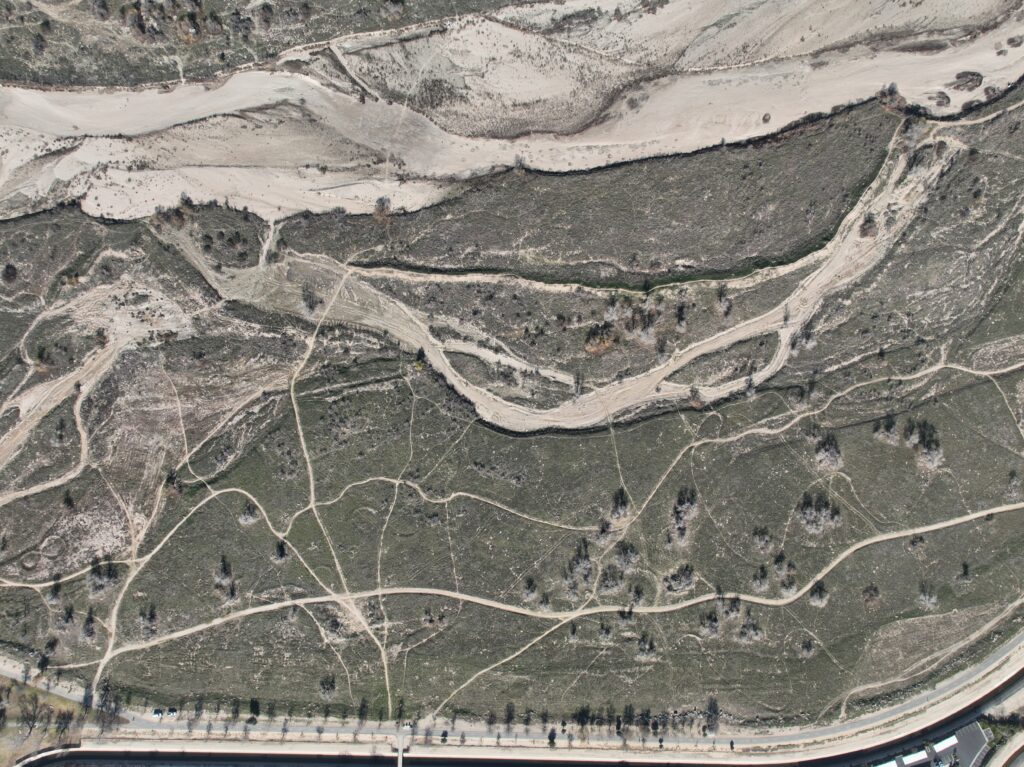
However, our Lower Kern River restoration site in Kern County was flagged as under active stress, showing the study’s highest fungal pathogen load despite apparently healthy microbial diversity. Havstad said based on eDNA results like this, projects in Kern County could benefit from additional restoration support, like mycorrhizae inoculation trials, which test the benefits of supplementing symbiotic associations between fungi and plant roots.
“With the mycorrhizae trial, we’ll take soil with a good fungal community from someplace nearby and add about a tablespoon of that native soil to the planting hole,” she said. “You do that when you think there’s some good, beneficial fungi in the soil nearby.”
Speaking of soil, several sites previously used for intensive farming continue to show a “legacy” signal of fertilizer use. High levels of nitrogen‑cycling bacteria—a byproduct of long‑term fertilizer use—remain dominant, and that can help invasive weeds over native species. Havstad said detecting invasive plants on our sites early is critical to future success.
“One of the principles of our work for invasive plant control is early detection-rapid response. We did see some invasive plants pop up [in the report] that we didn’t know about, so the Science team will consider doing field reconnaissance to see if we find those plants on the landscape,” she said. “Maybe it’s a quirk of eDNA, or maybe they’re cryptic, or maybe it’s a small population, but we’re exploring how to field-verify whether these are actually there, and if they are, that would be an interesting use of eDNA.”
Wildlife that Walk, Fly, and Swim
While soil communities form the building blocks of restoration, the eDNA results also revealed important findings above ground to inform future planning and implementation.
Birds

- Swainson’s hawk: A state-threatened raptor was identified at Arena Plains and Dos Rios State Park Phase 4, indicating that suitable open foraging habitat and nesting structures are available.
- Tricolored blackbird: This state-threatened species was detected at Bear Creek’s remnant grasslands, where appropriate wetland and riparian scrub habitat supports its highly colonial nesting behavior.
- Northern harrier: A California Species of Special Concern detected at Lower Kern River and SLNWR. Its presence reflects the value of large, contiguous restoration landscapes for disturbance‑sensitive, ground‑nesting raptors.
Mammals
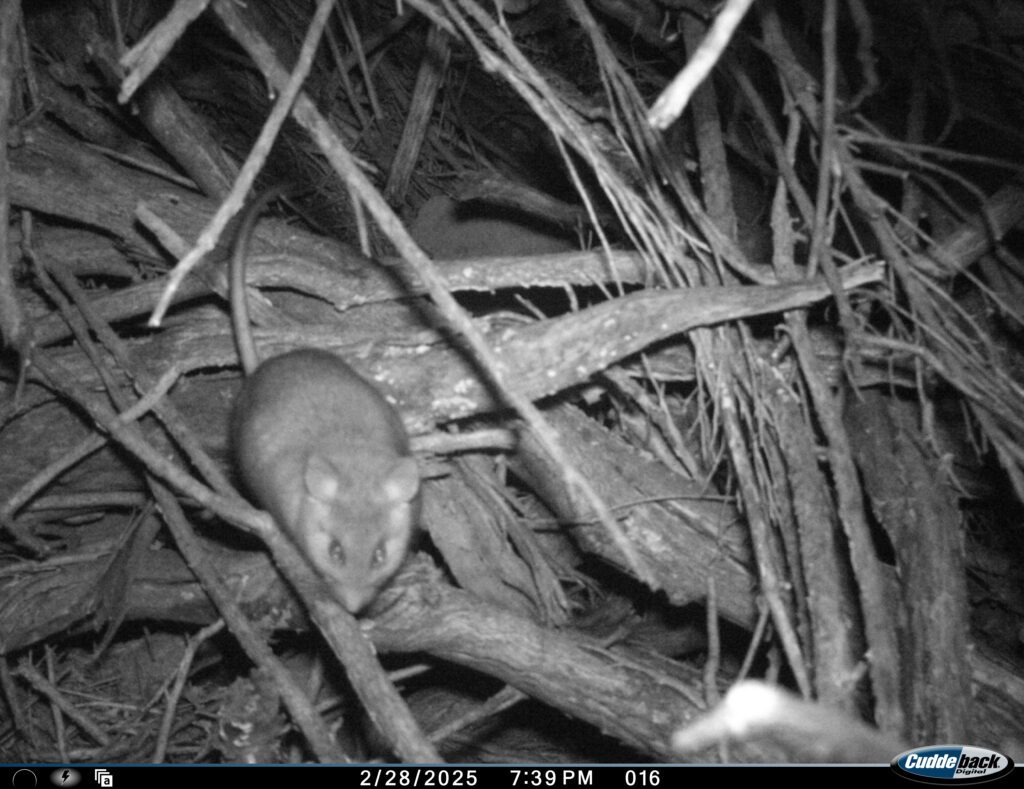
- Woodrat: This ecologically important small mammal was detected at 25 sampling locations in both rounds—the most of any mammal in the survey. Detection within target restoration areas like Dos Rios State Park Phase 4 and San Joaquin River National Wildlife Refuge (SJRNWR) underscores the importance of continued habitat restoration and the need for additional investigation.
- American badger: A California Species of Special Concern detected across multiple sites, including Lower Kern River, Panorama Vista Preserve, and SLNWR, the badger remains vulnerable to habitat conversion and fragmentation.
Amphibians
- California tiger salamander: A California Species of Special Concern, its detection at an agricultural site is ecologically notable given the level of disturbance at that location.
- Western spadefoot: A California Species of Special Concern proposed for federal protection, was detected within multiple watersheds.
Fish
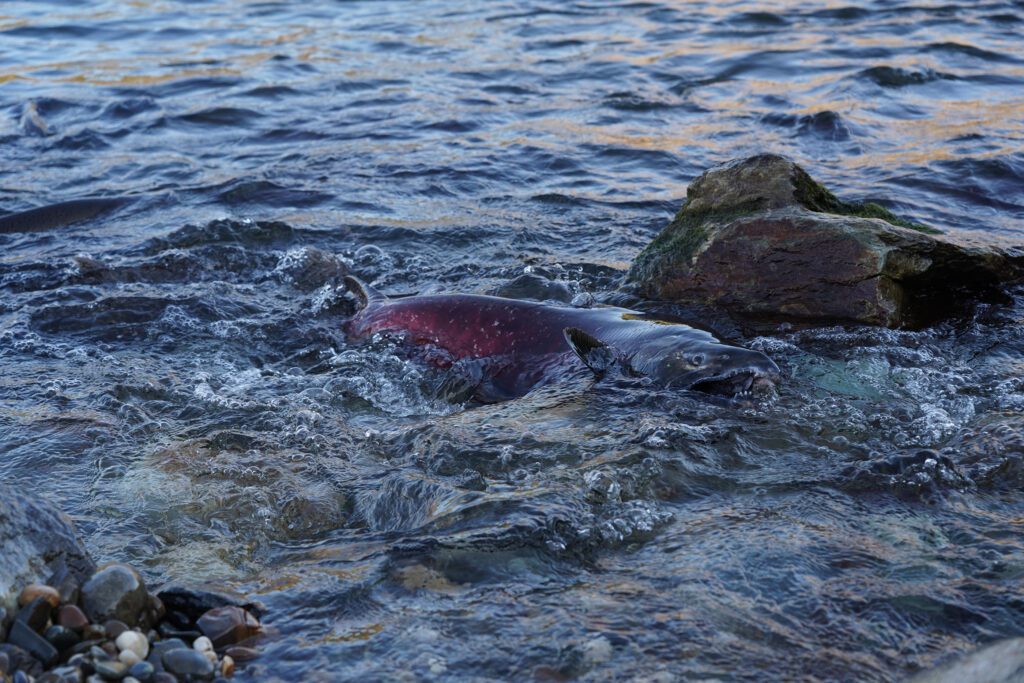
- Chinook salmon: Detected at SLNWR and the SJRNWR side‑channel project sites. Because several runs are state and federally threatened, these detections illustrate the importance of restored riparian corridors for migration and rearing habitat.
Invertebrates
- Folding‑door spider: Highly sensitive to habitat disturbance and noted for its California conservation value, this species was detected at Bear Creek and SLNWR, suggesting that small but intact microhabitats persist within altered landscapes.
Beyond individual species, the data also revealed broader indicators of ecosystem health and resilience.
Important Ecosystem Health Indicators
Several findings underscored critical ecosystem health indicators across River Partners’ restoration sites.
While winter rains often homogenize biodiversity, harsh summer conditions in the Central Valley act as a “drought filter,” sharpening the contrast between resilient habitats and degraded ones. As a result, summer eDNA sampling provides a more precise lens for identifying sites capable of withstanding seasonal extremes.
Several soil health bioindicators were detected. White Worms—highly effective indicators of intact soil structure and moisture stability—were found primarily at high‑quality reference sites like Eplin Tract and SLNWR. Sensitive to tillage and compaction, they can be an early indicator of soil recovery. Earthworms, considered ecosystem engineers for their role in maintaining soil fertility and hydrology, were also detected at select agricultural sites and Dos Rios State Park, signaling the return of key decomposers and nutrient recyclers.
Aquatic health is central to River Partners’ restoration work, from the largest salmon to the smallest insect. Detections of mayflies, stoneflies, and caddisflies—food sources for aquatic species and collectively known as EPT taxa—are recognized as indicators of high ecosystem health.
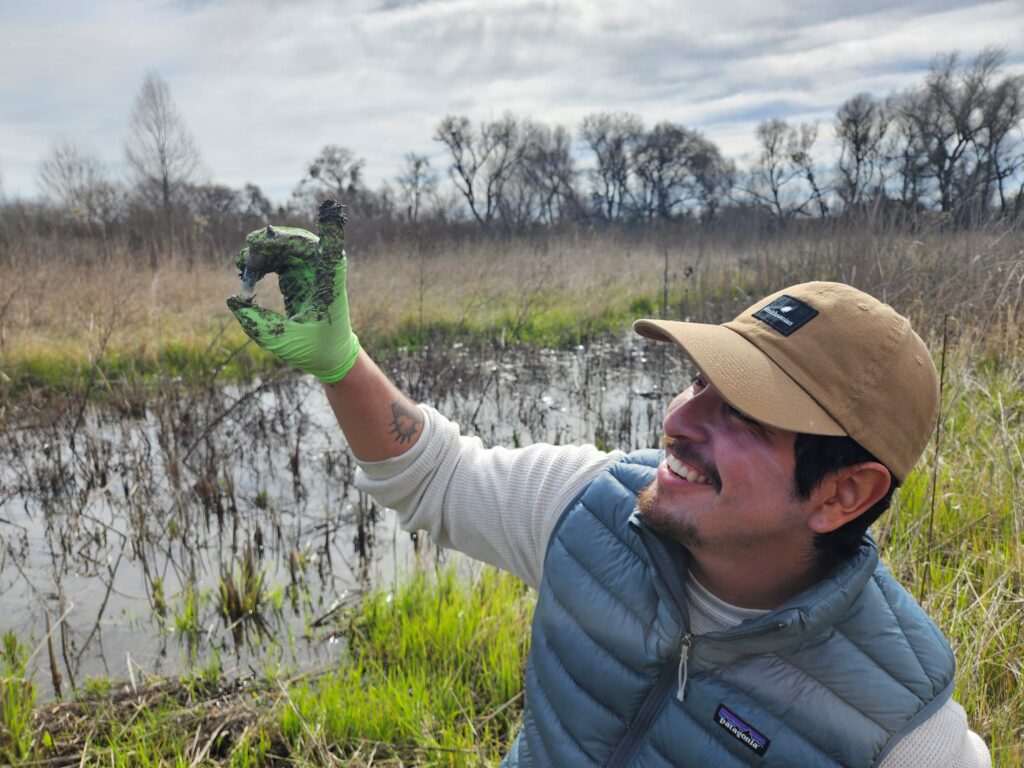
Amphibians are highly sensitive to pollutants and can serve as reliable indicators of water quality. Chorus frogs were detected at multiple restored and reference sites, signaling intact or recovering aquatic habitats.
Healthy wildlife populations depend on healthy food webs. The detection of myotis bats—considered secretive bioindicators—provides insight into the condition of terrestrial food systems and will help inform the planning and effectiveness of future wildlife corridors.
Seeing the Whole Ecosystem
eDNA allows River Partners to evaluate restoration sites in a fundamentally new way, where we measure the full web of life, from soil fungi to raptors, in a single analysis.
“One of the things I’m most excited about from the eDNA report is the experimental indices for integrating all levels of life into one or a few biodiversity ranks,” Havstad said. “What that allows us to do is say that we won’t, for example, prioritize the Swainson’s hawk over chorus frogs, or both of those things over important fungal communities, but instead compare the full community composition across sites.”
From a single teaspoon of soil, River Partners now holds a richer, more complete map of the kind of life that exists on our restoration sites, what these sites need, and a compass to shape healthier ecosystems for the future.