
 June 17, 2026
If you take a walk through a riverside forest of willow, cottonwood, oak, and alder restored by River Partners, you’ll likely start to notice something.
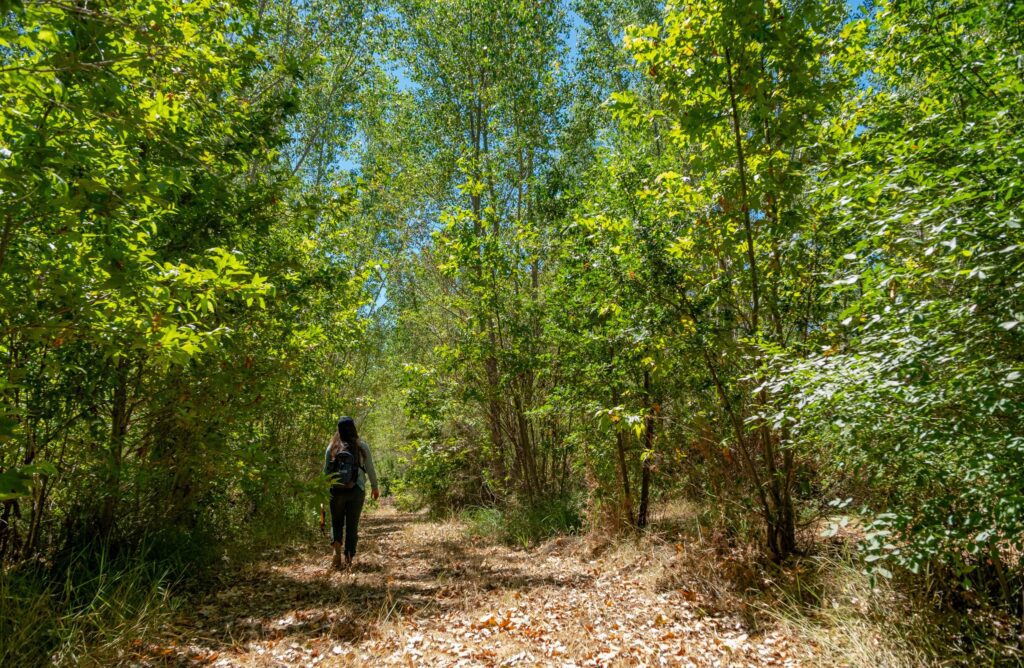
One-foot trees planted ten years ago now form a canopy overhead, filtering the hot mid-day sun. The birdsong and buzz of insects is so strong you can hear it through your skin. Butterflies skirt from blooming milkweed to elderberry to spicebush.
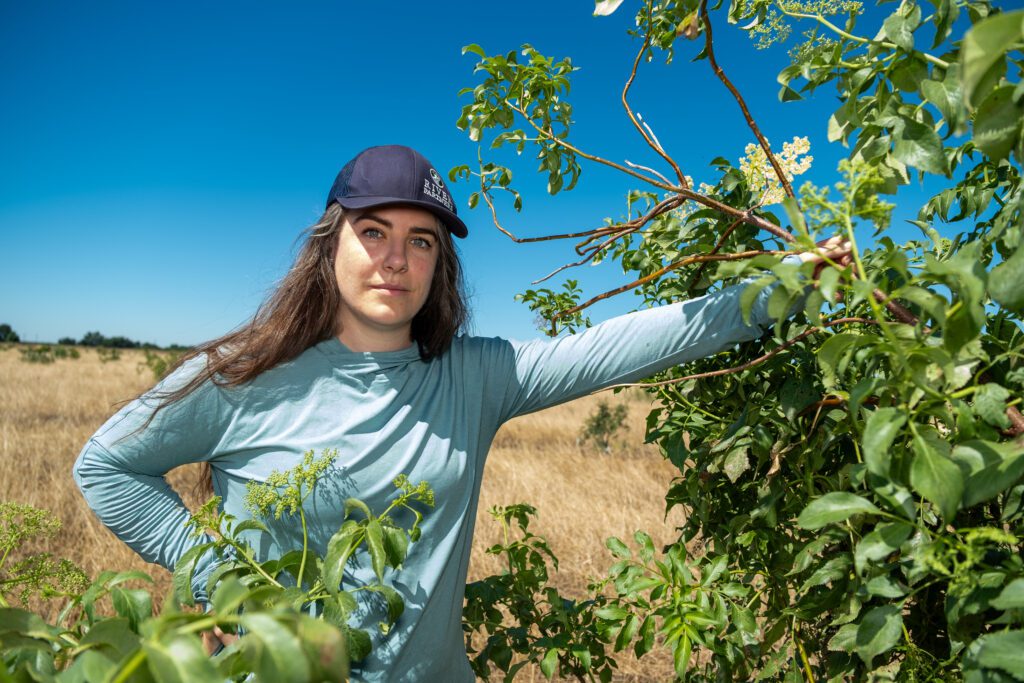
Standing there it’s easy to feel it: restoration works.
But for River Partners Senior Scientist Dr. Sarah Gaffney, the feeling is only part of the answer. Her job, essentially, is to keep asking, are we doing this right? And how do we know?
Those questions drive River Partners’ entire team of nearly forty restoration scientists—the people who help plan, permit, plant, and monitor every restoration we undertake.
“River Partners has always said that we perform adaptive management,” Gaffney explains. “That means we’re always trying to learn and improve our practices.”
That commitment to questioning is what separates River Partners from an organization that exists solely to plant trees. With only 5% of California’s historical riparian habitat remaining, salmon populations collapsing, groundwater depleting beneath the Central Valley’s farms and communities, and floods intensifying with climate change and without functional floodplains to absorb them—we don’t just need more trees planted blindly in the ground. We need restoration that works—the right tree, in the right spot, at the right time.
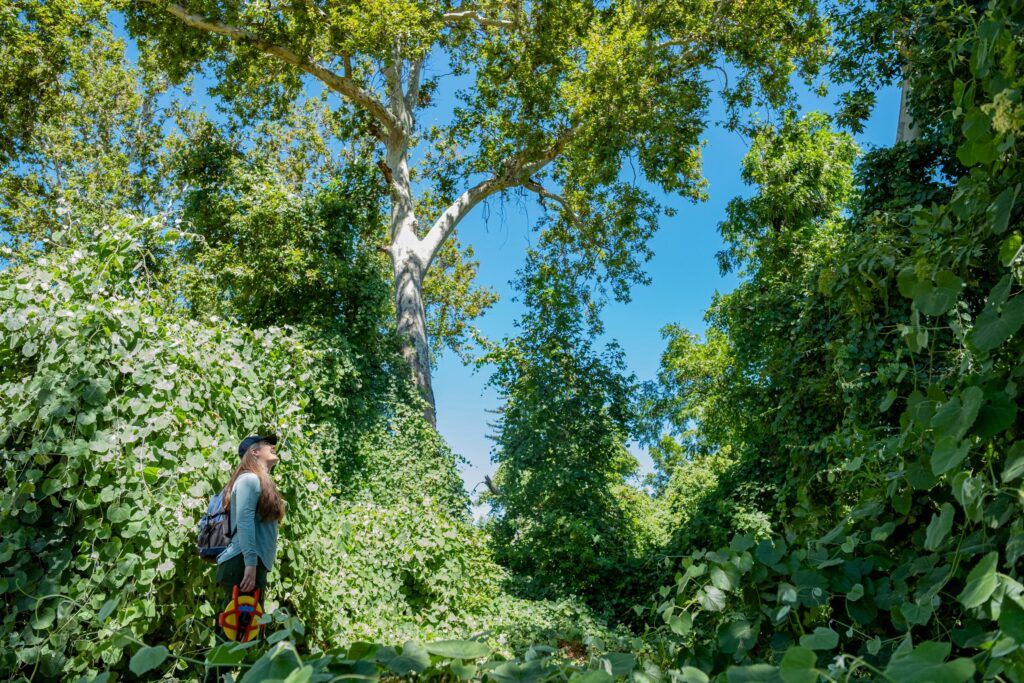
River Partners collects data on every project—whether trees are surviving, which wildlife are returning, how sites are changing over time. That data is the foundation, not the destination. The questions Gaffney is really after are larger: are these rivers actually coming back to life? Are restored floodplains doing what floodplains are supposed to do for salmon, for groundwater, for communities? Finding the partners and building the research to answer those questions (and many more)—that is Gaffney’s job.
From Academia to the Field
Gaffney studied ecology as an undergraduate, went to graduate school, and came out with a PhD and a conviction that her work needed to matter. In graduate school, she researched plant community ecology with a focus on native grassland restoration—developing a deep fluency in experimental design.
“I love doing experiments and data analysis,” she says. “But I want my work to be actionable and at a fast pace—with direct outcomes that help improve the environment. River Partners’ ability to restore at scale allows me and the team to do that.”
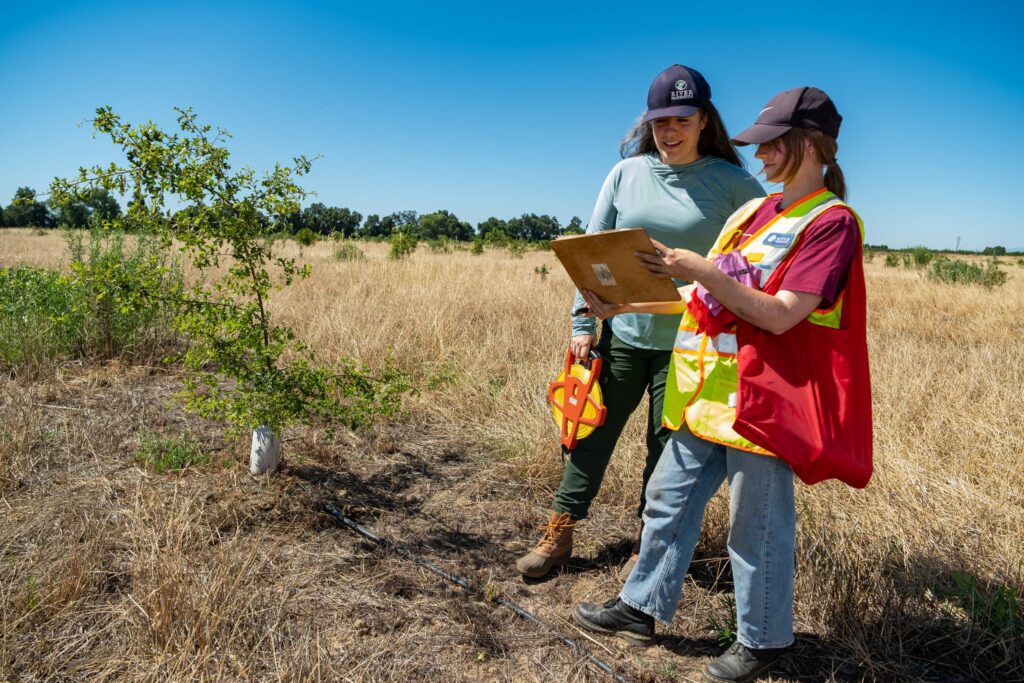
It was a restoration ecology course her last semester of undergrad that first showed her this path existed.
“I realized I could actually create tangible impacts instead of just studying the impacts of a degraded landscape on X, Y, or Z,” she says. “You can actually restore it.”
She arrived at River Partners with a scientist’s training and a practitioner’s orientation—and found here the rare place where those things both can exist.
“In so many ways, this is my dream job,” she says.
Living Laboratories
One of the fundamental challenges of restoring rivers in California’s Central Valley is that there is no perfect model to work from. The rivers have been so altered—dammed, channeled, and disconnected from floodplains—that scientists have no perfect reference point to replicate.
“We don’t have ideal pristine reference sites to look at because of the intensely modified hydrology of the valley,” says Gaffney. “We don’t have a site we can go to and say, this is exactly what we want. Ecosystem ecology is so complex.”
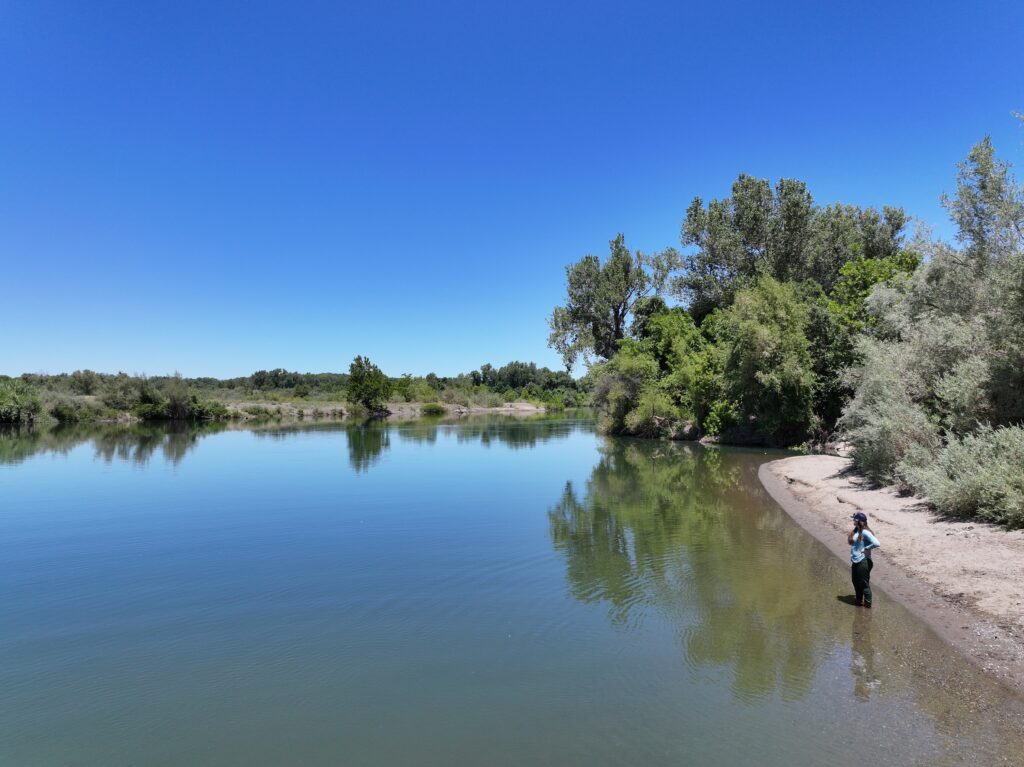
So, River Partners’ approach is to do the best we can within a limited system. We do that by treating every project site as a place where questions can get real answers. Gaffney actively reaches out to universities and research institutions with a simple offer.
“All of our sites are essentially living laboratories,” she says. “We can provide access for you to come answer whatever questions you want to answer.”
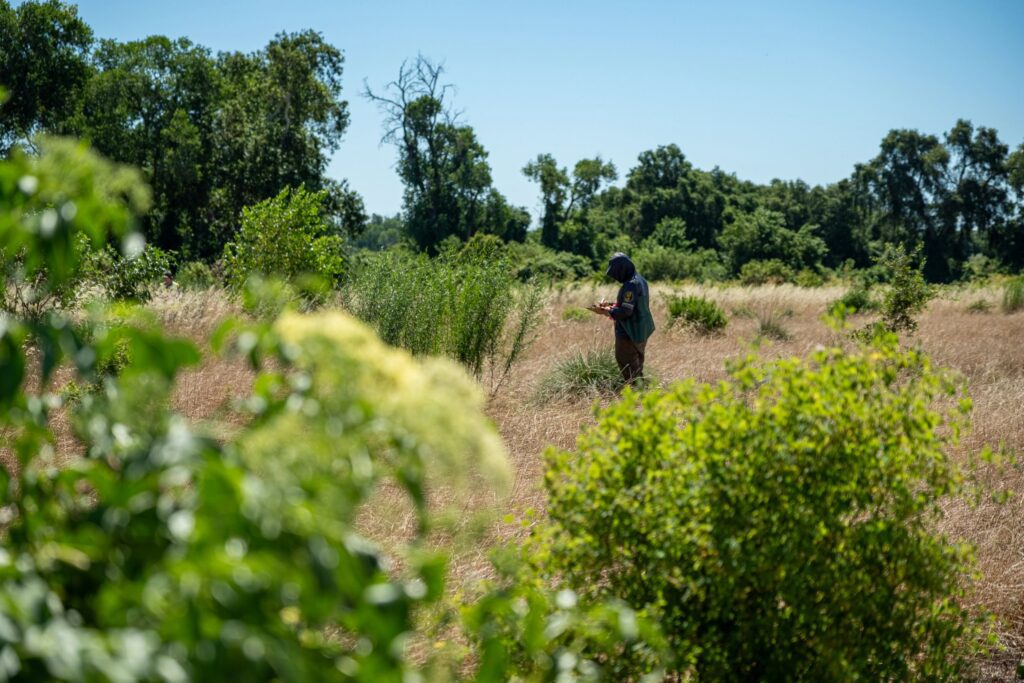
This openness has drawn an extraordinary range of scientific partners to River Partners’ restoration projects. Lawrence Livermore National Laboratory, Stanford University, UC Davis and others are researching how restored floodplains recharge aquifers—and whether that cold groundwater then discharges back into rivers as the cool baseflow that salmon desperately need to survive summer temperatures and groundwater-dependent ecosystems needs to survive drought.
It has brought acoustic receivers to Dos Rios Norte at the confluence of the Feather and Sacramento Rivers, where researchers are tracking juvenile salmon to understand how young fish use restored floodplain habitat and what might help them access it more easily.
It has put Motus wildlife tracking stations in the field at Dos Rios State Park near Modesto and Panorama Vista Preserve in Bakersfield, allowing River Partners to follow tagged birds, bats, and butterflies across the landscape and understand not just that the species are present, but what they’re responding to and how restoration can better provide it.
Alongside these external research partnerships, River Partners runs one of the most ambitious internal monitoring programs in the restoration field. The Before-After Control-Impact project — known as BACI — pairs future restoration sites with nearby reference sites to collect baseline data before a single tree goes in the ground, then tracks how both sites change over time. It’s the kind of long-term, rigorous monitoring that is rare in conservation, where funding almost always follows planting rather than measuring. “A lot of people focus on doing the work and getting the restoration in,” Gaffney says. “It’s so rare that we could get money to go back to a restoration site — but it’s so valuable that we’ve started writing it into all of our new grants as baseline.”
Gaffney knows it’s not enough to just do the science; the story has to be told as well.
Since January of this year alone, science team members have delivered more than 20 presentations at conferences hosted by organizations including the Society for Ecological Restoration, the Salmonid Restoration Federation, the California Native Plant Society, and the Western Section of the Wildlife Society.
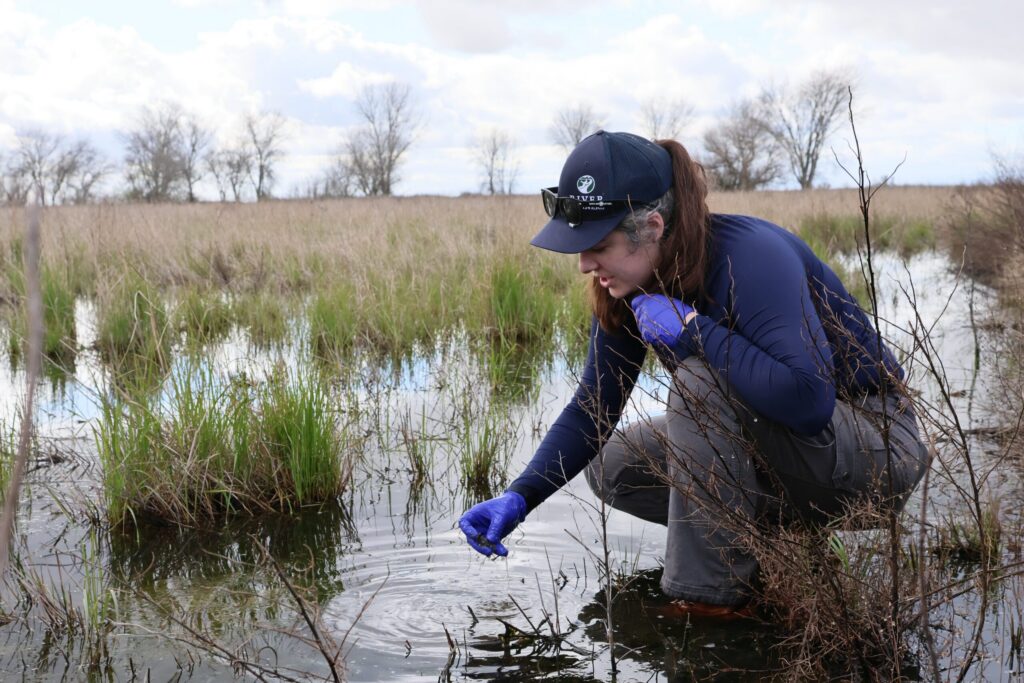
In June, Gaffney joined CalMatters’ Insight on Air to explain how a water sample pulled from a restoration site can reveal an entire hidden community of life through environmental DNA analysis.
“The way we view it is that all of our data is collected with public money. So, we want all of our data to help the public in some way,” she says.
Get Off the Computer and Into the Field
For all the value of data analysis and academic partnership, Gaffney is clear about one thing: you cannot be a good restoration scientist from a desk.
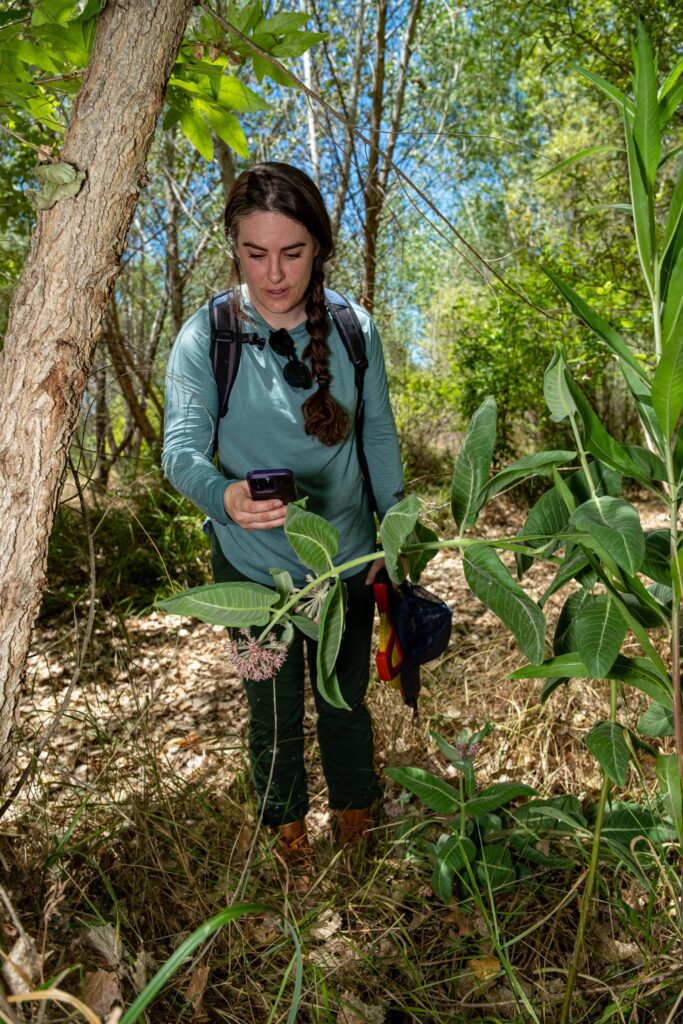
“You can’t be an effective ecologist if you’re behind your desk all the time,” she says. “If you’re managing a site, you need to know your site really well.”
There is a kind of knowledge that only comes from spending time in a place. That could mean noticing the box elder trees look slightly yellowed in areas that stay wet longer, then storing that observation, and confirming it later in the survival data. You pick up on things no monitoring protocol would have told you to look for.
“Sometimes what you learn about the site and the ecology comes to you inherently through seeing the site regularly and seeing how it changes over time,” she says.
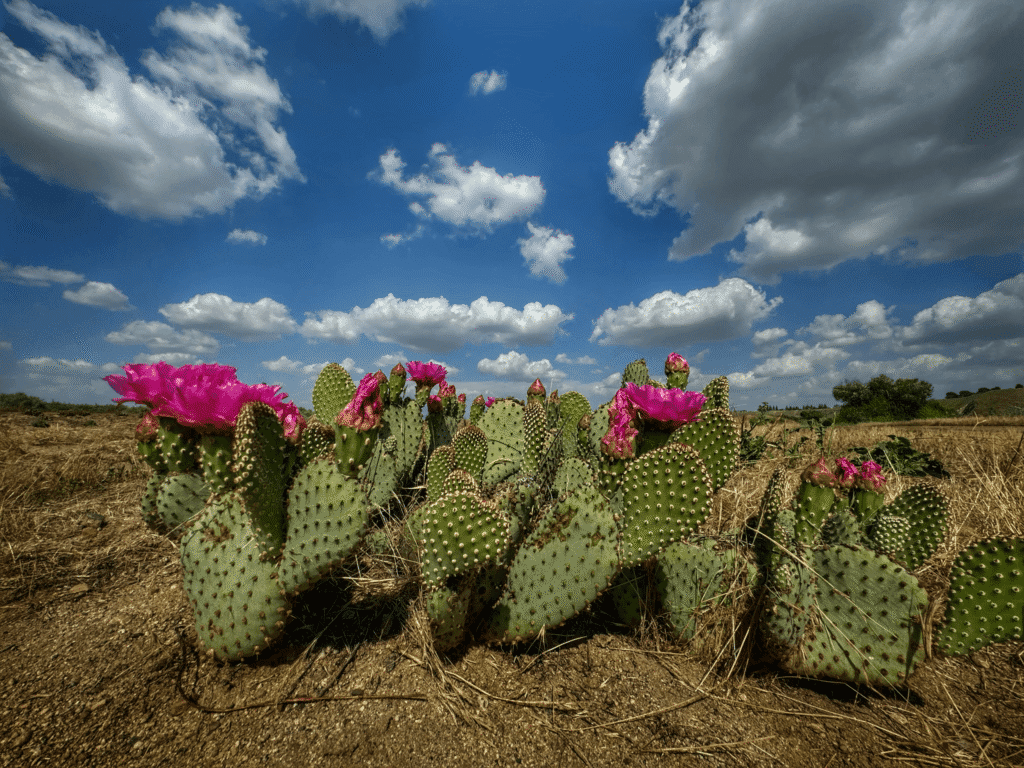
This is how some of River Partners’ best ideas for improving restoration practice are born. Field Foreman Eligio Hernandez’ observation about native grasses potentially suppressing weeds on planting berms became a formal trial. An unexpected result from a rare plant propagation—Bakersfield Cactus at Panorama Vista Preserve, where 86% of plants survived three years after installation and averaged 29 pads per plant compared to just two at planting—became a lesson in what close attention to overlooked species can produce.
“If we’re going to make changes, let’s have them be evidence-based,” Gaffney says. “And if we get interesting results with a trial, let’s do it multiple years, across multiple sites. That’s my ideal to really test our practices.”
Dream Job
“Knowing that everything I do has meaning and is going to help the world and the environment in some way—it’s just really important to me,” Gaffney says. “Even the boring parts, like budget tracking—that has value because it results in a project well done, which results in 500 more acres of riparian habitat added to the landscape, which is going to provide more habitat for our birds and our animals.”
Ask her why her work matters to her, and the answer comes without hesitation.
“Humans are leading to the extinction of wildlife, like salmon. We need to do everything we can to bring them back. Salmon are an intrinsic part of the river system—and so that means they’re important to me.”
The conviction that a river without salmon isn’t a river translates to every part of the ecosystems Gaffney has dedicated her life to figuring out how to make whole again.
“Our mission is my mission,” she says. “My values align with our values as an organization. Working for River Partners, in my role—it’s my dream job.”
Restoration Heroes is a series about the dedicated and often under-recognized people behind River Partners’ statewide work — field crews, scientists, seed collectors, partners, and supporters — whose dedication makes the extraordinary work of restoring California’s rivers and communities possible.