
 July 21, 2026
Over the past year, River Partners has provided a glimpse of the wildlife species that our science and operations staff have seen in the field as they restore California’s once-flourishing riverways.
Summer in California is increasingly hotter and drier, with more intense heat waves. Using the wildlife featured in “Eyes in the Wild” over the last year, we’ll journey through the state to see how these species manage, use, and survive the heat of California’s summer and explore how River Partners helps them thrive in restored habitats.
Check out the last year of our “Eyes in the Wild” series here.
San Joaquin River National Wildlife Refuge (San Joaquin and Stanislaus Counties)
Beginning in the water, we have what was once the landscape’s most vital architects, beavers, like this one seen cruising along in the San Joaquin River within the 7,500-acre San Joaquin River National Wildlife Refuge, where River Partners restored around 2,500 acres of native habitat. After nearly being wiped out during the 19th-century fur rush, these industrious “ecosystem engineers” are finally rebounding. When River Partners and other like-minded conservation organizations restore the beaver’s habitat along rivers and other waterways, we’re not just saving a species; we’re helping to repair the water table.
The work of these busy water engineers include encouraging groundwater recharge (their ponds slow down water, allowing it to seep into the ground), water quality (their wetlands naturally filter waterways before it hits the main river channels), providing access to water for other wildlife, and wildfire breaks (lush, wet meadows created by beavers can act as natural firebreaks in dry grassland areas)—all of which help sustain the ecosystem through the deepest heat of the summer months. And California’s landscape benefits from the work of the productive beavers year-round.
Battle Creek Ranch (Shasta County)
Fall-run Chinook salmon face a daunting summer gauntlet in California’s warmer rivers, including the Sacramento River, where these fish were spotted at our 1,721-acre Battle Creek Ranch restoration in Shasta County. An ecological pillar, salmon have had a long and intimate connection with Indigenous Tribes throughout our state. And as a keystone species, their health directly reflects our state’s ecological and economic well-being. During the summer months, juvenile fall-run Chinook salmon that haven’t yet started their journey to the ocean rely on cold, shaded pools in major rivers to survive the heat.
When fall-run Chinook salmon aren’t doing well, we know the river system isn’t as healthy as it could be. Drought, historic heat, and low water levels have turned many stretches of rivers into inhospitable environments for salmon egg incubation. River Partners is determined to boost salmon numbers within the Sacramento River and beyond, from restoring salmon habitat and side channels and learning more about their migratory journeys to our organizational mission to reconnect floodplains. And our future restoration at Battle Creek Ranch is yet one more opportunity to help one of our state’s most important fish species.
Dos Rios Norte (Sutter County)
As spring turns into summer throughout California’s Central Valley, groups of migratory shorebirds on flooded landscapes, like these white-faced ibis, are a common sight. These birds are enjoying and taking advantage of the food options at our 1,600-acre Dos Rios Norte restoration at the confluence of the Sacramento and Feather rivers and lower Butte Creek in Sutter County.
While the waterways here are essential for all runs of Chinook salmon, its mosaic of managed marshes and flooded rice fields also provides vital sanctuary for migratory birds along the 10,000-mile Pacific Flyway. This area once held floodwater for months leading into the summer. Today, protecting these floodplain corridors (through restoration and collaborative initiatives like BirdReturns, in which flooded fallow fields become temporary wetland habitat for migratory shorebirds) helps ensure these birds and others thrive around the Sacramento Valley.
The white-faced ibis is an important indicator species, and because it relies on shallow, flooded habitats, it is particularly vulnerable to drought and the loss of seasonal wetlands. Seeing these birds here signals a healthy, functioning wetland—and it tells us our restoration efforts are helping.
Imperial Wildlife Area, Finney-Ramer Unit (Imperial County)
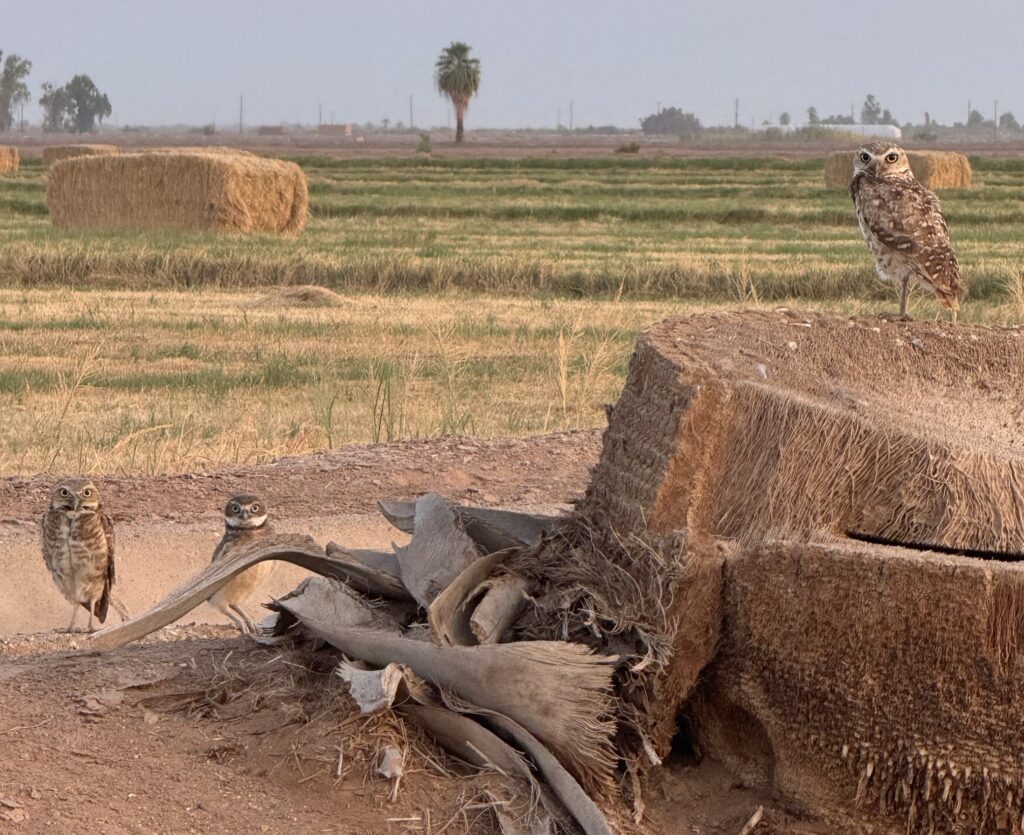
While some species seek the water, others have come up with clever ways to beat the heat on land. The burrowing owl utilizes the earth itself for climate control. These owls were photographed at the Finney-Ramer restoration site we’re leading with the California Department of Fish and Wildlife and California Conservation Corps in Imperial County. Summer temperatures here can soar above 110 degrees, so these birds retreat into underground burrows that maintain a cool, steady 85 degrees.
Imperial County is home to 70% of California’s burrowing owl population, and because they can struggle to find natural nesting sites, it’s key that the natural crevices and animal burrows remain intact. This ensures the owls have a place to call home or seek shelter in and allows these expert predators to continue their work, keeping the rodent population in balance.
Additionally, the diverse palette of native trees and vegetation River Partners plants on our projects provides abundant food year-round, which, in Imperial County, is critical since water scarcity and fallowed agricultural fields can limit available foraging habitat.
Chico Headquarters (Butte County)
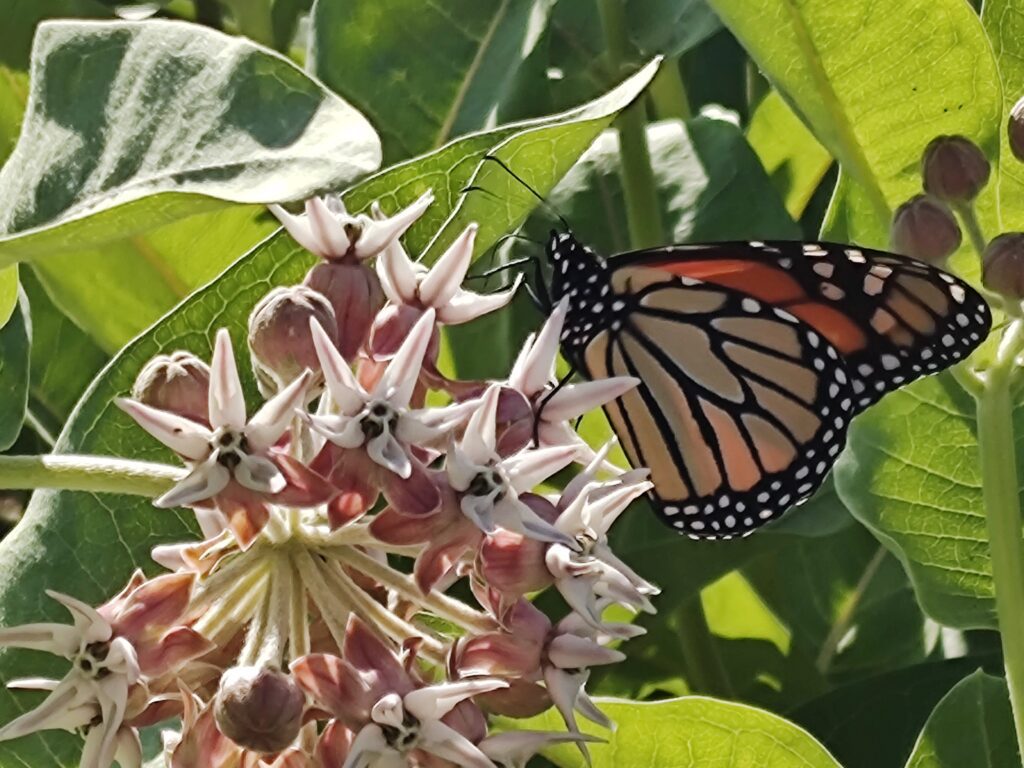
Finally, one of our most exciting sightings this past year didn’t happen at a restoration site, along riparian habitat, or within a remote area by camera trap—it happened in front of our Chico headquarters. This Western monarch butterfly was spotted flitting among milkweed that was planted as plugs five years ago.
Summer is a critical time for the Western monarch in California’s Sacramento and Central valleys. Given that this monarch is a male—determined by a black dot on its hind wing called a “field mark”—and was spending time in the milkweed flowers in late spring, it was likely dining on the energy-rich nectar for its flight across the Sacramento Valley. If it had been a female, it would either have been drinking nectar or searching for a safe spot to lay her eggs on milkweed, the only plant monarchs lay their eggs on and that caterpillars eat.
Western monarchs born in the summer live only about two to six weeks—so time is of the essence for them. During the summer they breed, lay eggs, and die, allowing successive generations to quickly spread their range. Likely on their third generation at this point, they will resume their arduous journey over the Rocky Mountains as they breed—filling up on milkweed along the way—after which the final generation will migrate back to California’s coast to overwinter in a single season.
Additionally, summer adults require a continuous supply of high-quality nectar from blooming flowers. Because much of California, including the Central Valley, experiences hot, dry summers, monarchs seek microclimates and riparian corridors where plants can retain access to moisture and provide necessary energy.
Four decades ago, Western monarchs numbered around 4.5 million—today, the population has declined by more than 99 percent. River Partners is committed to planting 15 million milkweed plants for monarchs across California by 2030. We’re adding milkweed seeds and plugs to all our future restoration project plans, up and down the state. Our nonprofit native seed venture, Heritage Growers, is providing the seeds and plants for most of these efforts, which we envision helping generations of Western monarchs for generations to come, especially during the increasingly hot summer months.
From mammals and birds to insects and fish, California wildlife species rely on connected landscapes that provide shelter, food, and a place for them to rest for their survival—particularly during California’s hot summer months.
River Partners’ work in restoring historic floodplains, connecting them to California’s major rivers, and rejuvenating riparian habitats helps wildlife species across the board and aids in their adaptation to summer, where every creature must navigate heat, scarcity, and the search for refuge. And with our multi-benefit restoration approach, River Partners is doing our part to increase climate resilience around California.