
 August 13, 2026
This summer, River Partners expanded its popular Restoration Fellows program to give college students from across the state a sense of what on-the-ground restoration work is like.
The next generation of conservation leaders is needed now more than ever. The U.S. Bureau of Labor Statistics projects employment for environmental scientists will grow 4% between 2024 and 2034, with about 8,500 openings predicted each year—many due to retirement and workforce turnover. The field is also growing faster than the pool of trained workers ready to enter it. With the Restoration Fellows Program, River Partners is working to close that gap.
Boosting the future of ecological restoration is a major theme of River Partners’ Restoration Fellows program, and the in-the-field training our interns receive is critical workforce development that’s needed to keep up with the growing demand for restoration practitioners.
“The restoration field is growing, but having funding for restoration doesn’t automatically create a workforce capable of carrying that work forward,” said River Partners Restoration Fellows Program Coordinator Holly Ferrara. “You need people who have actually been exposed to the tools, methods, and decision-making involved.”
This summer’s Fellows spent eight weeks in paid internships alongside River Partners biologists, ecologists, and project managers working across the Central Valley, helping to lead strategic science and research to help maximize River Partners’ statewide impact. While being part of teams driving innovative research, these interns visited active and future restoration sites, monitored a variety of habitat statewide, conducted species surveys, and collected data to help shape how River Partners designs and implements projects for maximum returns on biodiversity, ecosystem health, and climate and community resilience.
The Chico office welcomed Lillian Moore and Erin Robins as Fellows for the Sacramento Valley Region. Moore, a 2026 Cal Poly Humboldt grad in Environmental Science and Management, was especially glad to intern in her hometown of Chico.

“Now, I’ll drive past some of the locations I hadn’t realized were in active restoration, and I’ll say, ‘Oh, that’s a River Partners project?’” she said.
Robins, a Chico State student studying Plant Biology, will graduate next spring.
The Modesto office welcomed Skylar Mello and Nadia Cardona for the San Joaquin Valley. Both from nearby Manteca, Mello (Cal Poly Humboldt, Environmental Science and Management) and Cardona (Stanislaus State, Geography) will graduate in spring 2027.
Across regions, the Fellows experienced more than just a traditional internship. They were exposed to the way restoration science is evolving and received training and hands-on experience working with innovative research tools like GIS mapping, remote sensing, automated acoustic monitoring, data collection technologies, and advanced vegetation monitoring.
“Restoration is a field where the workforce needs to be able to bridge science and implementation. It isn’t enough to understand how an ecosystem functions,” Ferrara said. “We need people who can take that knowledge and apply it to real landscapes, often under challenging environmental, logistical, and social conditions.”
Robins and Moore also conducted pollinator surveys at Rancho Breisgau and Battle Creek Ranch along the Sacramento River. Robins said the trip crystallized for her how restoration serves multiple purposes at once, from planting to river management to habitat for species like the imperiled riparian brush rabbit and Swainson’s hawk.
“I learned to see how everything I did had a purpose and was related,” she said.
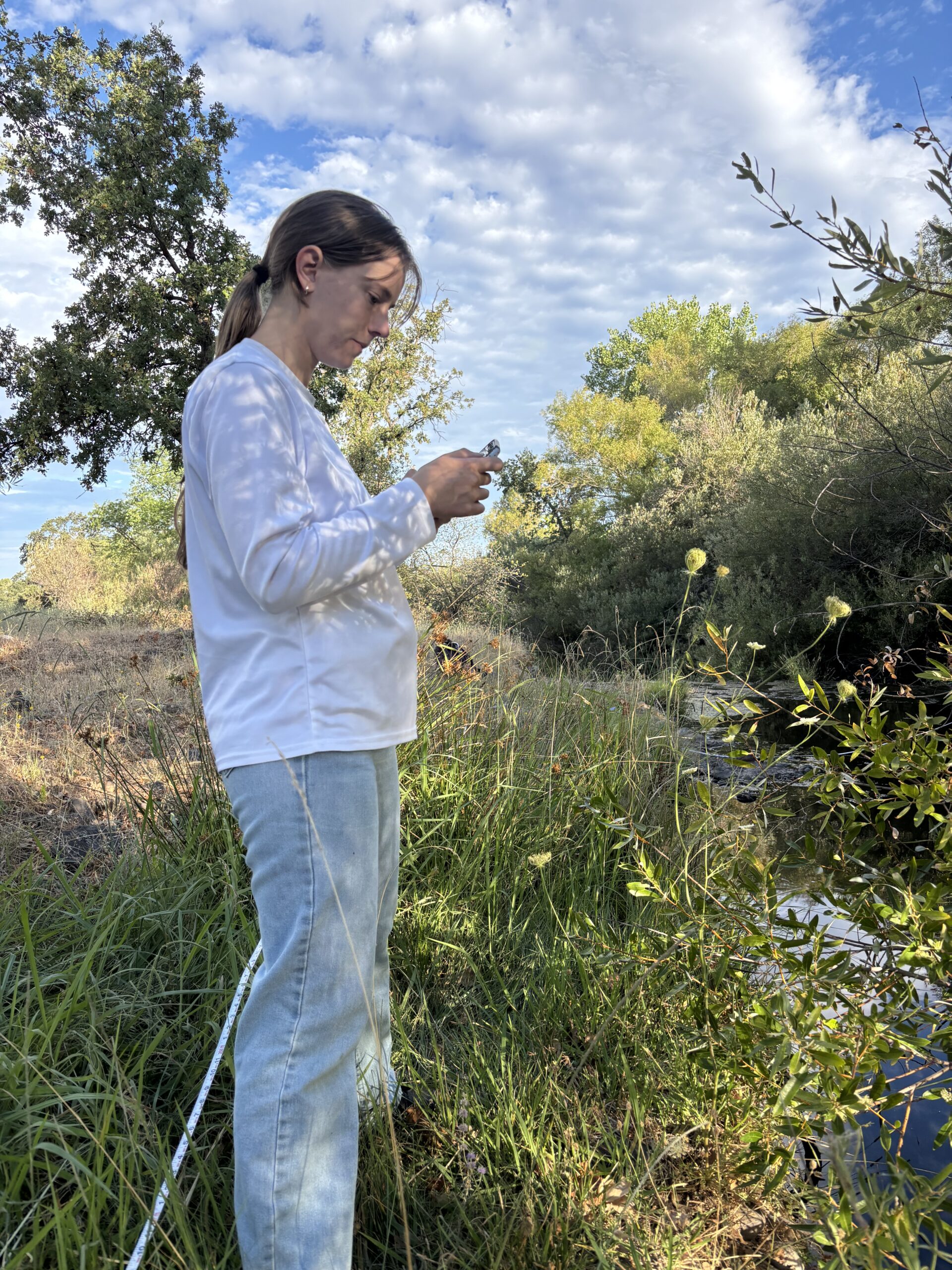
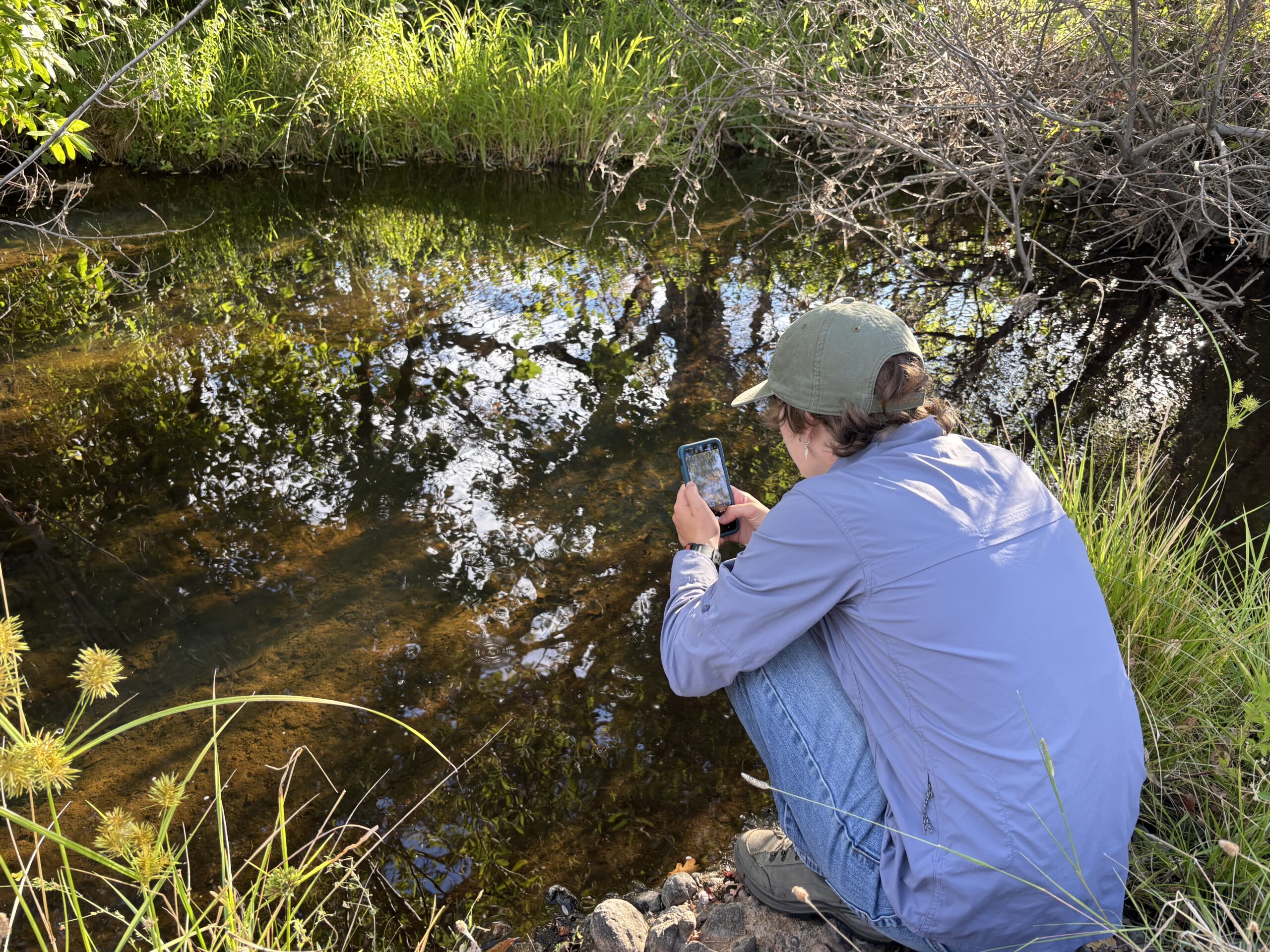
Robins (left) and Moore did some monitoring at River Partners’ recently acquired 1,721-acre Battle Creek Ranch near the Sacramento River in northern Tehama County. Robins records plant diversity and vegetation cover data for a baseline relevé (vegetation survey) of the riparian corridor of Sheep’s Creek. Meanwhile, Moore captures a photo of small fish swimming in Sheep’s Creek for identification with iNaturalist, a tool widely used in the evolving field of restoration.
When the Restoration Fellows make those kinds of connections, they do so while developing skills that can follow them throughout their careers.
“River Partners has an opportunity to expose Fellows to the tools and technologies that are shaping the future of restoration, rather than simply teaching them the way restoration has always been done,” she said. “Our Fellows are developing skills that can follow them throughout their careers.”
Cardona brought that idea closer to home, emphasizing restoration’s community value in the work she did this summer.
“I want to show my friends and family that we have some really cool things here in the Central Valley,” she said. “When people enjoy their spaces, they’re more inclined to want to take care of those spaces.”
When the two pairs joined up in the Central Valley, Moore was struck by the scale of sites like the 1,600-acre Dos Rios State Park.
“You look at them when you’re driving in, and you say, ‘Oh, wow, that’s big.’ And then you start walking them, and you say, ‘Oh my gosh, this is massive.’”
Cardona also noted the supportive team culture.
“You hear horror stories about internships, that’s not the case here at all,” she said. “What has stood out to me about River Partners is that they’re trying to mold the future generation of scientists.”
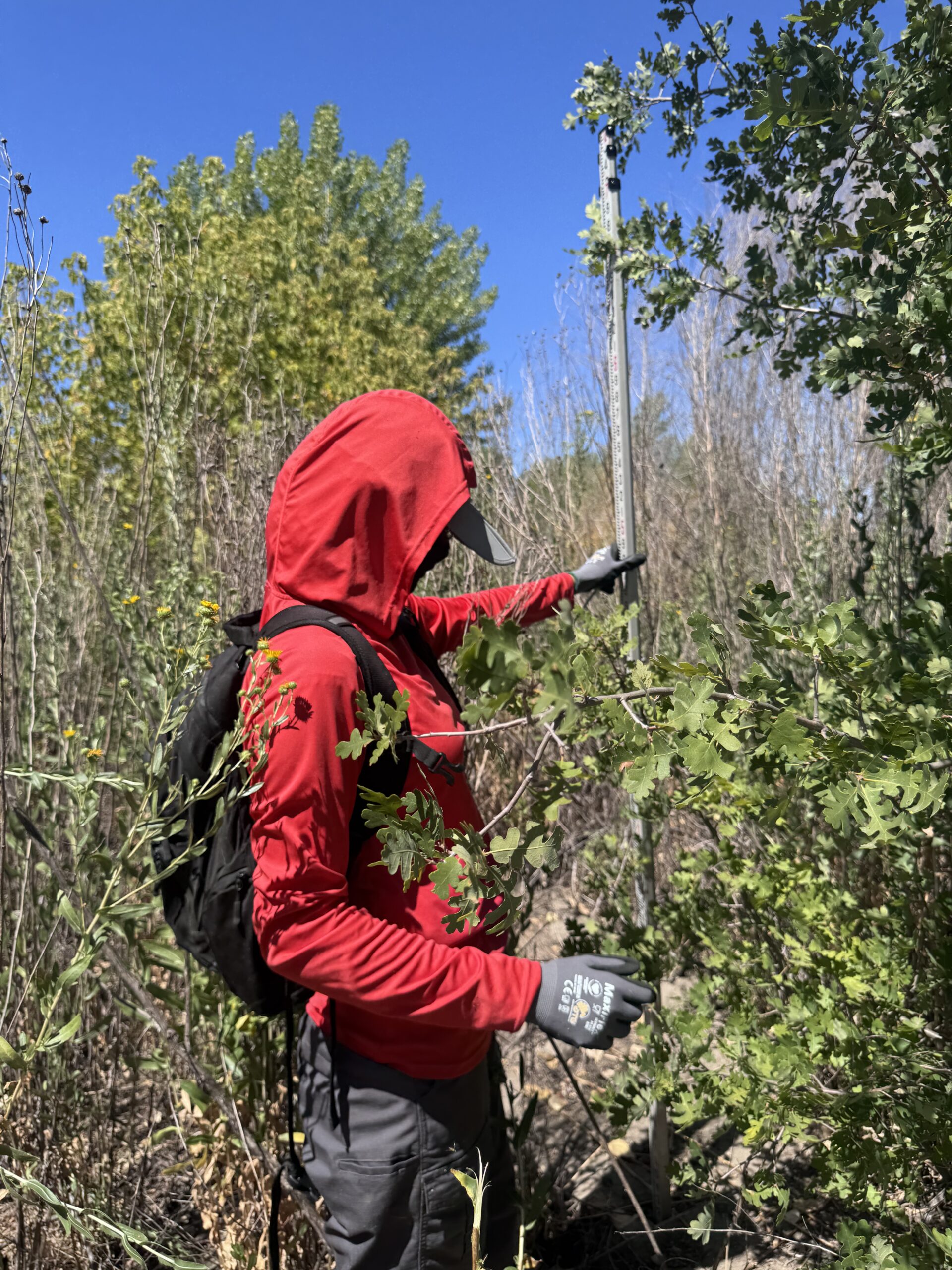
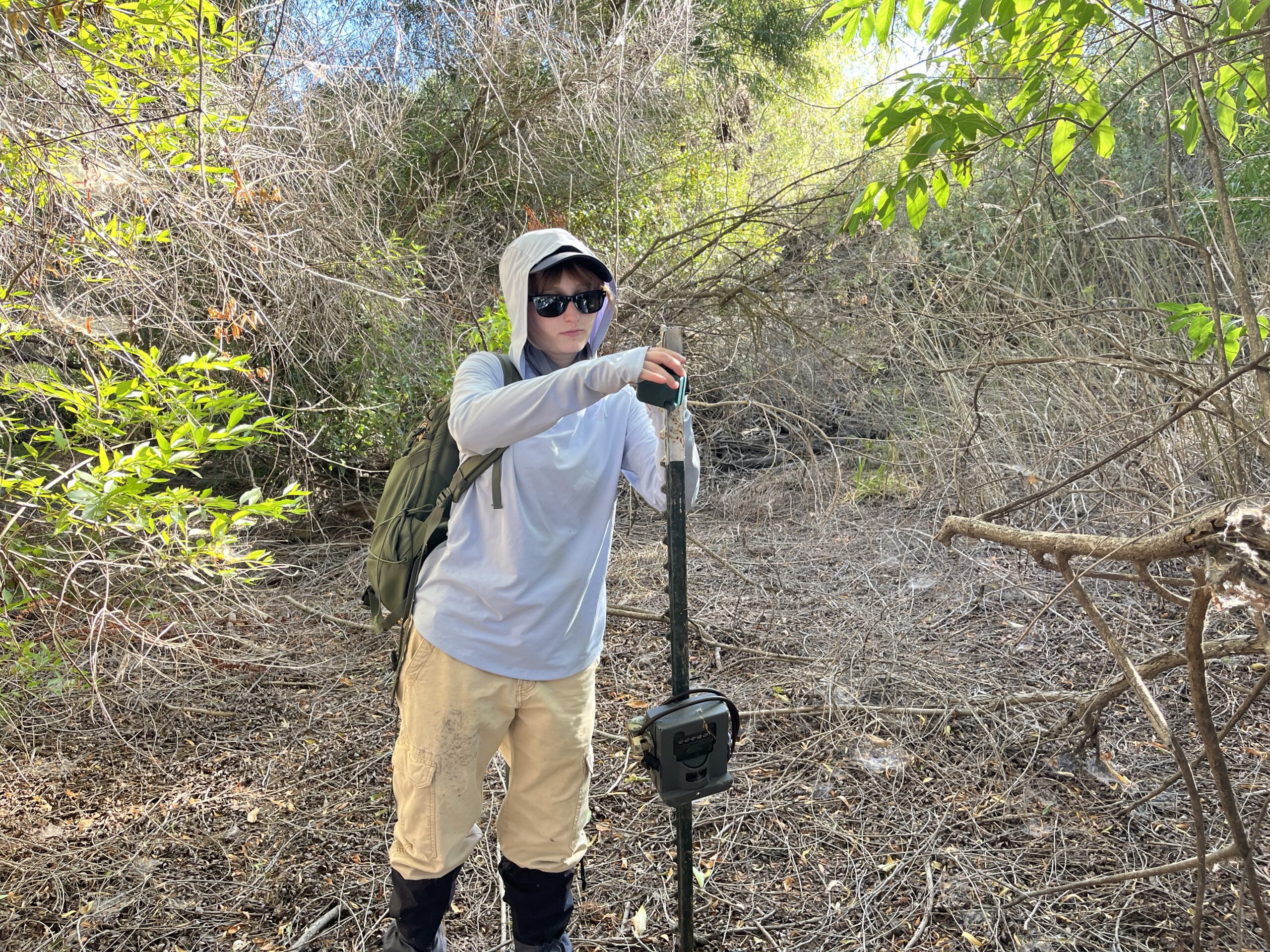
The Fellows were also exposed to a range of possible career paths. Robins would like to learn more about seed collection and native plant supply—the specialty of our native-seed nonprofit, Heritage Growers.
Mello realized opportunity resides close to home.
“I always thought that if I wanted to go into the natural resources world, I either wanted to or had to go outside of the Central Valley area,” Mello said. “I didn’t think there were that many opportunities out here, but this experience changed my whole perspective.”
As the internships ended, Cardona and Moore offered advice to future applicants.
“If you’re thinking about applying, I say go for it. If you’re hesitant, not sure you’re qualified, or if you don’t think you could get it, apply anyway,” Cardona said. “I also had some doubts. I was really green and thought there was no way they’d want to hire somebody in my position. But thankfully they took a chance on me. As long as you’re willing to learn, adapt, and if you come with a good optimistic attitude, you’ll be fine. It’ll be hard for sure, but really rewarding at the end of the day.”
“If you’re still in college, I would say make the most of this experience, learn as much as possible, and talk to as many people as you can. It’s a great opportunity to learn a lot,” Moore said.
Ultimately, Ferrara said, success isn’t measured by how many Fellows we have each year. It’s measured by what those Fellows go on to accomplish.
“The Fellows program becomes an extension of River Partners’ restoration mission. We’re restoring ecosystems and investing in the people who will have to continue doing that work for generations to come,” she said.