
 August 7, 2026
As the odds of a strong and possibly historic El Niño rise, so too have conversations surrounding the potential for increased flood risk in California this winter following a long, hot summer and prolonged fire season.
Climate Scientist Dr. Daniel Swain believes this winter’s El Niño could be historically strong—and he’s not the only one. More and more climate experts are joining the chorus that sees the strengthening El Niño potentially as one of this century’s strongest. But when it comes to the bigger picture, a warming California faces a number of potential extreme weather-related threats that extend beyond heavy precipitation and flood risk.
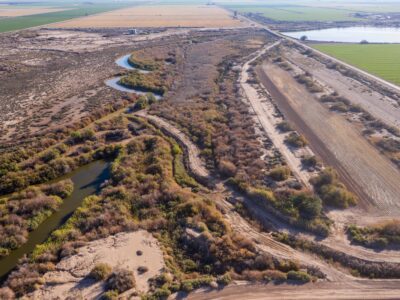
In Part 2 of our conversation with Swain about how our lives are being shaped by weather (Part 1 is here), he explores how River Partners’ 20,000 acres of restored floodplains alongside rivers reduce flood risk, build climate resiliency, and how California policymakers can help protect the state’s most vulnerable communities.
To read our July interview with Swain, please check out Part 1, “A ‘Very Significant El Niño Event’ Could Collide with California.”
River Partners has restored more than 20,000 acres of floodplains across California since 1998. From a hydrological standpoint, what does that kind of acreage mean for a major flood event?
It’s certainly significant acreage. And I think one key finding from recent research is that it would actually be really helpful to run some studies where you put these new projects through simulated extreme events to see what would happen if there was a really big flood on the upstream and downstream watersheds from some of these projects with and without the project intervention.
There has been some movement toward doing that and quantifying some of the benefit. It certainly isn’t the only benefit, but it is one of the more financially quantifiable benefits in the sense that a reduced risk of a very costly disaster, even a fractionally reduced risk, is worth a significant amount of money and money not lost, essentially, or money not spent in recovery.
Some studies have suggested that you can get significant benefits from projects on the scale of four-figure numbers of acres, and once you start getting up into the 10s of thousands of acres, that’s significant acreage. It depends on the topography: How much of that will allow the water to spread out within it? It depends on the subsurface and how readily that will allow water to infiltrate into the soil column and into aquifers. How quickly will it do so? Is it a really good place for recharge, and is the water constantly flowing out into the aquifer, or is it sitting there on the surface as a temporary lake, or is it a mix of these things?
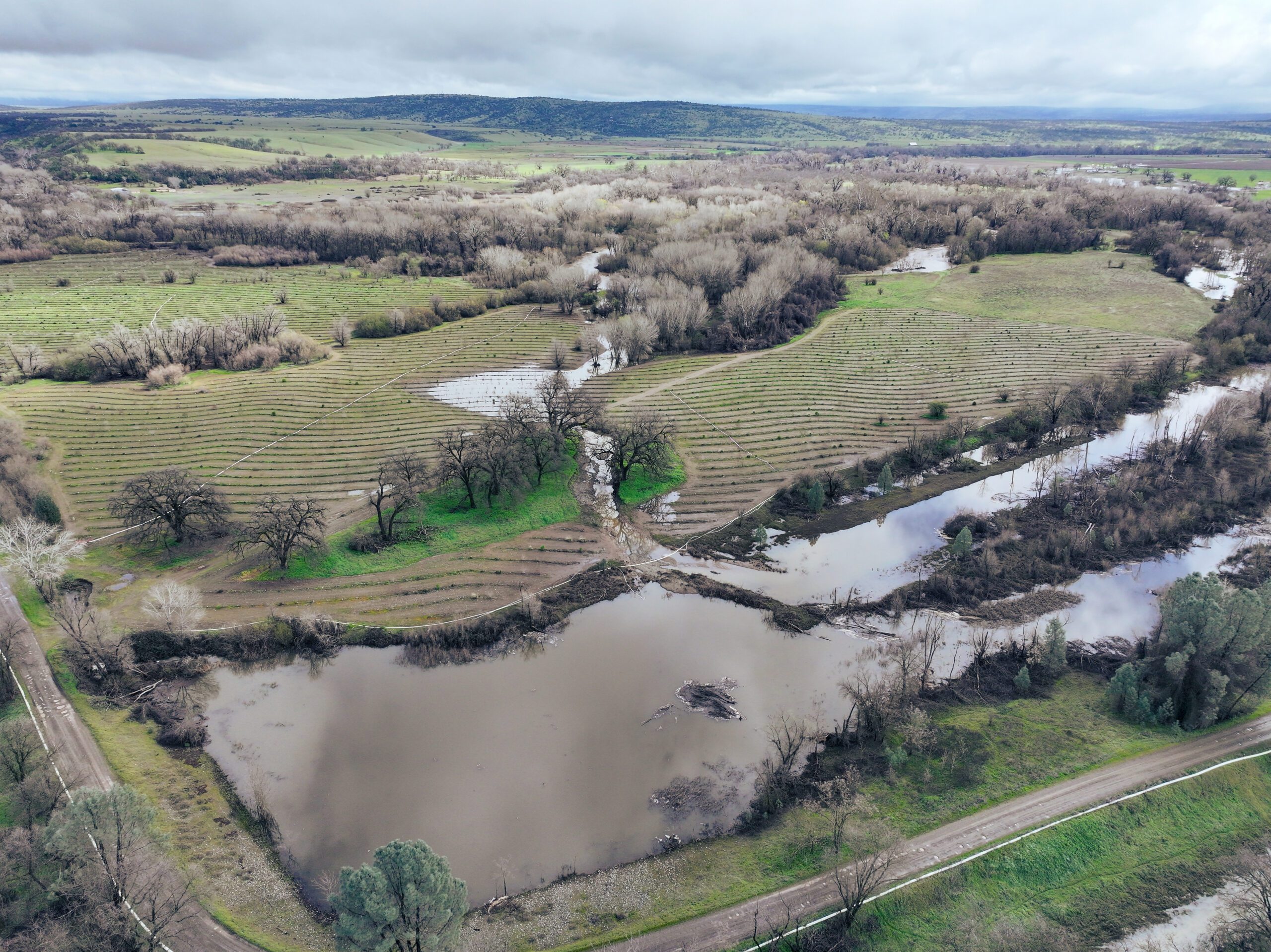
Since it’s a bit context-dependent, it’s hard for me to give a specific answer, but I think once we start seeing projects into the 10,000-plus-acre range, those are significant commitments, and I think those are the kind of scale of projects we’ll need in the Central Valley specifically, where there is a lot of land that is not developed as residential neighborhoods. There’s mostly agricultural land. There are some significant cities, other infrastructure, and some fallowed land. But there is room, at least theoretically, to do more of these large-scale projects and even larger.
In general, thinking big is necessary if some of the benefit that we’re going to quantify is the flood risk reduction, because it is the very biggest floods that threaten the greatest costs. Mitigating smaller floods is still very useful, but the real cost savings from a disaster loss averted perspective are probably going to come from even fractionally shaving off the severity or likelihood of a really big one, and that’s where those big projects really come in handy.
Has California’s investment and policy posture on floodplain restoration shifted since then, or is the state still being reactive?
I think there’s some mixed progress. I do think the conversation has shifted; it’s palpable. And, in speaking with the California Department of Water Resources (DWR) and folks in the Governor’s office and other local groups, this is something people are talking about at all levels of government. I don’t think that was true even five, 10 years ago. I think that’s a constructive shift. The conversations are happening. I think where the gap might still be is seriously moving to implement those kinds of projects at scale. There’s research going on, which is a necessary first step in many cases.
We need to move past the conversations, accelerate the research, and move into implementing some of these larger scale projects, sooner rather than later. If we get through this winter without any really serious flooding, it might serve as a helpful reminder about the value of these kinds of projects from a risk reduction perspective. If there is a big flood, it will further demonstrate why it would have been good to move even faster with these, and why the next best time is now.
You mentioned that 2023 could be viewed as a helpful reminder in risk reduction perspectives. You had an analogy between floodplain restoration and prescribed fire and the public’s perception of both. Has the framing for either or both moved the needle with policymakers or the public?
I think partly because there’s been such a dramatic, unignorable, repeated reminder of the wildfire risks rising in California through catastrophe, this is not a disaster-averted situation; it’s very much a disaster-after-disaster observed situation. It has raised the immediate crisis to the level that it’s become literally impossible to ignore. It’s intersecting with things like affordability, housing, insurance rates, and all these things that the average Californian is paying a lot of attention to, and their elected officials are paying a lot of attention to.
We are seeing an increase in the use of prescribed fire and in the public awareness of why it is being conducted and why it is useful. There still is also a lot of fear surrounding prescribed fire, a lot of which is because there are some misconceptions surrounding it. I think the analogy that’s also useful is not just that fighting fire with fire and flood with flood, in a sense, is the way to think about the paradigm, but also, some folks will say, “why would you intentionally want to flood an area?” I think the answer is the same as, “why would you intentionally want to burn an area?” And the answer is that floods and fires are both natural things at a certain frequency and intensity, in most cases, and are beneficial for most ecosystems and would have naturally been a part of that landscape since time immemorial, until we built stuff and put stuff in the way.

That analogy is really strong, but I think in California, the imagination is sometimes lacking when it comes to floods, because for most people, there isn’t a recent visual reminder of what that looks like. Whereas for fire, almost everybody in California has seen a wildfire at this point. It might be distant if you’re lucky, might be right up in your face and terrifying if you’re unlucky, but no one is completely insulated from wildfire smoke, evacuations, or insurance rates.
There are a lot of people in California, I think, who feel they’re very isolated from flood risk in a way that is still a communications challenge. And I think that’s why progress has been slower for flood than for fire. I continue to emphasize that we could have said the same thing about fire 20 years ago, where a lot of people thought it was out of sight, out of mind, and that it’s a problem for people who live in the woods. And then it really came home, literally, unfortunately, for a lot of people.
We have a window of opportunity to get ahead of the flood risk in this way and shift the conversation to being proactive rather than reactive. There are some signs that we’re moving in that direction, but I don’t think we’ve fully shifted yet. I think in terms of flood, we could still get ahead of it if we really ramp things up. And that’s why it’s so important to expand the public understanding of the benefits of floodplains and restoration and what groundwater recharge projects and co-conjunctive reuse projects are. They benefit ecosystems and can help mitigate drought risk, which is what a lot of people worry about. And even though it won’t be relevant most of the time, you’ll be really glad in the moments where it is relevant that you did that work in advance. In those moments it’ll be indispensable. But we have to be able to communicate in a way that forces people to use their imagination a little bit.
What’s the single most important thing that California can do in the next five years to reduce flood risk and improve water resilience?
In terms of getting stuff done, there’s a number of research projects demonstrating the benefits of some of these kinds of floodplain and aquifer interventions in California that have just come out. Some of these are the co-produced projects with DWR and others. I think moving quickly to say, “look at the benefits, let’s do some of this now and strike while the iron’s hot,” there’s an opportunity to implement some of the lower-hanging fruit quickly in a moment when there is recent evidence.
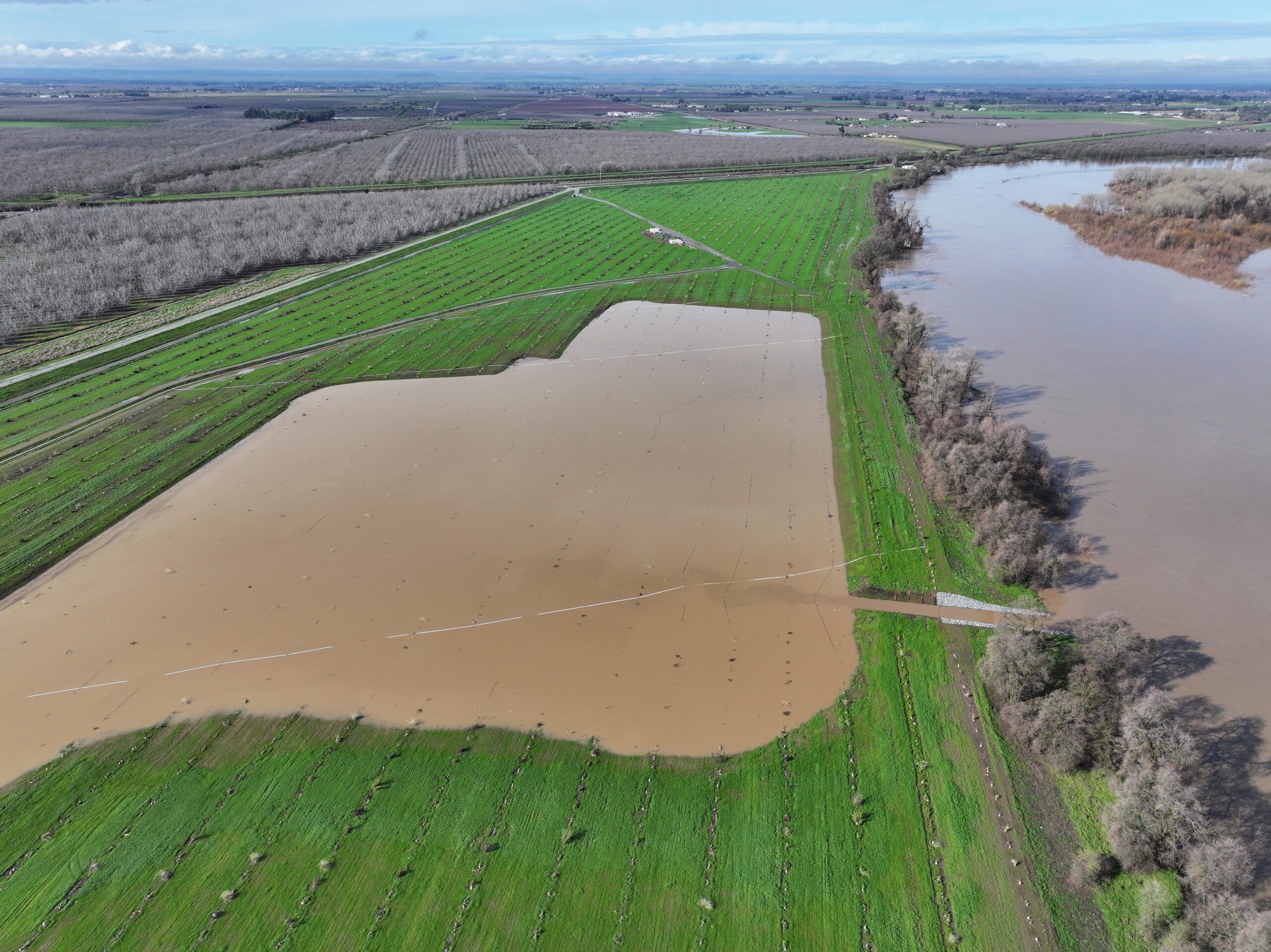
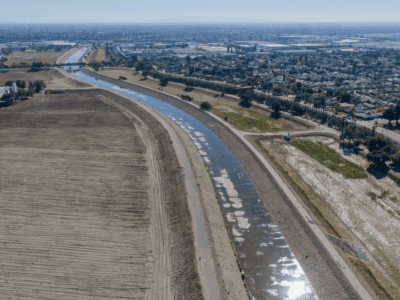
But there will be future floods to mitigate. So there’s still a lot of benefit to doing this, using recent experience as an example, because now that’s how it’s working with wildfire. I think there are critical vulnerability assessments that have been ongoing too. There are some life-critical infrastructure, levees in neighborhoods and dam auxiliary structures, dams themselves that are hopefully not in terrible shape, but in some cases are probably not up to the standard they would need to be to withstand a plausibly severe 21st-century flood event. There are some steel and concrete projects we probably need to do, but it’s more along the lines of shoring up these systems that we’ve already locked in.
In some cases that can be done fairly quickly, because you’re not building new infrastructure; you’re fixing or strengthening what’s already there. And there’s the other side where we now have pretty good scientific evidence, some of which has been co-created by state agencies, that the partnership is important to prove the benefit of nature-based solutions and these floodplain restorations. Thinking about both simultaneously, it really isn’t an either-or. No one wants the levees to collapse; that’s a bad thing. Everyone wants the spillways on dams to function as they’re designed to do. It’s not a situation where we need to decide between that and restoring floodplains; it’s got to be both. Nobody’s saying we don’t need CAL FIRE for wildfire; no one’s saying let everything burn. That would be a very different statement than saying prescribed fire, purposeful burning, is beneficial and can greatly reduce risk. It’s not saying we don’t need firefighters and fire engines and firefighting aircraft; we obviously do to prevent bad outcomes. It’s not an either-or; we need to be doing both, and maybe we’ll need a little bit less of one if we do more of the other, but they’re part of a harmonious balance if we can get to that point.
If there’s something positive we can take from a possible significant El Niño event in California, what would it be?
I think the most optimistic thing about a big El Niñoevent in California is that it gets us talking about a different side of California water, which is the overabundant side, rather than the dry side. I think it’s an important conversation to have, because of increasing hydroclimate whiplash and the expectation that that will certainly emerge in the near future, if it hasn’t already, and why this gives us an excuse to not have to use as much imagination to have that conversation. Regardless of what actually happens this winter, but particularly if this winter is very wet, it gets us talking about wet winters. It gets us talking about water and rivers and flooding and all of that again, and I think that is a useful conversation to have right now.
I think talking about flood risk is constructive right now. Talking about how floods and flows on rivers and floodplain restoration all work together in this network of gears where we’ve not had every single year be some terrible drought year in California in the last decade. It has been a mix of very dry years and very wet years, and we have seen a lot of both recently. People often think about water more in California during the dry years because of scarcity; this is what makes the news. In some ways, it’s more visible because the really, truly disruptive floods are so infrequent historically. But when we really do get truly big floods, they will dwarf the consequences of the worst droughts.