
 May 28, 2026
River Partners restores riverside habitat to bring life back to California’s rivers—and wildlife tell us it’s working. River Partners teams keep a close eye on what’s returning, and this month, the wild came to find them—right outside our Chico headquarters.
To learn more about what our teams are seeing in the field, check out the other installments of our “Eyes in the Wild” series here.
Chico Headquarters (Butte County)
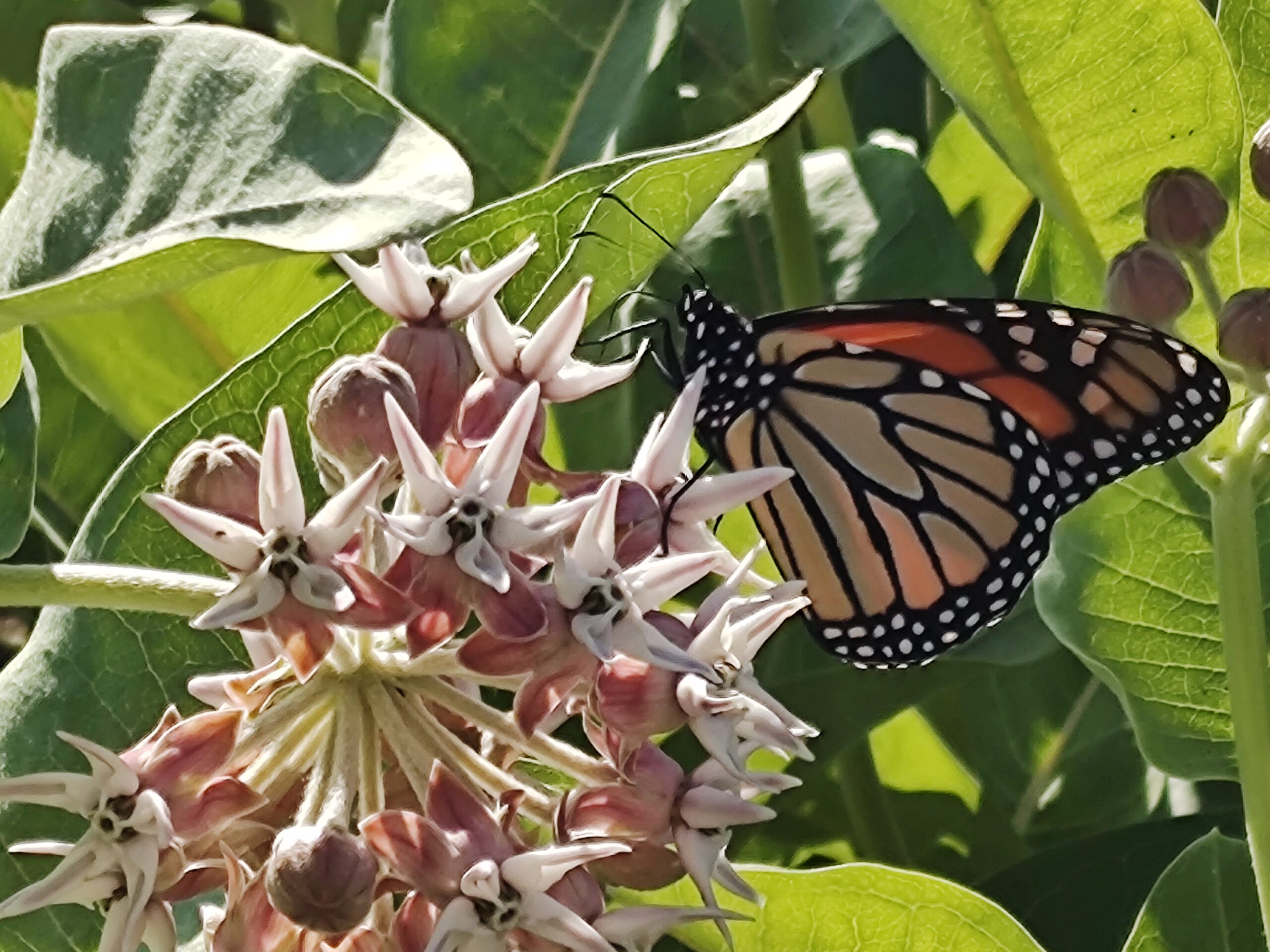
The “Eyes in the Wild” series typically shares wildlife sightings spotted at restoration sites, but this month want to highlight something at our Chico office. Instead of typical landscaping ornamentals, we have a small native plant garden with native plants. These relatively tiny habitats can be vital for wildlife, especially pollinators, and there are even programs that recognize home gardeners. Safety and Office Administrator Mona Dagy planted milkweed plugs here five years ago. Year after year, she and our Chico staff waited to spot a Western monarch butterfly here. When the moment finally arrived, Associate Restoration Scientist Jeremy Dustin saw this beautiful butterfly and snapped this photo.
We can learn several important things about this monarch with context clues: Given that this monarch is a male—determined by a black dot on its hind wing called a “field mark”—and was spending time in the milkweed flowers in mid-May, it was probably dining on the energy-rich nectar for its flight across the Sacramento Valley. If it had been a female, it would either have been drinking nectar or searching for a safe spot to lay her eggs. Since milkweed is the only plant monarch caterpillars can eat, the adult female will first taste the plant with her feet to confirm it is indeed the correct species before depositing tiny, single eggs on the undersides of the leaves or near the flower buds. By laying eggs on milkweed, she ensures her future caterpillars can feed on the plant’s milky sap. And because milkweed is a toxic plant, the caterpillars and eventual butterflies will be toxic to predators like birds, a defense mechanism advertised by their bright colors.
Four decades ago, Western monarchs numbered around 4.5 million. Today, the population has declined by more than 99 percent, driven by habitat loss, pesticide use, and climate change. Our window to reverse the trend is narrowing fast. But River Partners is committed to a bold goal: planting 15 million milkweed plants for monarchs across California by 2030. River Partners is doing its part to help the monarch by adding milkweed seeds to plugs too all of our future restoration project plans, from the Northern Sacramento Valley to the San Joaquin Valley to the Imperial Valley. Our nonprofit native seed venture, Heritage Growers, is providing the seeds and plants for the vast majority of these efforts.
Dos Rios State Park (Stanislaus County)
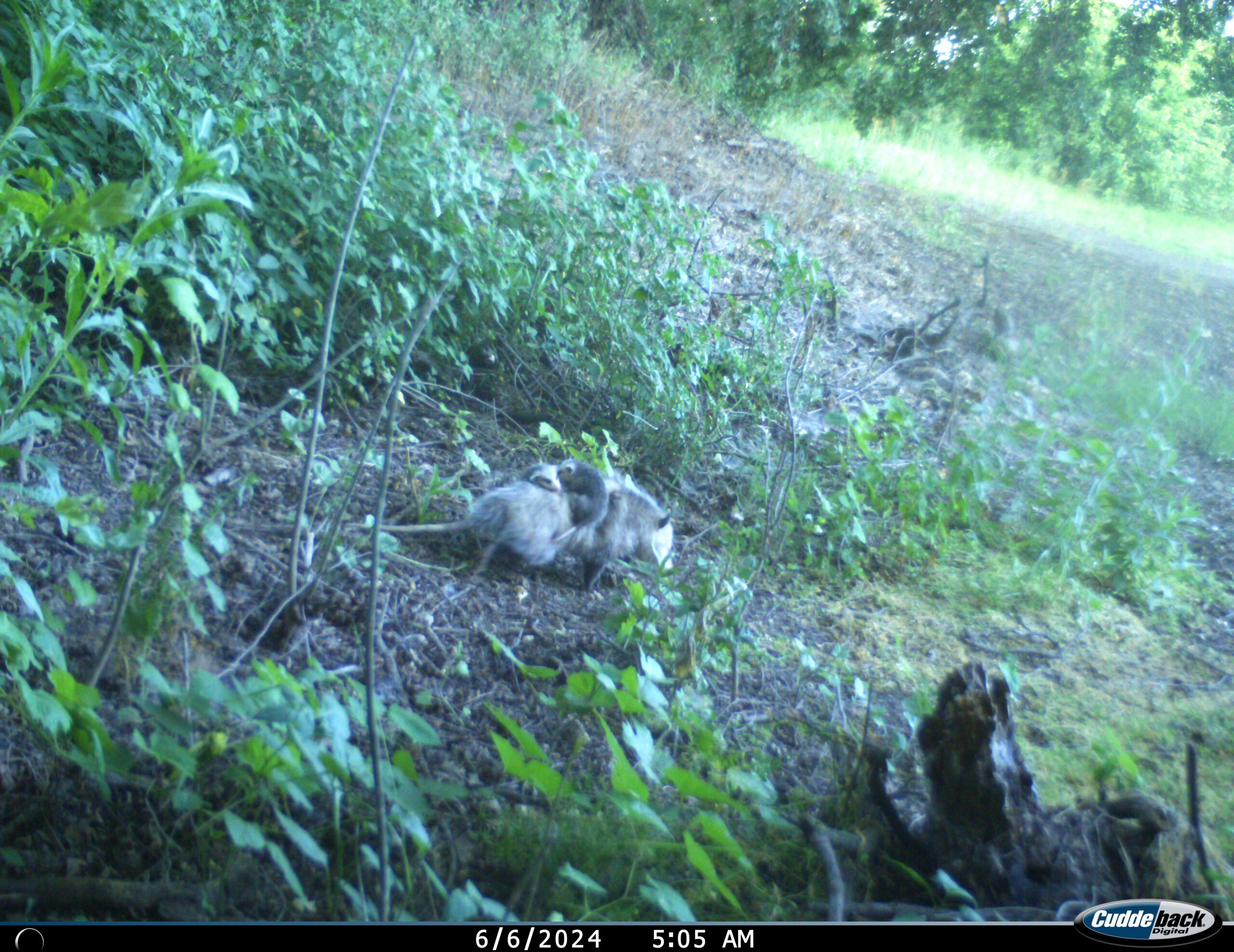
Camera traps provide insight into the wildlife that uses restored habitats around our state and can help guide our future restoration efforts. They also capture wildlife at their most candid. Here, a camera trap within our crown jewel restoration project, Dos Rios State Park, which two years ago became California’s first state park in over a decade, shows a Virginia opossum carrying her babies. Judging by the time of day, they may be heading home from a night of scavenging.
The Virginia opossum is the only native marsupial in North America. They are extremely adaptable and thrive in the San Joaquin Valley’s riparian corridors and agricultural areas—features that define Dos Rios State Park.
Opossums aren’t picky eaters, which helps them survive in a wide range of environments. From hunting for beetles, crickets, and snails to noshing on fruits, berries, and leafy greens, these marsupials are true omnivorous scavengers. They’ll also eat mice or rats, find what they can in neighborhood garbage cans, and feast on dead animals.
A very high reproductive output allows opossums to be extremely resilient as a species. Depending on the climate, a female could have one to three litters per year. After a gestation period of only about 13 days, the tiny young (about the size of a honeybee) are born and crawl into the mother’s pouch to continue growing. After about two months of development, they’ll begin to emerge from the pouch. When they’re not quite ready to fend for themselves, the babies start riding on their mother’s back, using their strong claws to grip onto her fur while she moves around to forage.
Imperial-Wildlife Area, Finney-Ramer Management Unit (Imperial County)
This spring, Associate Restoration Scientist Samantha Licona walked around the Finney-Ramer restoration site River Partners is leading with the California Department of Fish and Wildlife and California Conservation Corps, south of the Salton Sea. Checking on a black willow tree River Partners planted as a cutting, she saw a handful of bees around the tree and took note. The next day, she returned to the same tree and saw a very different scene: a classic honeybee swarm. Hundreds, if not thousands, of worker bees clustered together on the black willow tree branch, surrounding their queen, protecting her, and keeping her warm, a natural part of a honeybee colony’s reproductive cycle.
“At first, I had no idea what it was from afar, but once I started getting close, I noticed it was honeybees,” Licona said. “They were very calm since it was early in the morning, and pollinators tend to be more active in the afternoon when the weather warms up. It was very special to see that they chose to rest in a black willow tree that River Partners planted.”
When a honeybee colony gets too crowded, the old queen and about half of the worker bees engorge themselves on honey and leave the original hive to find a new home. While a small group of scout bees flies around the area looking for a suitable cavity for a new home, the rest of the cluster waits patiently in a temporary shelter—just like the one in this willow tree.
While the swarm here looks intimidating, honeybees are at their least aggressive when while in a transitional swarm state. Because they have no home, no honey stores, and no young to defend, they have very little reason to attack. They’re mostly just resting and waiting.
Panorama Vista Preserve (Kern County)
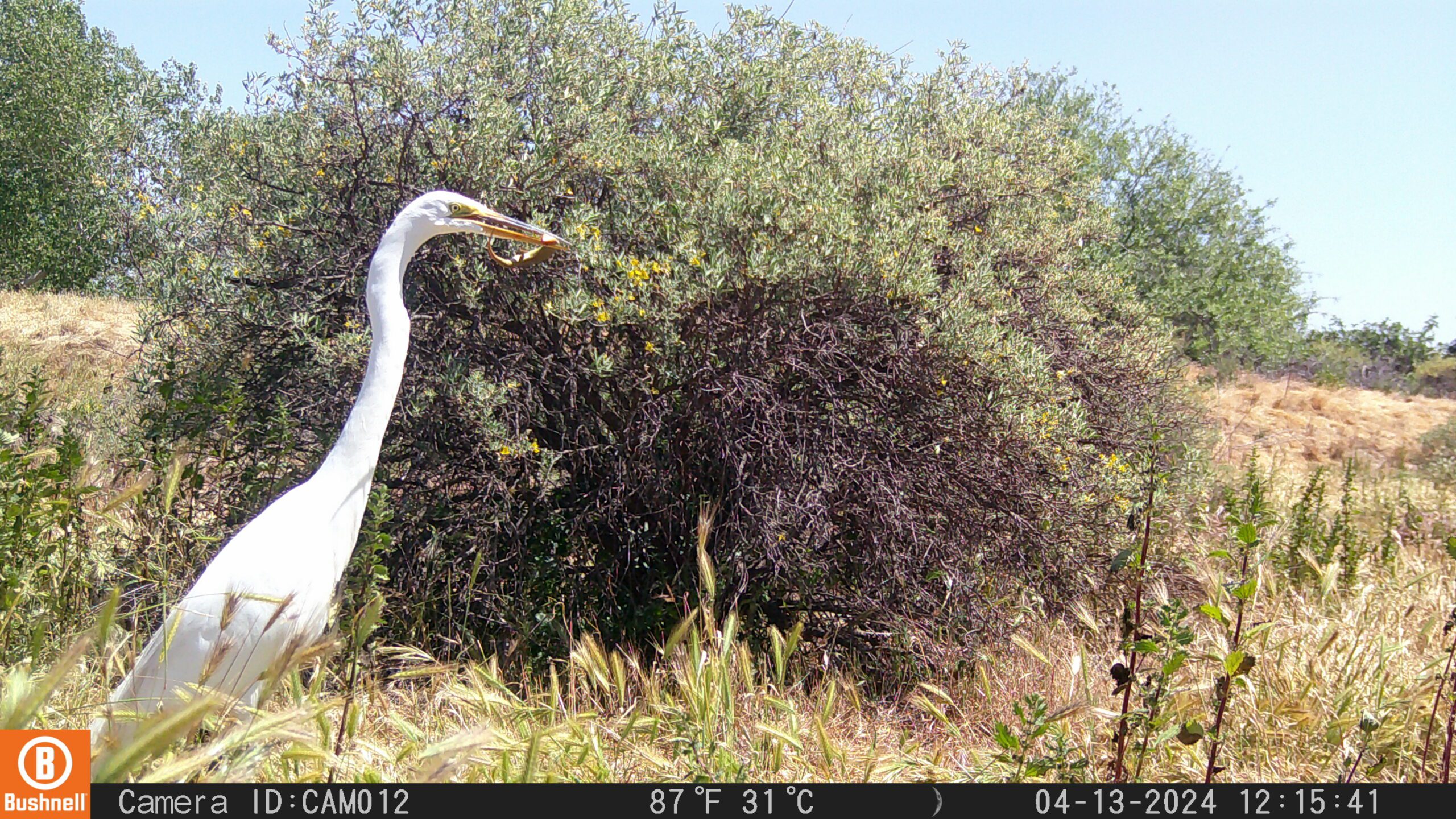
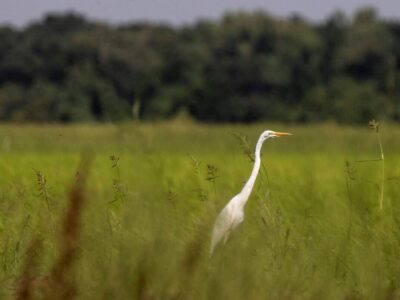
It’s mealtime for this great egret at the 935-acre Panorama Vista Preserve (PVP), restored by River Partners north of the Kern River in Bakersfield. Sitting near the top of the local food chain, great egrets are opportunistic carnivores and provide effective and essential pest control in the San Joaquin Valley. They’ll look for food in the water (small fish, frogs, and aquatic insects) and on dry land (hunting for lizards, snakes, and small mammals, as well as large terrestrial insects like grasshoppers and beetles). To snag this meal, it could have employed its signature hunting style: standing totally motionless or stalking with slow, deliberate steps through tall grass before delivering a lightning-fast downward jab to grab its prey.
Great egret populations are strong in the San Joaquin Valley—but that wasn’t always the case. They were hunted to near extinction in the late 19th and early 20th centuries for their elegant breeding features to decorate women’s hats. This news sparked public outrage and led to the establishment of some of the world’s first bird preservation laws (like the birth of the National Audubon Society, check out its logo).
The great egret still faces modern challenges. Relying heavily on wetlands and agricultural landscapes in the Central Valley, they are impacted by habitat loss from urban development, water diversion and drought, and pesticide contamination, which can poison their food chain. So, protecting and restoring the Central Valley’s seasonal wetlands and riparian corridors (all of which River Partners does) is critical to keeping their numbers strong.