
 May 25, 2026
When you step into the warehouse at Heritage Growers, on the surface it might look like any number of farming operations in California’s Central Valley. It even smells like your average farm shed—like dried grass and dust. In the background, you’ll hear the hum of a mill.
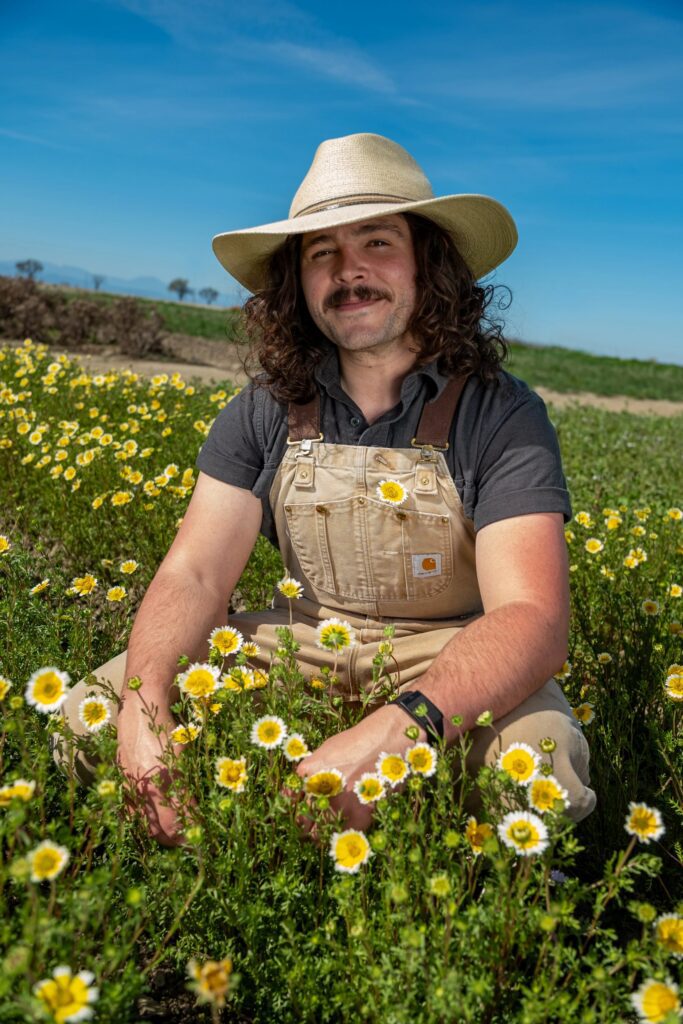
Photo: Joan Bosque, Heritage Growers
But this mill isn’t handling your average crops. It’s processing something that restoration projects across California urgently need and can have a difficult time sourcing: native seed. Restoration-quality native seed is not available in abundance, prices are often high, and demand outpaces supply—creating a bottleneck that stands between California’s landscapes and the large-scale recovery they need. Heritage Growers exists to change that.
“Most people don’t really know that you can farm native plants,” says Mason Shorts, Director of Farming Operations at Heritage Growers. “When I tell somebody I’m a farmer, they think I’m just a farmer. They don’t really think about what that could mean.”
What it means, in Shorts’ case, is overseeing one of only a handful of operations in California dedicated to growing, harvesting, and cleaning native seed at scale—seed that will one day become the meadows, wetlands, grasslands, and riparian corridors restored by public agencies, private conservation groups, and many others working to bring back biodiversity across the state. Heritage Growers, which River Partners launched in 2021, supplies the raw material for ecological recovery: acres upon acres of cultivated native species, grown from source-identified wild seed stock that gets amplified from a handful of seeds to hundreds of pounds of seeds on the farm.
As Shorts puts it: “At the end of the day, we are not going to make the impact that is needed without large-scale seed amplification like this.”
An Unexpected Calling
Shorts didn’t set out to become a native seed farmer. He studied crop science at Chico State, drawn by a lifelong fascination with plants but unsure where it would lead. The conventional paths—pesticide management, commodity agriculture—never quite fit.
“A lot of the jobs that come out of that degree are centered around standard agriculture, working with pesticides and managing weeds,” he says. “That never really sat well with me.”
Then a friend who’d been working at Heritage Growers during its inaugural year mentioned the position was opening up. Shorts had never worked with native plants. He’d never heard of a job like this.
“I never even knew a job like this existed,” he says. “I interviewed, and from there I kind of fell in love with it.”
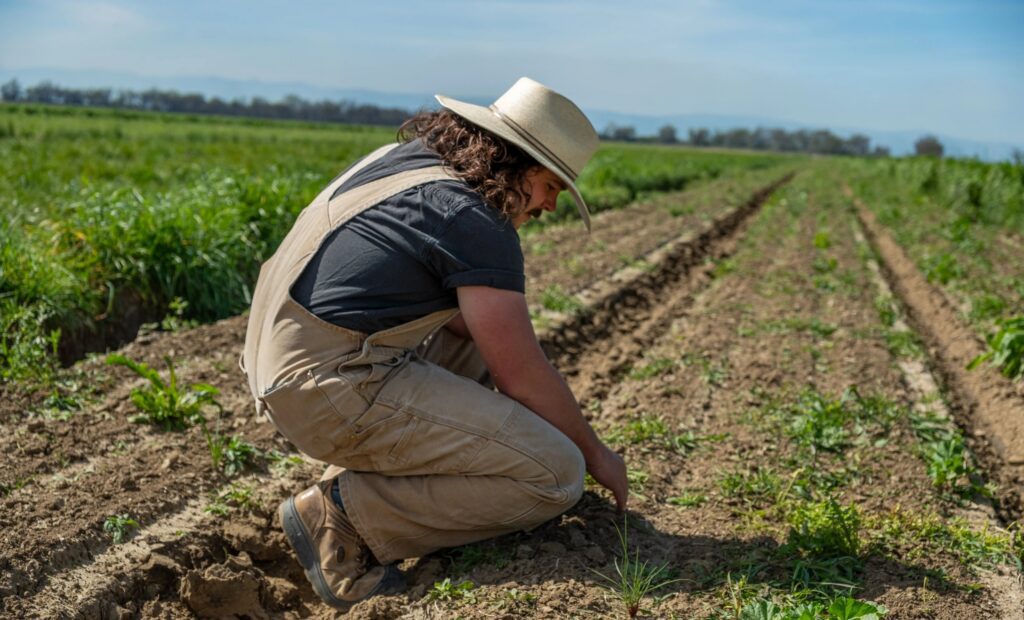
He started as an assistant farm manager three years ago and has been immersed ever since—learning species by species, season by season, building expertise in a field where textbooks or guides essentially don’t exist. There’s very few people farming native plants at this scale.
No Two Days Look the Same
Ask Shorts to describe a typical day and you’ll get a list that keeps growing. He checks in with the mill operator first thing, running quality control on the seed coming off the cleaning lines and pulling samples for laboratory testing.

Then he moves to the wildland and small-lot cleaning crews, troubleshooting species that don’t behave like anything in the manual—except, well, there is no manual.
From there, it’s out to the fields.
“If we’ve gotten rain, we’re checking to make sure everything’s draining, things aren’t getting flooded,” he says. “Once a week I do an actual data collection—I walk through all of our fields on foot and do a detailed look at every single species.”
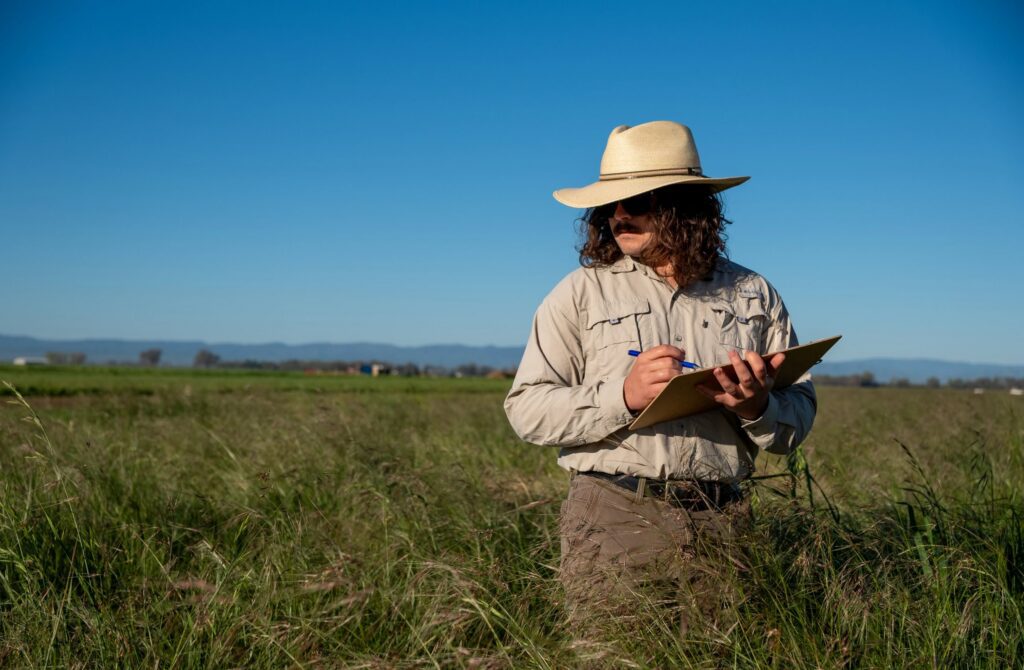
Right now, in late winter, he’s watching for germination and the first signs of flowering. In a few months, he’ll be tracking seed set and ripeness, determining harvest windows down to the day. After the field walks come the emails, the client meetings, the farm planning that never really stops.
“We just finished planting a few months ago,” he says. “Now I’m figuring out what’s getting taken out for the year, how many acres we have available, and what’s going in come October.”
Harvest season, cleaning season, planting season, planning season—they blur together into a cycle that keeps Shorts moving year-round.
When There’s No Playbook, You Write One
Perhaps the most remarkable part of Shorts’ work is how much of it has been figured out from scratch. Native seed cleaning is not commodity agriculture. The equipment available on the market is built for beans and corn, not yarrow and milkweed. The settings, or growing approach, that work for one ecotype (a genetically distinct population within a single species that has adapted to the specific environmental conditions of its local habitat) of a species collected in Northern California may fail completely on the same species gathered from the south.
“We’ve worked with hundreds of different species and ecotypes, and what we quickly learned is that even though we’re cleaning the same species, a lot of these ecotypes are completely different,” Shorts says. “We could have settings that work perfectly for a yarrow from up north, and then we start cleaning one from down south and realize none of it works at all.”

The solution has been equal parts research, improvisation, and invention. Shorts and his team have modified commercial machinery, built custom equipment, and developed cleaning techniques by studying crops with similar seed shapes and sizes—then adapting those approaches through relentless trial and error.
“It’s been a lot of researching, a lot of tracking, a lot of mistakes,” he says. “But we’ve finally got it to a point where we have a good rhythm down.”
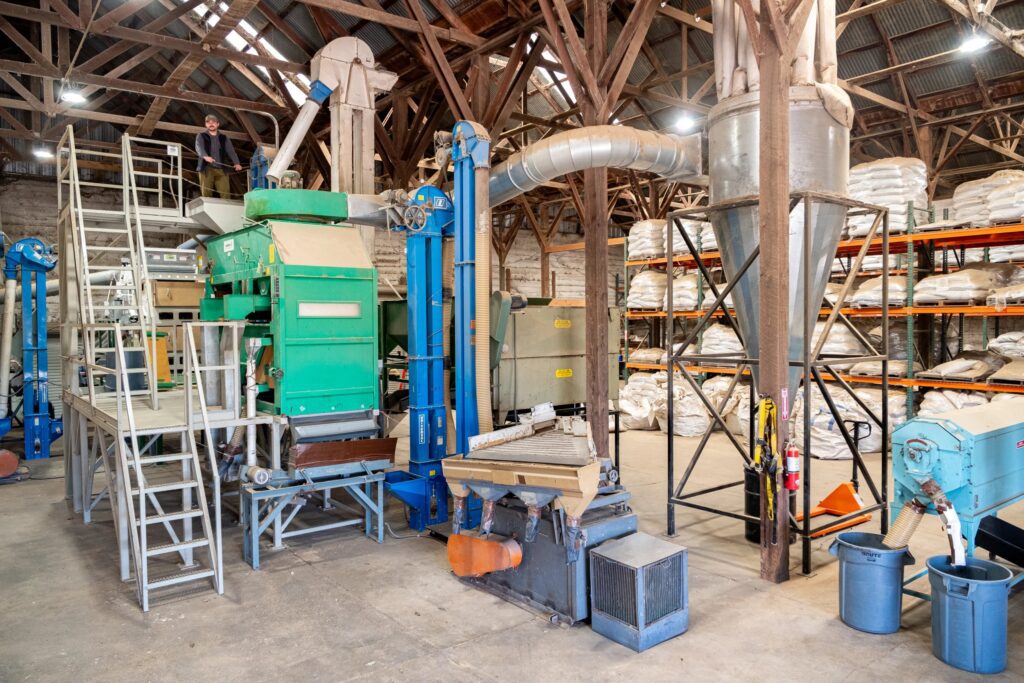
That hard-won knowledge isn’t staying behind warehouse walls. In May, Shorts presented on native seed cleaning techniques at the California Society for Ecological Restoration (SERCAL), the state’s premier ecological restoration conference, aiming to give small producers and nurseries a starting point and new ideas.
“There’s not a whole lot out there if you look for how to process native seeds,” he says. “A lot of people just don’t know where to start. I’m excited to be able to provide that starting point—how you can do this in the field, how you can set stuff up at home. Not everyone needs the fancy equipment we use at amplification scale.”

Ultimately, Shorts hopes to consult with other farms and inspire more to produce native seed.
Growing Industry Standards Together
Beyond the daily work of growing and cleaning, Shorts has spent the past year and a half working on a team to reshape the entire framework of accountability for native seed in California. As part of a working group with the California Crop Improvement Association (CCIA), he’s been instrumental in developing certification standards for source-identified native seed—standards that, remarkably, hadn’t existed in any formal way.
“If you buy rice or meat off the shelf, it all has to pass a certain standard before it goes to market,” Shorts explains. “Native seed kind of falls under this gray area where there’s not necessarily set standards. So it can be hard for customers to really trust what they’re getting.”
The certification process the group has built is rigorous. CCIA inspectors verify collection sites, confirm species identity in the field, check farm plots for noxious weeds, and review laboratory seed tests before issuing what’s known as a “yellow card”—official certification that a seed lot is what it claims to be, from where it claims to be, and meets defined thresholds for purity and germination.

So far, the working group has established standards for close to 200 species. It’s a foundation, Shorts says—one that will keep evolving as the restoration industry grows.
“We want to make it achievable for producers while still ensuring customers aren’t being harmed,” he says. “It’ll continue growing and evolving, and hopefully it’ll eventually get to the point where this is the standard for most farmers.”
The work is tedious, but it matters. Building standards industry-wide creates a foundation of trust that California’s restored landscapes increasingly rely on.
Restoration Is A Team Effort
Every successful restoration effort—whether it’s stabilizing a roadside margin, controlling erosion after a wildfire, revitalizing a stream or river corridor, reclaiming a forest understory from invasive species, or greening an urban park—begins with the right native seed, and a whole team of people who bring that seed to market.
And someone has to grow it, harvest it, clean it, test it, and certify it. Someone has to know that this one ecotype needs different mill settings than that one, that this species is ready to harvest on Tuesday but not Thursday, that the germination standard for lupine is different from the standard for needlegrass, and that the rain will come when it wants to come and someone must ensure the seeds are in the ground before it’s too muddy.
That someone, at Heritage Growers, is Mason Shorts.
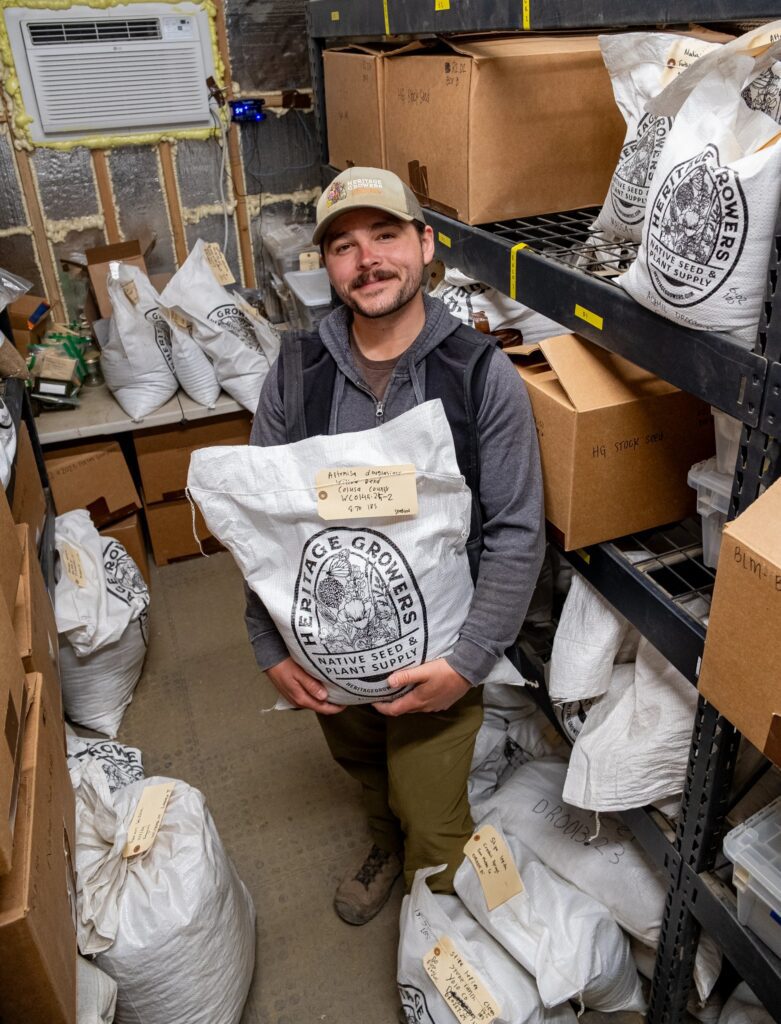
Even if this wasn’t what he thought he was going to school for, now that he’s three years in, he’s become one of the people making large-scale restoration possible. But he can’t do it alone. He knows that true success looks like collaborating, sharing knowledge, and inspiring others to join—there’s simply too much need for seed.
“In five years, I want to be able to look back and say that we have inspired other farmers. I don’t want to do this by myself,” he says. “We work as a team at Heritage Growers, and we need to remember large-scale restoration isn’t a solo operation, it’s a team effort.”
Restoration Heroes is a series about the dedicated and often under-recognized people behind River Partners’ statewide work—field crews, scientists, seed collectors, partners, and supporters—whose dedication makes the extraordinary work of restoring California’s rivers and communities possible.