
 February 25, 2026
This past November, volunteers counted fewer than 13,000 western monarch butterflies overwintering along the California coast—the third lowest tally in nearly three decades of monitoring. The three lowest counts on record have all come in the last six years.
“Western monarchs are in serious trouble. The migration is collapsing,” said Emma Pelton, a senior conservation biologist with the Xerces Society, which leads the annual Western Monarch Count and is a long-time partner of River Partners. “Our window for action is narrowing, and our conservation efforts must accelerate.”
River Partners has responded with the largest coordinated monarch recovery effort in the West: 15 million milkweed plants by 2030. The milkweed—the only food source for monarch caterpillars and nursery for their eggs—will be planted in a primary monarch migration corridor, from Redding in Northern California to the Imperial Valley near the Arizona and Mexico border.
It’s an ambitious target, set against a grim backdrop. In the 1980s, western monarchs numbered around 4.5 million. Today, the population has declined by more than 99 percent, driven by habitat loss, pesticide use, and climate change. Our window to reverse the trend is narrowing fast.
Why The Central Valley is Key for Western Monarchs
The key to understanding the best opportunities we have to save monarchs is the same reason they are so remarkable—they don’t stop for long in one place and travel vast distances.
Each spring, monarchs leave their overwintering groves from Mendocino to Baja California and push inland. The first place they breed is California’s Central Valley, which makes it “Priority 1” in monarch conservation plans.
Multiple generations are born as the population fans out east toward the Rocky Mountains. Then, a final “super generation” emerges in late summer—butterflies built to live up to nine months instead of the usual four to six weeks. Those butterflies make the long push back to the coast. Eastern monarchs echo the same journey on the other side of the Rockies, moving from Mexico to as far north as Canada before turning around to overwinter down South again.
No single butterfly completes the full round trip. Monarch migration is a relay race passed across generations.
This is exactly why the Central Valley and other priority breeding areas are so critical for western monarchs. They even use rivers as migration pathways, where they can find a steady supply of water, habitat, food, and shelter needed to make the full migration. “If monarchs lose their ability to breed in the Central Valley, we lose the entire population,” says River Partners Director of Science Michael Rogner. “There will be no further generations to continue the migration.”
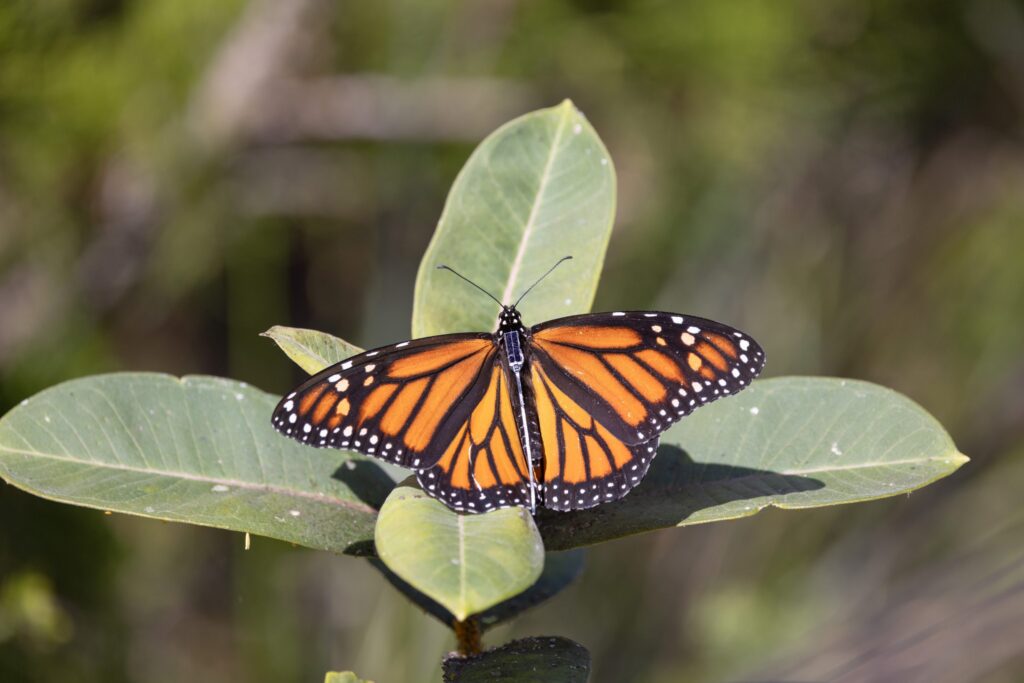
Milkweed is foundational habitat for monarchs. Monarch caterpillars feed exclusively on its leaves, and females lay eggs nowhere else. The plant has disappeared from much of the West due to development and herbicide use. Without enough milkweed, the relay race of migration breaks down. “We know monarchs can travel from wherever they are with an egg and die before they ever find any milkweed,” Rogner said. “We need more milkweed out on the landscape so that doesn’t happen.”
Building the Foundation
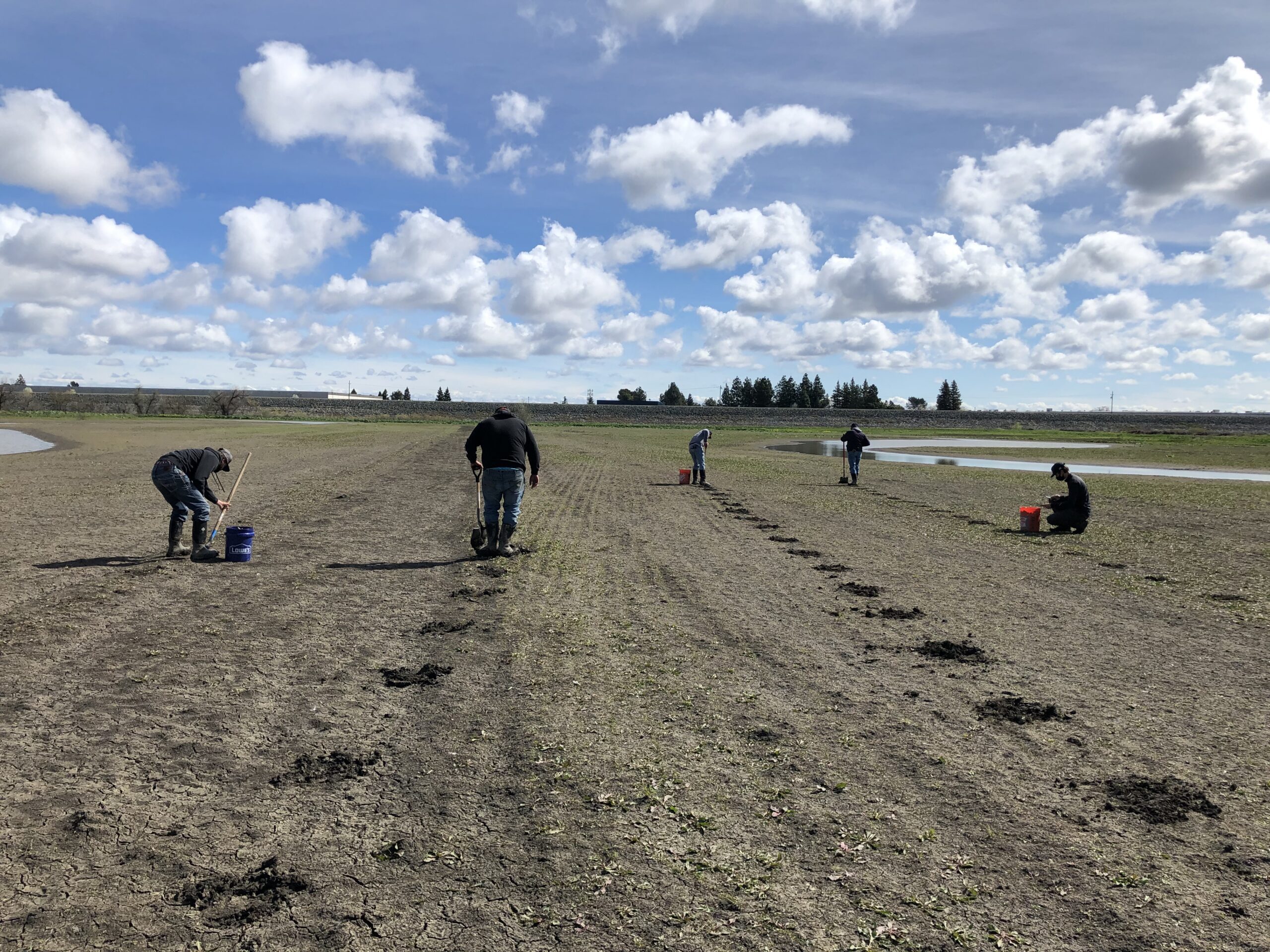
River Partners began scaling up its monarch work in 2020, partnering with the Xerces Society, California of Fish and Wildlife, Washington State University, and other organizations to plant more than 30,000 milkweed plants across 600 acres of priority habitat throughout the Central Valley. When the milkweed went in, the monarchs found it immediately. So, River Partners decided to keep going.
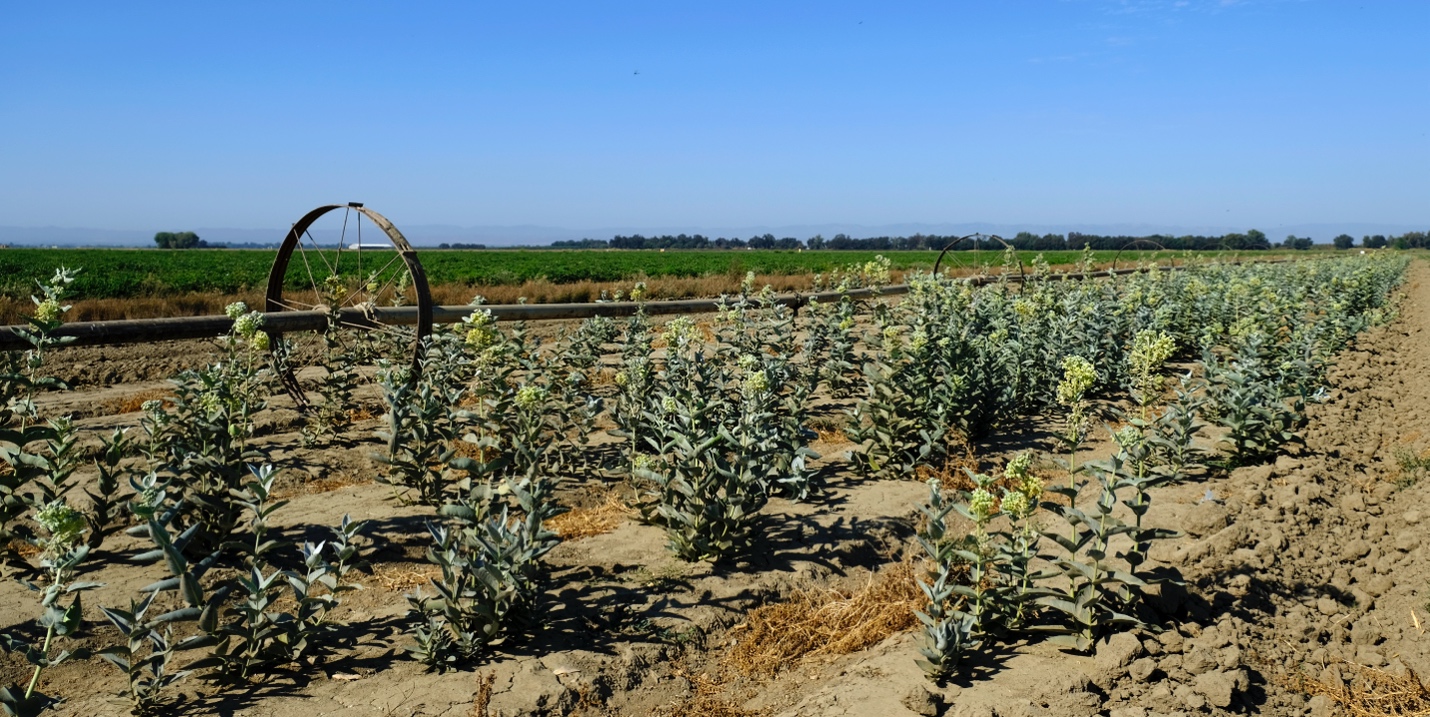
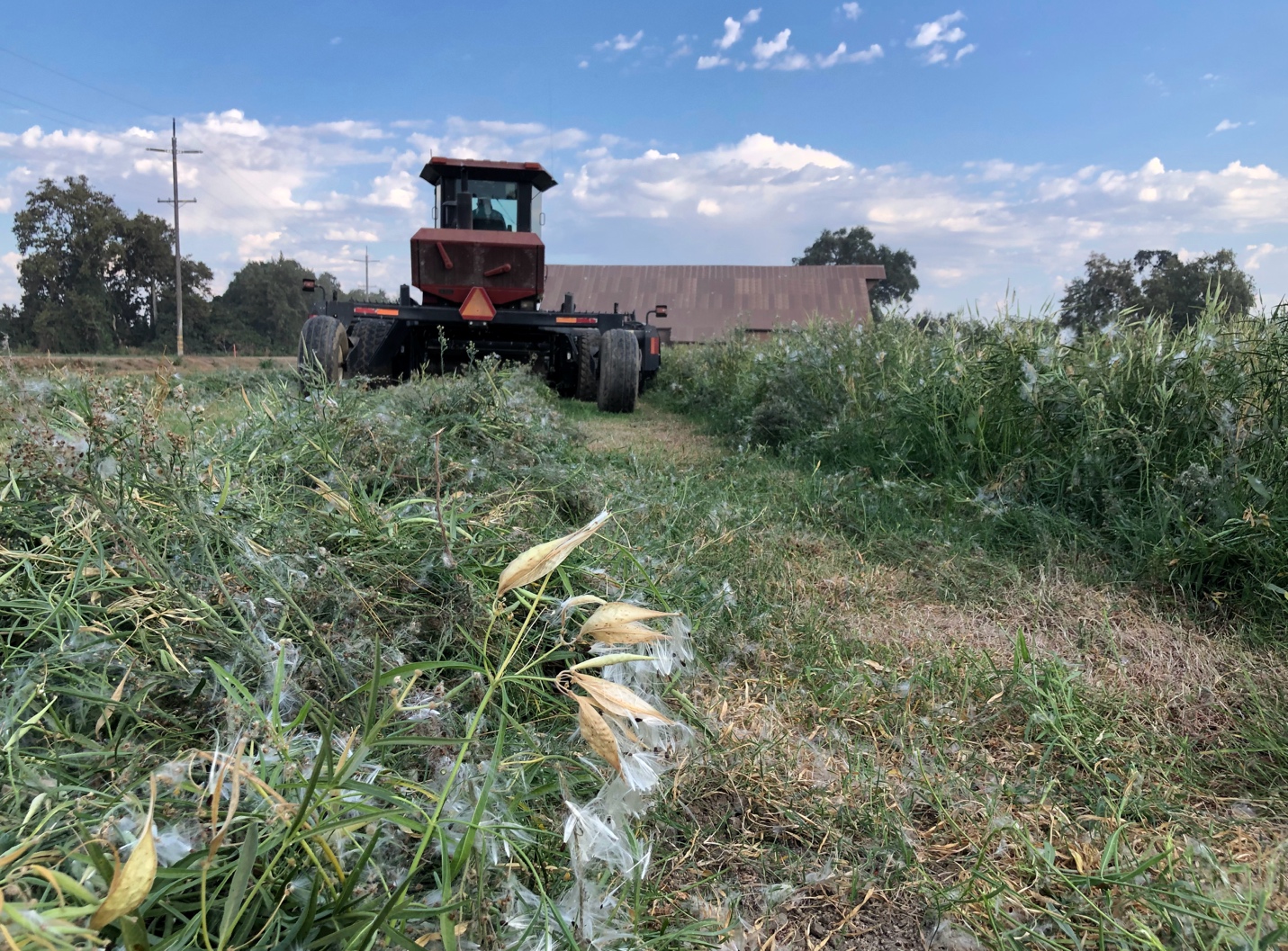
The new goal is exponentially larger. Reaching 15 million milkweed plants by 2030 means solving a seed problem most people don’t think about—you can’t harvest that much milkweed seed from wild populations without damaging them. Heritage Growers, River Partners’ 200-acre native seed farm near the town of Colusa in northern California, is cultivating milkweed specifically for restoration, amplifying what the wild can’t provide on its own.
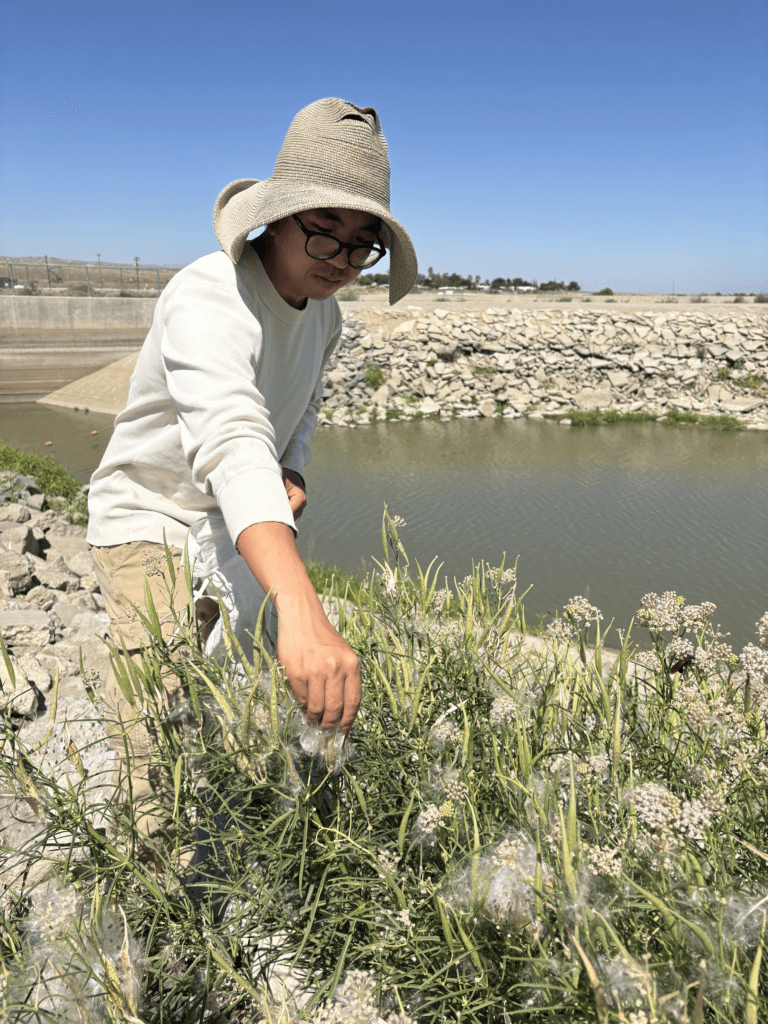
Heritage Growers Wildland Seed Collector Haleigh Holgate spends much of her time scouting for wild seed up and down California, tracking harvest windows that close fast. “Sometimes you have just a couple of days where the window to harvest seed is right,” she says. “And you can’t miss it.”
Heritage Growers cultivates three main milkweed species for restoration: narrowleaf milkweed (Asclepias fascicularis), which is the most abundant across the valley and has a remarkably long window for both bloom and seed collection (which Holgate noted with relief); showy milkweed (Asclepias speciosa), which grows in smaller, scattered stands; and desert milkweed (Asclepias erosa), critical for monarchs in the southern part of the state.
The scale of River Partners’ restoration is important here, too. Researchers have found systemic insecticide residue in milkweed tissue far from the nearest farm—meaning plants that were never directly sprayed may still be toxic to butterflies. “That was shocking to see,” says River Partners Senior Restoration Ecologist Corey Shake. “The use of systemic pesticides that make their way into plant tissues corresponds with the decline of butterfly species in California.”
The only real protection in the Central Valley is distance: sites large enough to offer refuge. When River Partners purchases conventionally farmed land and restores it to native habitat, that ground isn’t just gaining milkweed. It’s losing pesticides and other chemical inputs—permanently.
“River Partners has a unique opportunity to provide stopover habitat where monarchs can stay and linger and not get exposed to insecticides,” says Shake. “No one else can quite pull that off at the scale that we do.”
River Partners is also deploying wildlife tracking stations through the Motus Wildlife Tracking Network at Dos Rios State Park near Modesto and Panorama Vista Preserve near Bakersfield. The towers are equipped with special receivers to detect butterflies fitted with Bluetooth tags powered by tiny solar panels. Traditional battery-powered trackers would be too heavy for their tiny bodies. Forty additional wildlife sensors spread across restored areas will help triangulate movement at fine resolution. “Being able to track their movements very specifically around different patches of milkweed will really help answer questions about what it is the monarchs are keying in on,” says Rogner. “If we can detect a pattern in those movements, we can design our restoration projects to create more of that.”
Powered by seed, scale, and knowledge, River Partners is equipped to not just plant some milkweed, but build the foundation we’ve established with our partners for the largest monarch habitat recovery effort in the West. At the end of the day, though, success isn’t ours to declare. It’s for the monarchs to determine.
A Narrow Window
This years’s third-lowest western monarch count on record is sending a message: the chain of habitat monarchs have depended on for millennia has frayed. But there’s reason to hold on hope.
Monarch populations are naturally variable—they can swing dramatically from year to year, the way acorns have mast years and wildflowers don’t superbloom every spring. After hitting an all-time low of fewer than 2,000 butterflies in 2020, the western population rebounded to more than 200,000 in 2021—without any significant change in habitat. What changed the most was the weather.
This means monarch populations can rebound quickly when conditions align. But when the baseline is already low, natural variability of a drought or poorly timed storm becomes less of a bouncy house and more of a cliff edge for the population. A few bad seasons stacked on top of decades of loss are devastating.
“If you think of habitat as the foundation, that’s the thing you have to keep and create more of,” says Shake. “You might have the foundation, but you can’t build the house if other pressures are too strong. But you have to have the foundation if there’s hope for recovery.”
That’s both the hopeful and the sobering part: the capacity for monarchs to make an astounding recovery is still there, despite the near collapse of the population.
Recovery Is for More than Monarchs
Monarchs have become an ambassador species for something larger than themselves. When River Partners restores habitat for monarchs, we plant an array of nectar-producing species that support all pollinators, with planting palettes carefully planned to provide food across the entire monarch migration window. The benefits ripple outward in ways that are hard to fully measure.
“Monarchs are an indicator of the overall health of native pollinators,” says Rogner. “If we’re helping to recover monarchs, we’re helping to recover the native biodiversity that provides the food on this planet.”

That’s why monarch recovery can’t wait, and it’s going to take all-hands-on-deck. We’re doing everything as quickly as we can. There’s no question—we can’t do this without private and public support right now.
For now, monarchs are still finding ways to complete the relay race of migration despite huge chunks of habitat breaking the chain. They need us to fill in as much of the foundation as possible—with milkweed, abundant nectar, and safe refuge—in order to support their migration from collapsing. That’s what River Partners is racing to build.
To support River Partners’ work toward 15 million milkweed for monarchs by 2030, visit riverpartners.org/donate.