
 January 8, 2026
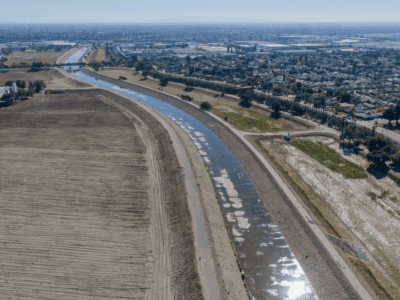
Since 1998, River Partners has restored more than 20,000 acres along some of the largest waterways and landscapes throughout California, transforming denuded riverside and former agricultural land into vibrant, lush native riparian habitat benefiting a wide range of wildlife species. Our work has added recreational opportunities to the state’s most park-starved regions, increased flood safety to underserved communities, and stimulated economies where we’ve worked.
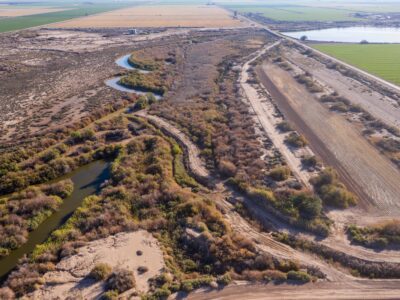
River Partners and a team of NGOs and resource agencies are now working on the Amargosa River Riparian Restoration, a grant aiming to restore around 1,000 acres of riverside and marsh habitat in the Amargosa Basin, located in the Northern Mojave Desert, one of the most demanding landscapes in the world. With California Wildlife Conservation Board (WCB) funding awarded to the American Bird Conservancy (ABC), River Partners is involved in two separate grant components.
First, we’re helping create a river habitat restoration plan, which, among other things, includes a native planting palate for migratory birds for their journey along the nearly 10,000-mile Pacific Flyway. Additionally, we’re being tapped to plan restoration habitat for the Amargosa vole, one of the most endangered mammals in North America. The restoration will also include plans to help imperiled fish species found nowhere else on earth, including the Amargosa pupfish, Amargosa speckled dace, and Shoshone pupfish.
WCB Desert Conservation Program Manager Amy Henderson notes that restoration efforts which explore multiple benefits around a larger region rather than a single benefit in a smaller area, like the Amargosa Basin Project, tend to be noticed by her agency.
“We love it when federal, state, non-profit, and Tribal groups come together,” Henderson said. “If you can get all of that together, it means people are really interested in the project, in the area, or maybe the species the project is trying to help. When we see these different entities coming together for a shared purpose, we get the feeling that this project will probably succeed.”
Amargosa Conservancy Executive Director Mason Voehl said that when collaborative opportunities like this come along with adequate funding, it’s a recipe for success.
“For me, it’s just an appeal to that ongoing collaboration as the means through which we really get impactful restoration work done in this landscape,” he said.
“The Galápagos of the Desert”
The Amargosa Basin is one of the harshest landscapes on the planet, with stunning extremes. Temperatures exceed 120 degrees in the summer and fall below freezing in the winter. The average annual rainfall measures just over 4 inches—that is, when it does rain.
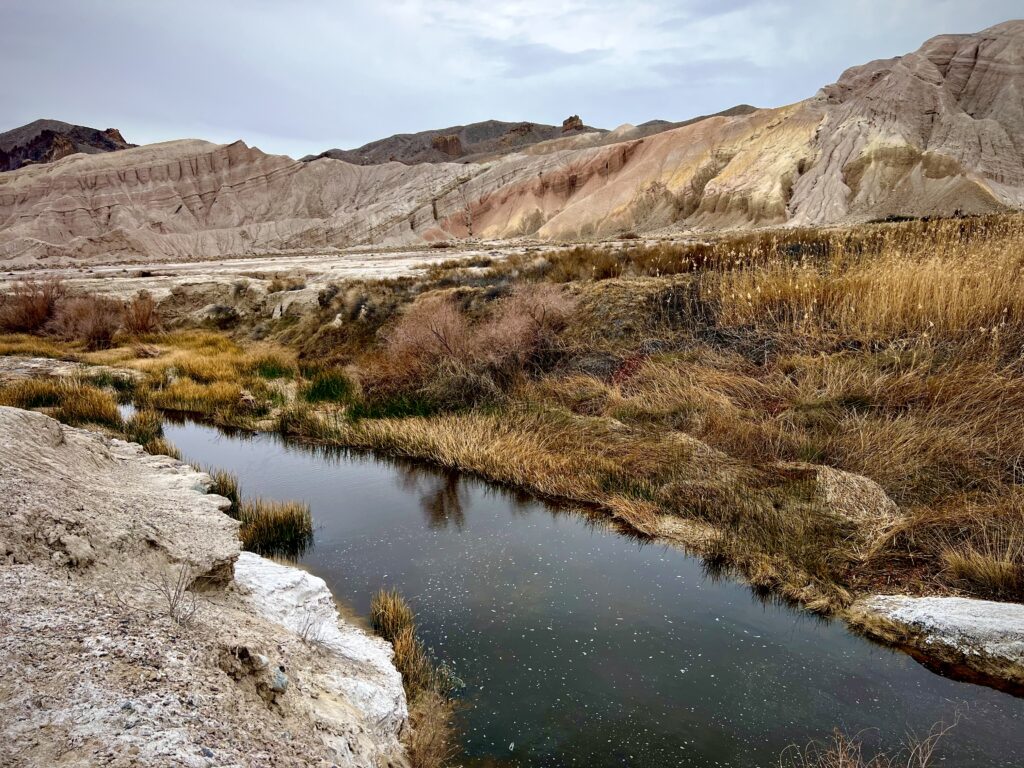
Meanwhile, the 185-mile-long Amargosa River is an ancient and mostly underground waterway in the Mojave Desert. It flows from southern Nevada into California and Death Valley National Park, terminating at Badwater Basin, the lowest point in elevation in North America at 282 feet below sea level and 200 square miles of salt flat.
The Amargosa Basin, which Voehl calls a “relic ecosystem,” wasn’t always like this.
“If you dial the clock back 20,000 years, the Mojave Desert was not the Mojave you see today—it was far wetter, more temperate, and had large inland bodies of water, like Lake Manly and Lake Tecopa, inside what is now Death Valley,” Voehl said. “These are also the ancestral homelands of numerous Tribes, including the Timbisha Shoshone, the Chemehuevi, and the Southern Wamp Paiute. It has all these really rich biological and cultural values overlaid.”
As the climate changed over that time, the Amargosa Basin became one of the hottest and driest places on the planet. In this increasingly hostile environment, the Amargosa River supports precious species found nowhere else in the world, leading Voehl to compare life in the Amargosa watershed to another isolated wildlife habitat more than 3,000 miles away.
“People call the Amargosa the Galápagos of the desert, because we have that same kind of effect with these constrained isolated habitat areas—in this case, our springs and wetlands are isolated by the surrounding Mojave Desert,” he said. “Instead of islands of land in an ocean, we have islands of water in an ocean of desert.”
That prolonged isolation has led to species diversification at an extraordinary rate, making the Amargosa River Basin one of North America’s most important remaining biodiversity havens. At last count, Voehl said, over 100 endemic species live in the Amargosa Basin, meaning they’re found nowhere else in the world. For example, the Amargosa pupfish and one of its subspecies, the Shoshone pupfish, live solely in severely isolated aquatic habitats amidst this vast desert landscape.
“The challenge of managing them is pretty clear on the face of it—these are just very delicate, isolated wet environments where these species have endured for millennia and the threats to them are growing,” River Partners Senior Restoration Ecologist Mike Davis said. “They have nowhere to go if, for example, their habitat becomes degraded or is eliminated by any number of threats.”


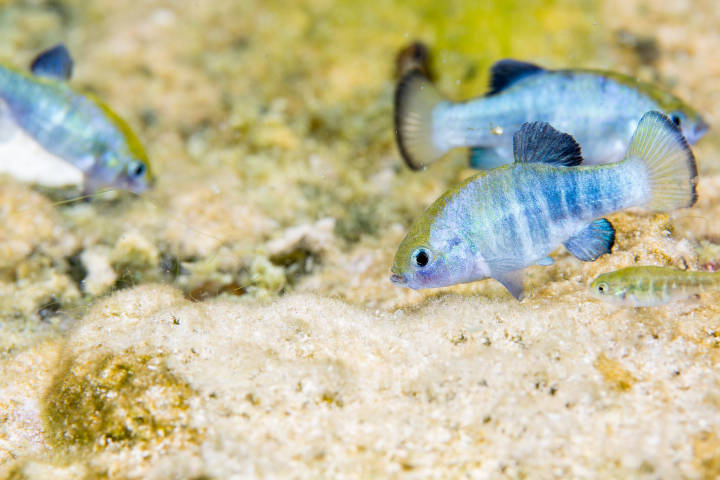

Of the 100-plus endemic species that live in the Amargosa River Basin, here are a few that will benefit from restoration (clockwise from top left): Amargosa vole (courtesy of Nancy Good), Shoshone Pupfish (courtesy of American Bird Conservancy), Ash Meadows Amargosa pupfish (courtesy of United States Fish and Wildlife Service), least Bell’s vireo.
Davis adds that they’re especially vulnerable because many of them support extremely small population sizes, and “when you get small population sizes, genetic integrity and continuity is a major problem. They have no backup plan.”
Some vital bird species also make their home in the basin. River Partners Director of Restoration Science Emma Havstad said this area is so productive for rare birds that when there is enough high-quality habitat, it can serve as something of an avian nursery for the entire region.
“Chicks that successfully make it to maturity from the Amargosa can then recolonize parts of their species’ historic range, making important progress to bring these species back from the brink,” she said.
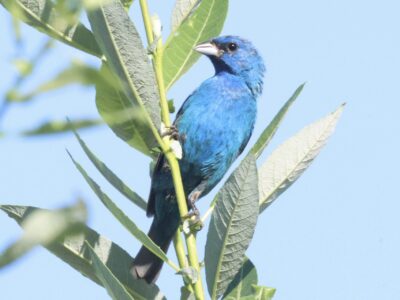
ABC Southwest Riparian Bird Recovery Coordinator Chris McCreedy points to riparian bird species like the southwestern willow flycatcher, yellow-billed cuckoo, and Bell’s vireo as key species to consider in the restoration planning. Other species more associated with the Sonoran Desert, like the crissal thrasher, Lucy’s warbler, and the black-tailed gnatcatcher, also stand to benefit from a rejuvenated riparian habitat.
“This is a site with some of the most riparian habitat regionally with the capacity to help many populations or subpopulations of bird species improve their status in the Mojave Desert,” he said. “Miracle may be too strong of a word, but it’s exceptional the riparian habitat exists along the Amargosa River in the first place.”
In addition to restoration that supports migratory birds, River Partners is also planning habitat restoration for the Amargosa vole, one of North America’s most endangered mammals. The vole relies primarily on Olney’s three-square bulrush (Schoenoplectus americanus) for food and shelter, so restoration efforts will focus on expanding bulrush marshes.
“It really only lives here in a handful of small marshes and was once declared extinct before its rediscovery in 1979,” River Partners Restoration Science Ecologist Laurel Sebastian said.
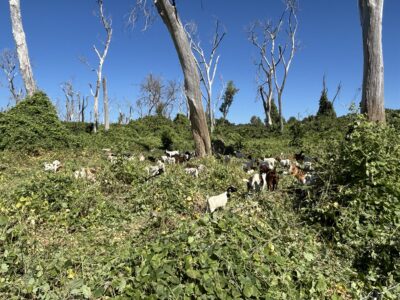
Sebastian said there are some tricky enhancement and restoration actions to juggle based on the remote and sensitive nature of this area. For example, salt cedar (also known as tamarisk) grows rampant here, displacing native vegetation, increasing fire fuels and damage, and depositing harmful salts on the soil surface. The irony here, Sebastian said, is that tamarisk trees do have some value as nesting habitat for birds.
“We want to remove tamarisk in targeted locations while we replace it with native trees that offer crucial bird nesting habitat, like Goodding’s black willow or honey mesquite,” Sebastian said.
The need to at least do something with this pest will benefit not only the soil but also the fish in the Amargosa River.
“We often talk about shade being good for fish habitat, but the fish here need some open water habitat for their colorful breeding displays,” Sebastian said. “Tamarisk can grow in thickets and choke the river, increasing water salinity and decreasing the insect food available for fish. So, one goal would be to open the canopy and remove tamarisk immediately around the river to improve fish habitat.”
If the environment and climate here weren’t threatening enough to an ecosystem living on a knife’s edge, another challenge looms from businesses looking to extract from this fragile landscape.
Water is Everything in the Desert
Global demand for rare earth minerals, like lithium used in rechargeable batteries, has spurred mining companies to pursue exploratory drilling and mining operations around the Amargosa Basin, risking the depleting of groundwater upon which every plant, animal, and community here depends.
Over the past year, the Amargosa Conservancy, alongside Tribal nations, local communities, and nonprofit partners, successfully stopped a proposed mining project near the adjacent Ash Meadows National Wildlife Refuge through litigation and advocacy.
“Several mining proposals are currently in active development and each one poses some level of threat to critical habitat, endangered species, and local communities by virtue of the fact that they absolutely need some amount of groundwater for their operations,” Voehl said. “Every living thing here depends on groundwater. It’s what makes the Amargosa region so special and so spectacular.”
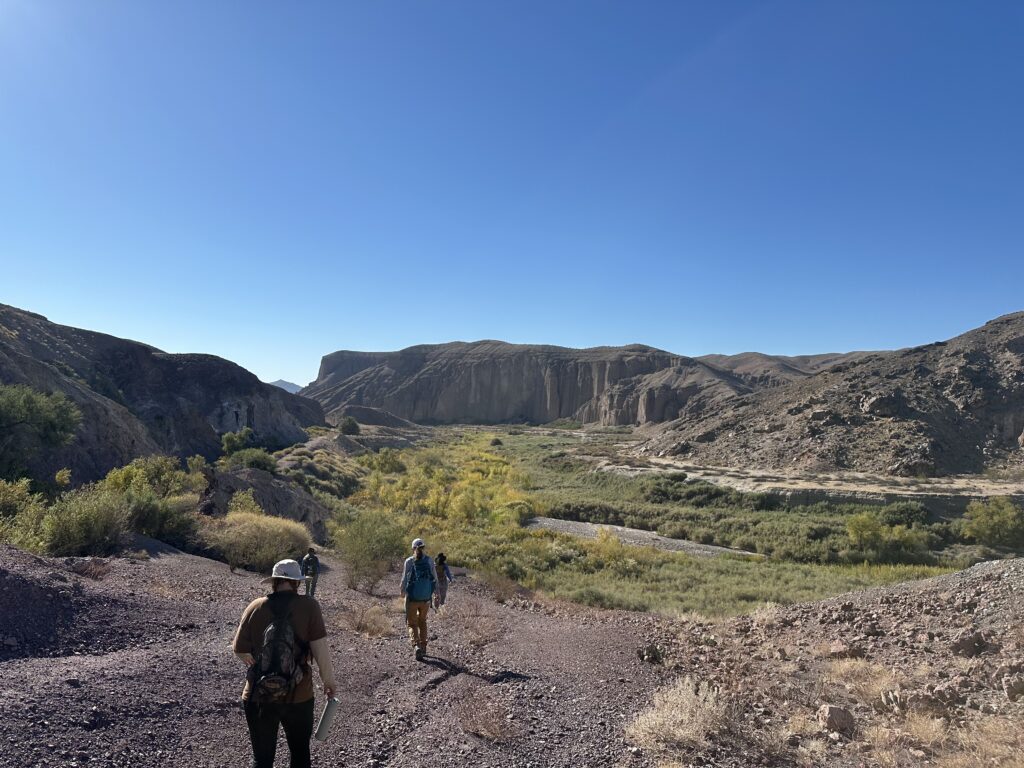
So far Voehl is very pleased with the progress of the restoration planning and praised River Partners for doing work that hasn’t been done in the Amargosa Basin before this.
“River Partners is looking at things like soil compositions and water chemistry and exploring where the biggest bang for our buck will be in terms of restoration, so that when we do have opportunity to restore, we’ll maximize the benefit because we know it will be work,” Voehl said. “It’s a tall order, but we have a lot of confidence that River Partners has the means to get it done for us.”
Restoration planning will continue through early 2028, when all partners hope additional funding will allow implementation to begin. The challenges here are piled up high—environment, heat, a serious lack of water, invasive plant species, endangered and endemic species teetering on the brink—so much so that the WCB’s Henderson said she’s often asked questions like, why even bother restoring a region like the Amargosa Basin?
Her response typically begins with, “Why not?”
“Just because it’s isolated and in the desert, doesn’t mean there isn’t a benefit to that area. I think the hydrology is interesting, the pupfish, and the plants that don’t just survive, but thrive, in triple-digit temperatures,” she said. “And what if there’s something genetically speaking in those plants that we could put into food crops, so that we can feed people later, when climate change really gets going and there’s a lot more drought?
“I don’t know how you can’t fall in love with it. It’s just beautiful.”
Davis also sees the bigger picture, noting that, for example, while the Amargosa River may seem to matter only to the Amargosa pupfish and dozens of other endemic species, these fish are emblematic of all rare desert life.
“I think you could make an argument that to give up on one species is to give up on desert biodiversity at large,” Davis said. “This is important because to give up on the preservation of small, rare populations of unique desert species is to give up entirely on their potential future recovery. Because when you lose a species, you can’t bring it back.”
Funding for the Amargosa River Riparian Restoration project was made possible by the California Wildlife Conservation Board.
Lead photo courtesy of Patrick Donnelly