
 March 10, 2026
The morning air along the Sacramento River smells different than city air, according to River Partners Field Foreman Eligio Hernandez.
“You can smell plants and trees here,” Hernandez says. “You cannot smell this in the city.”
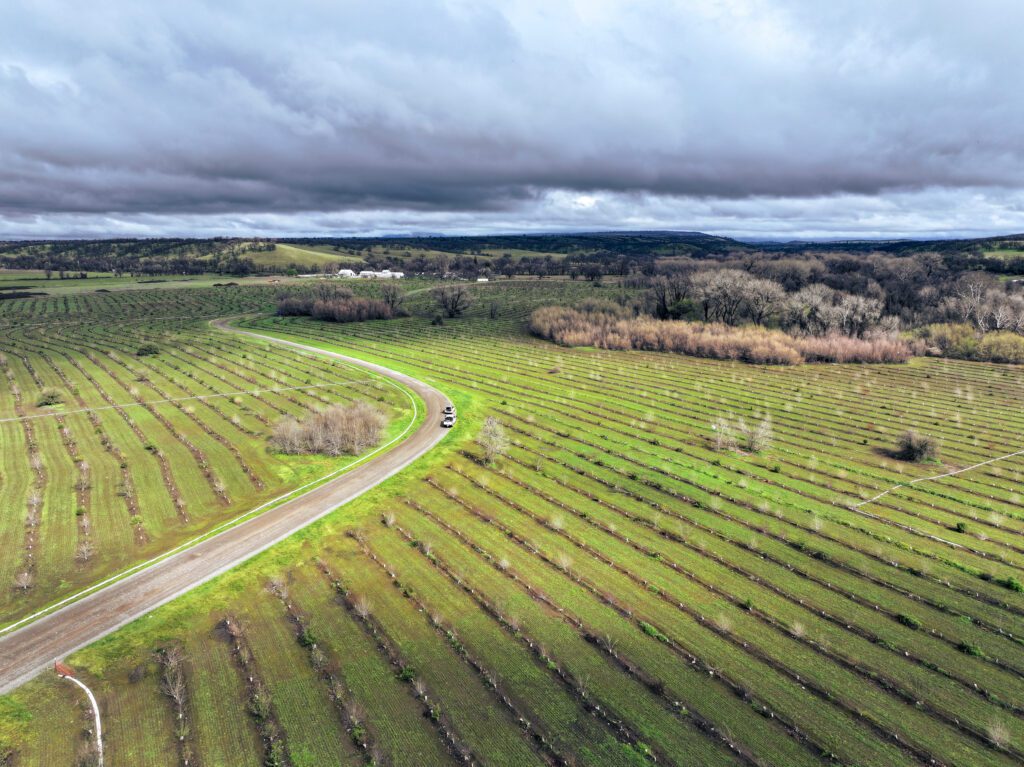
Hernandez stood at one of River Partners latest projects in Northern California, Rancho Breisgau—a 150-acre field of sycamores, willows, oaks, cottonwoods, and other native vegetation restored in partnership with the U.S. Bureau of Land Management and California Wildlife Conservation Board to support the recovery of critically endangered wildlife.
“When you go outside, you feel different. You leave the stress out,” he says. “That’s part of my life, being outside. And if I’m doing something for wildlife, it makes me feel good.”
For 25 years, Hernandez has spent his days planting riparian forests, installing irrigation lines, collecting native seeds, and helping rewild California riverways. During his service at River Partners, he’s helped transform over 10,000 acres of riverside lands into a thriving tapestry of renewed riparian forests that benefit people, wildlife, and economies.
But for him, it’s never felt like just a job.
“What I do here, what I contribute to River Partners, I feel like it’s not work that I do,” he says. “It’s kind of like my hobby, and they pay me to do this. I can’t ask for more than that. I feel proud of myself. I love to do what I do, what the whole organization does.”

Watching the Work Grow
When Hernandez joined River Partners in 2001, the organization was still small. He started three years after River Partners formed in 1998.
“We had three or four small projects,” he remembers. “When I started, we had one office, in Chico.”
Over the decades, he has watched the organization expand its footprint across California, from Redding to San Diego.
“We have been growing a lot,” he says. “The first truck I drove was #3. Now, the one I have is #114.”
Today, River Partners leads the largest footprint of riverway restoration in the West—reconnecting floodplains, planting native forests, and rebuilding habitat at a scale that was almost unimaginable when Hernandez first started.
Culture of Learning
When Hernandez first arrived at River Partners nearly 25 years ago, he didn’t know how to operate the machines used on restoration sites.
“Everything I do here, I have learned,” he says. “When I first started, I didn’t know how to operate a Gator, a tractor, nothing.”
Over time, knowledge came through experience. That kind of on-the-job experience, passed from person to person, is part of the culture of learning at River Partners.
“If you work at River Partners and you don’t learn something, then you’re missing a lot,” he says. “You have to pay attention to what you’re doing. Because anywhere you go, even if you leave River Partners, you will use it. And you can teach somebody. And that person will teach another person.”

Some lessons come from working with people, while others come from working directly with the plants and land. Hernandez was part of the first team of native seed collectors at River Partners, and over time has developed his own techniques for processing native seed, which are collected for use in future restoration.
“I’ve been collecting seed year-round, from May-October. Blackberry is the first we collect,” he says. “We collect about 20 varieties during the year.”
Some are more challenging than others to collect and clean, which means removing parts of the plant (such as the chaff) from the seed.
“Milkweed seed is not easy to clean. I was very frustrated because I couldn’t make it as clean as I wanted. I spent hours and hours thinking about how to do it,” says Hernandez.
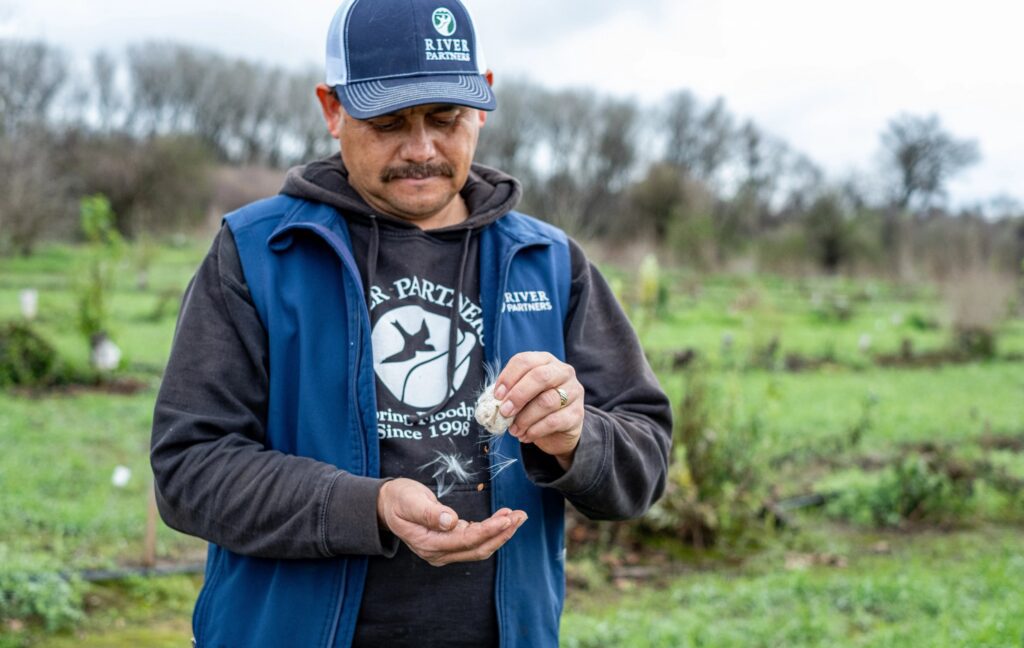

Eventually, a solution came to him.
“I started using an air compressor,” he says. “And then I showed someone else how to do it.”
Those early experiments helped shape the seed collection and processing systems River Partners uses today—work that later helped lead tothe creation of Heritage Growers, River Partners’ native seed and plant farm that supports restoration projects across the state.
Working Smarter and at Scale
Over the years, Hernandez has been instrumental to refining how restoration happens in the field.
“When I first started, we used to do everything by hand,” he says. “It was very slow and hard.”
Now, techniques he helped engineer allow crews to work faster, and more efficiently—allowing River Partners to maximize every dollar invested in restoration for outcomes to benefit wildlife and people.
Take the process of laying irrigation lines down in a field that will be planted with native vegetation, for example.
“The way we do it now, it’s smarter, faster,” he explains. “Right now three people—one driving the equipment and two laying it out—can do a field of 20 acres in about three hours. Before, when we were doing it all by hand, it would take a crew of 10 or 20 people all day to do the same job.”
“I always do the best I can. When I leave my house for work, I’m thinking about how to do things better, smarter, more efficient,” he says.

Making Space for Wildlife
For Hernandez, the real purpose of restoration is simple: making room for wildlife.
“Wildlife need more space,” he says. “Wildlife grow like people, right? So they need more room, more space.”
The landscapes Hernandez restores quickly fill with life.
“I see turkeys, deer, rabbits,” he says. “We see mountain lions too—but only in the photos from the camera traps.”
Sometimes the wildlife encounters are unforgettable. One time, he saw 40 or 50 deer all together, right at dusk, on a recently restored project.
“All of this,” he says, gesturing at the young forest at Rancho Breisgau, smiling. “That’s for them.”

The People Behind Restoration
If you were to take a walk at Rancho Breisgau 20 years from now, you might never know that people like Hernandez spent years of their lives transforming what used to be a walnut orchard back into a forest that seamlessly connects to the nearby waterways. That’s the trick of successful restoration—it takes thousands of small, thoughtful decisions and hours of work from dozens dedicated people—all to make a place looks like it was never altered.
It takes people like Hernandez, which is why he is a Restoration Hero.
Restoration Heroes is a series about the dedicated and often under-recognized people behind River Partners’ statewide work—field crews, scientists, seed collectors, partners, and supporters—whose dedication makes the extraordinary work of restoring California’s rivers and communities possible.