
 March 9, 2026
In helping to bring life back to rivers throughout California, River Partners is also bringing wildlife back to these restored river habitats. Whether captured by a camera trap or one of our staff in the field, whether it’s a migratory bird or a silent nocturnal hunter, or a reptile we’re keeping an eye on at a restoration site, when we come across wildlife, it means our restoration is working.
To learn more about what our staff are seeing in the field, check out the other installments of our “Eyes in the Wild” series here.
Dos Rios Norte (Sutter County)
Association Restoration Scientist Kylie McNary was part of a small group at Dos Rios Norte, our 1,600-acre restoration site at the confluence of the Sacramento and Feather rivers and Lower Butte Creek in Sutter County. While performing shorebird surveys during the last week of rice field flooding by Lundberg Family Farms to create shorebird habitat during the migratory season through the BirdReturns initiative, Kylie captured this video of a group of white-faced ibis.
While the waterways here are essential for all runs of Chinook salmon, its mosaic of managed marshes and flooded rice fields also provides vital sanctuary for migratory birds along the 10,000-mile Pacific Flyway. Probing the mud for invertebrates here, the white-faced ibis features a distinctive, long, and downward-curving bill and gorgeous iridescent plumage that shimmers with sleek shades of deep maroon, bronze, and violet. During breeding season, they develop a white feather border around their reddish facial skin, giving them their name. These highly social birds are often seen in large, vocal flocks, using their specialized bills to probe the mud for crayfish, dragonflies, and frogs.
Current white-faced ibis populations are stable, marking a successful recovery from past declines. An important indicator species, its presence signals a healthy, functioning wetland. Because they rely on shallow, flooded habitats, they are particularly vulnerable to drought and the loss of seasonal wetlands. Protecting these floodplain corridors and participating in initiatives like BirdReturns ensures white-faced ibis continues to thrive around the Sacramento Valley.
Great Valley Grasslands (Merced County)
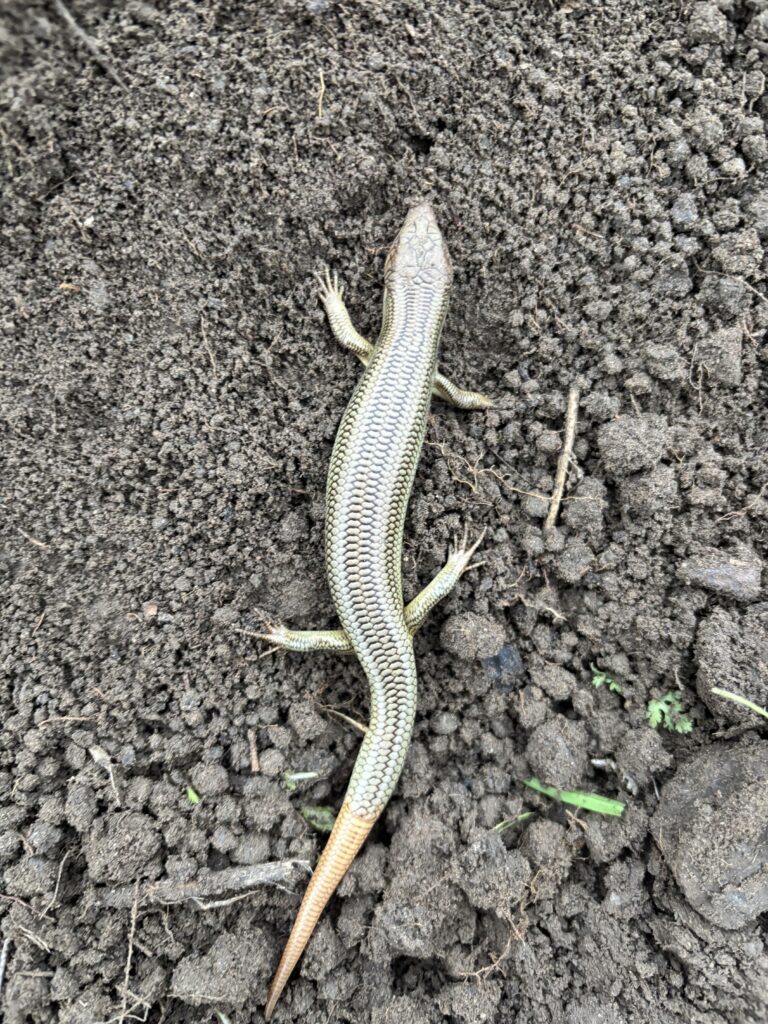
Seasonal Restoration Scientist Ciara Cipponeri and other Science team members were at River Partners’ 2,826-acre Great Valley Grasslands State Park revitalization project along the San Joaquin River in Merced County. An effort led by American Rivers and supported by California State Parks, we used heavy equipment to strategically (and carefully) remove sections of an old, unused levee system to restore a long-disconnected section of the river’s floodplain. Keeping an eye on the soil disturbed by a bulldozer, Cipponeri spied this secretive Gilbert’s skink and moved it to safety.
Gilbert’s skink is one of North America’s largest skinks, extending up to 13 inches in length. As they age, they undergo a dramatic metamorphosis, with juveniles sporting brilliant blue or reddish-pink tails and sharp longitudinal stripes, while adults transform into a shimmering coat of olive or burnished copper. Their lifestyle is largely “fossorial,” which means they spend much of their time wading through loose soil and damp leaf litter. These active foragers use their powerful jaws to hunt a variety of invertebrates, including spiders, crickets, and beetles.
Gilbert’s skink populations are stable across most of their range, but they face pressure from habitat fragmentation and urbanization in the Central Valley. Because they require specific moisture levels and dense ground cover, they are excellent barometers for ecosystem health. Our restoration work in Merced County, like that at Great Valley Grasslands State Parks, helps to ensure that these colorful reptiles have the connected, shaded landscapes they need to thrive.
Hidden Valley Ranch (Stanislaus County)
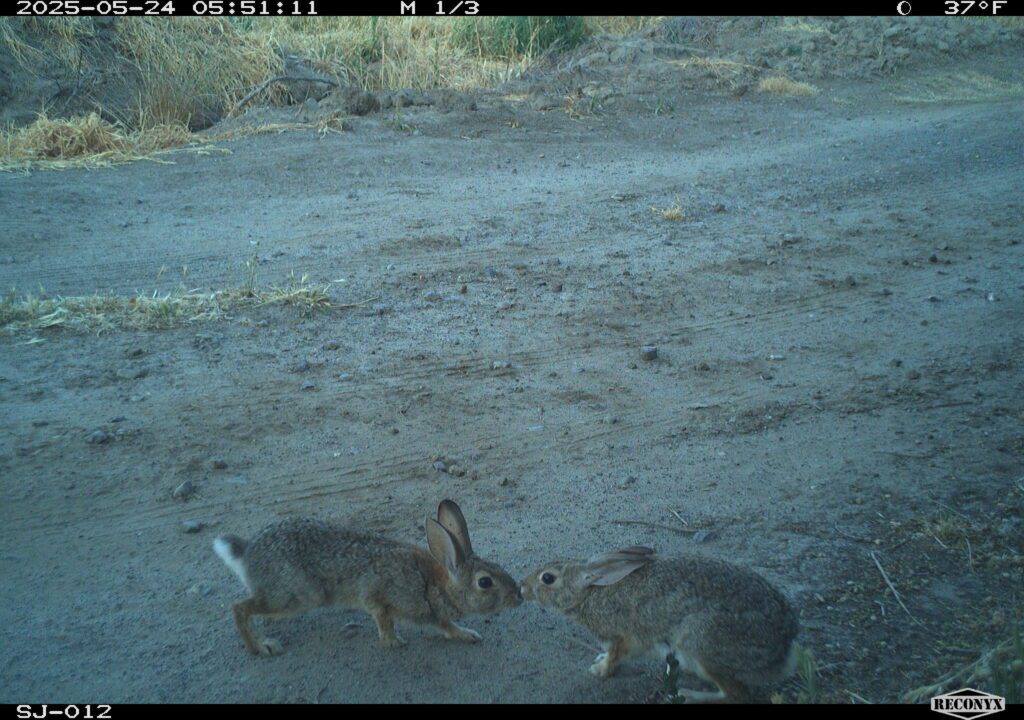
It’s a chilly May morning, and you’re a desert cottontail traipsing around Hidden Valley Ranch, a 350-acre former dairy near Modesto that River Partners restored in 2024 as a vital puzzle piece in one of the state’s largest contiguous corridors of floodplain habitat. It’s also peak breeding season—and you’ve just found yourself a possible mate. You communicate with the other desert cottontail, touching noses, a primary way to communicate. We’ll never know what happened with this pair, but we do know that one of our camera traps captured this courtship ritual.
The desert cottontail is noted for its large, rounded ears, which can reach up to four inches in length. These ears aren’t just for acute hearing, they’re filled with blood vessels that help the rabbit dissipate body heat during scorching Central Valley summers. Sporting a signature “cotton ball” tail and a salt-and-pepper grayish-brown coat, they are masters of camouflage. They emerge primarily at dawn and dusk to forage on grasses, sedges, and willow bark. If needed, they’re adept at climbing sloping tree trunks or thick brush to escape predators or reach a better vantage point.
Currently, desert cottontail populations are stable and widespread. As a primary food source for local hawks, coyotes, and bobcats, their health is a vital indicator of a balanced, thriving floodplain food web. However, they’re negatively impacted by habitat fragmentation and face other threats like Rabbit Hemorrhagic Disease Virus (RHDV2), an aggressive, highly contagious, and often fatal disease which attacks the liver and causes massive cell death and internal bleeding.
Tule Elk State Natural Reserve (Kern County)
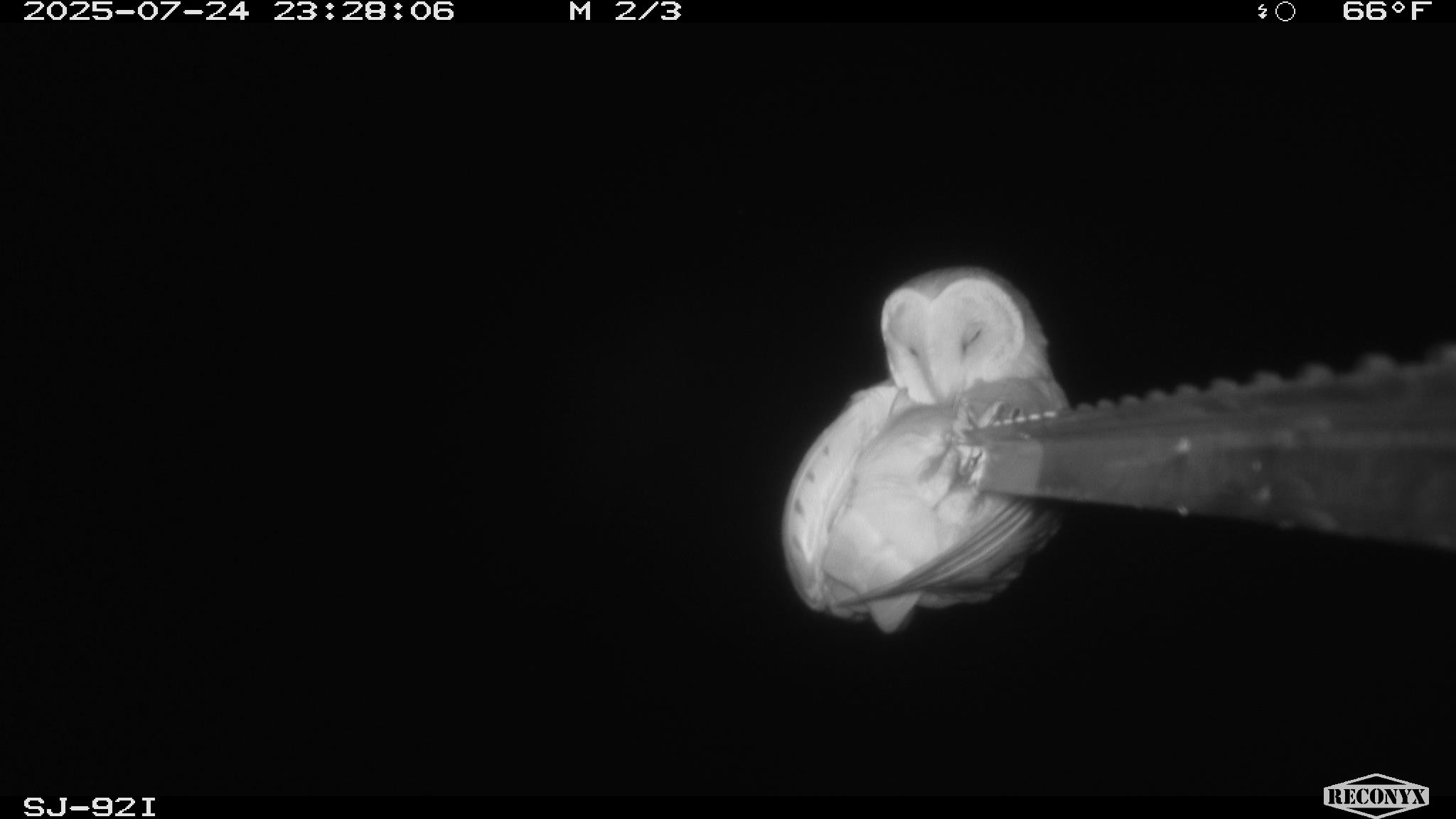
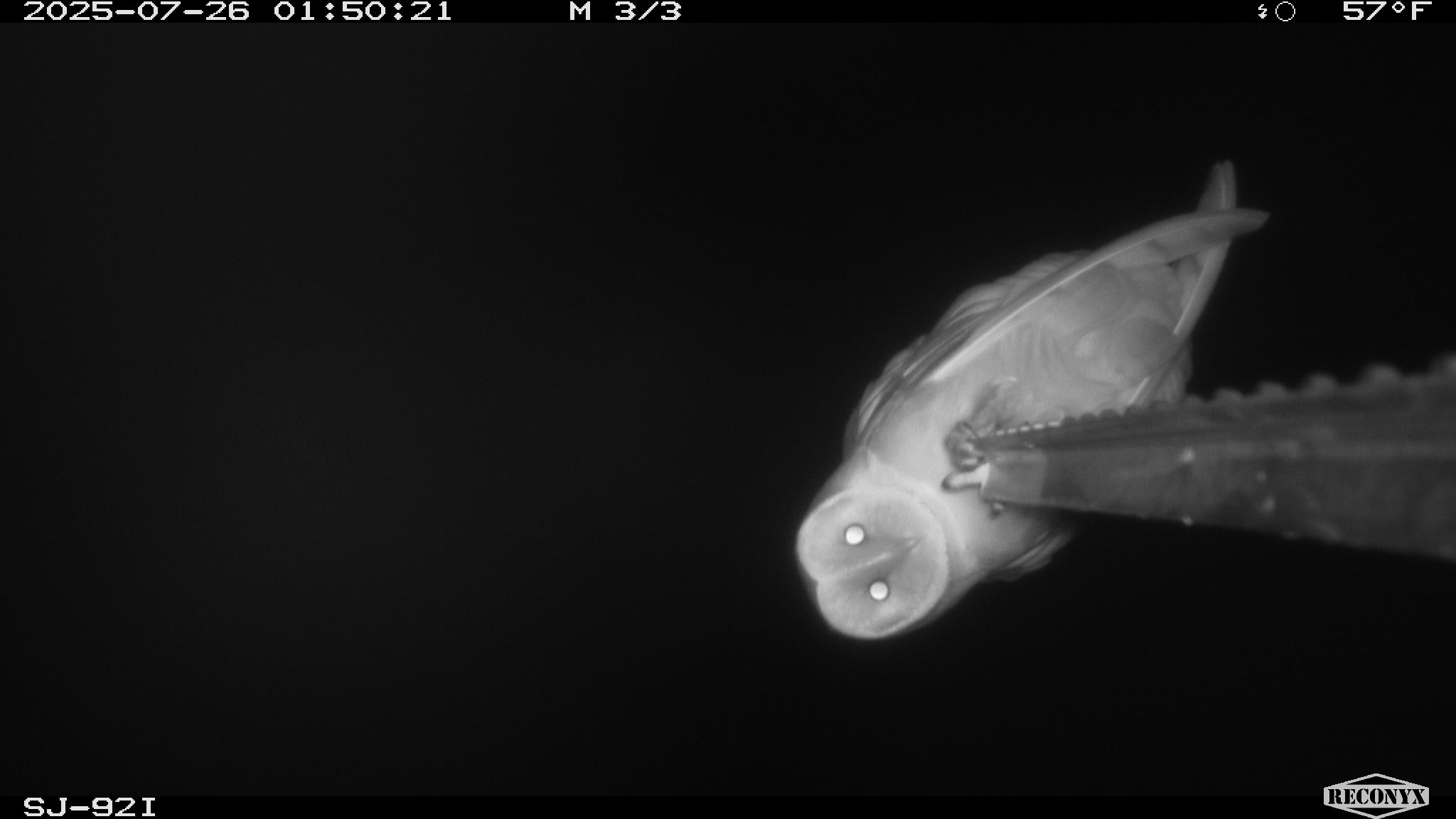
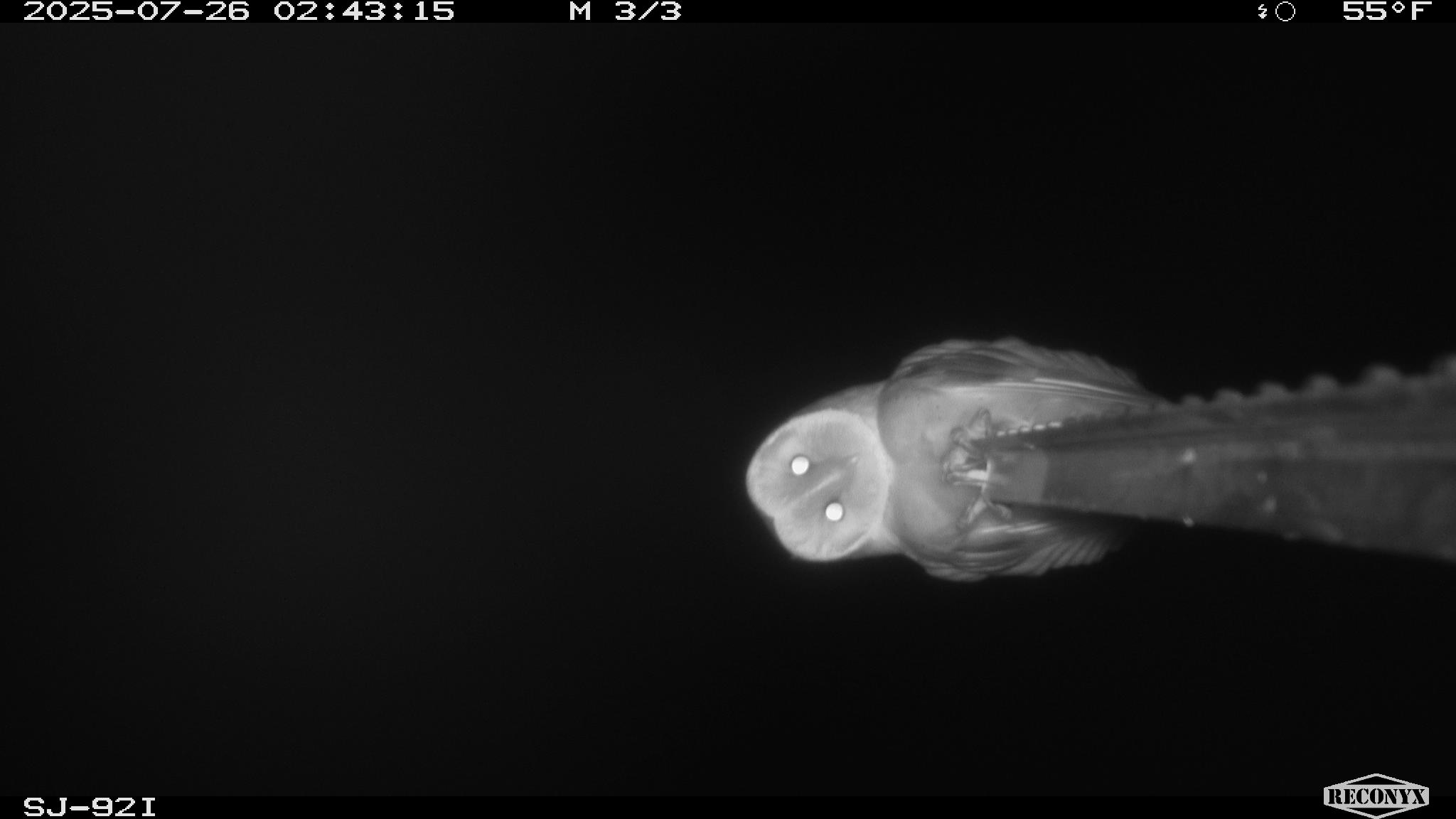
At the 965-acre Tule Elk State Natural Reserve in Kern County, River Partners is working to conserve and enhance critical habitats for the imperiled tule elk. Located about 25 miles west of Bakersfield, the Reserve also supports a vast array of other wildlife, as evidenced by the ghostly, pale visage of a barn owl looking directly into one of our camera traps. The owl seems to like this perch, as it was photographed on two different nights, including once likely preening after enjoying a tasty dinner.
The barn owl features a striking, heart-shaped facial disc, a natural satellite dish that funnels sound into its ears. Their hearing is so acute—helped by asymmetrical ear placement—that they can strike prey in total darkness! Sporting a mottled golden-brown back and a snowy white underside, they possess specialized fringed feathers that allow for near-silent flight. As nocturnal specialists, they primarily hunt voles, gophers, and mice, often swallowing their prey whole before regurgitating indigestible fur and bone as pellets.
Current barn owl populations are stable, yet they’re highly vulnerable to secondary poisoning from anticoagulant rodenticides that build up in their prey. It is an essential indicator species for grassland health, but habitat loss and the removal of old barn structures limit its nesting opportunities. Restoring and protecting these floodplain habitats ensures these silent guardians continue their nightly patrol.