
 January 23, 2026
As River Partners looks ahead to 2026 and beyond, our vision is shaped by a simple but urgent realization: the challenges facing California’s rivers are large, fast-moving, and interconnected—and our response must be as well. River Partners is focused on expanding impact not only through acres restored on the ground, but also through stronger partnerships, sustained investment, and continuing to expand public awareness about why healthy rivers are essential to California’s future.
In just a handful of decades, California’s waterways were transformed from some of the most dynamic river systems in North America into highly engineered corridors. Those changes powered California’s unparalleled growth into the fourth largest economy on the planet. But they also contribute today to rising flood risk from weather whiplash, depleted groundwater, collapsing wildlife populations, and communities increasingly vulnerable to climate extremes.
Bringing rivers back to life, like River Partners has done for nearly three decades across the state, is not simply an environmental nice-to-have. It is a long-term investment in public safety, water security, biodiversity, and economic stability.
Repairing the damage requires thinking at river scale. What would it mean to repair California’s rivers at the same urgency and ambition that once broke them? And if we can’t go back in time, how do we heal enough of what was lost to create a healthier, more resilient future?
River Partners President Julie Rentner reflects on how River Partners is meeting this moment at a critical time for California and the planet, and why scaling our work is not just something that fulfills our mission, but is a core ecological and social challenge of our time.
Q: What does “thinking like a river” mean to you right now?
Julie Rentner: For me, it’s about scale. Rivers operate at landscape scale, across ecosystems, across jurisdictions, across generations. And when you look honestly at what happened to rivers in California and across the West, we did a ton of damage really fast and at enormous scale. It happened over the course of a handful of decades, a couple of generations.
Back then, we had different tools, different data, and different value sets than we do now. So, if we’re serious about repair, we have to respond at commensurate scale. That means thinking differently about time, about systems, about economics, and about partnerships.
We can’t pretend that the impacts were small or isolated, and we must respond and repair in a way that matches the magnitude of what was lost.
Q: You’ve said that the real innovation needed right now isn’t technology, but scale itself. Can you explain that?
Rentner: There’s this tendency to think innovation must mean something flashy or new. But I think the scaling part is the innovation part.
When we talk about innovation, I’m much more interested in thinking a lot bigger about how economic forces drive River Partners’ work, how restoration is financed, how long-term stewardship is supported, how institutions are built to last decades instead of through grant cycles. How do we align ecology, economics, and partnerships so we can scale river restoration to endure?
How do we harness the same mentality that drove the reclamation and dam building eras to become so big? To repair it, we have to do everything big. It’s doing humanity a disservice to try and sweep under the rug the magnitude of what we did, or not respond commensurately.
Q: How do you think approaches to river restoration in California have changed over time, and how do you see River Partners approach accelerating repair?
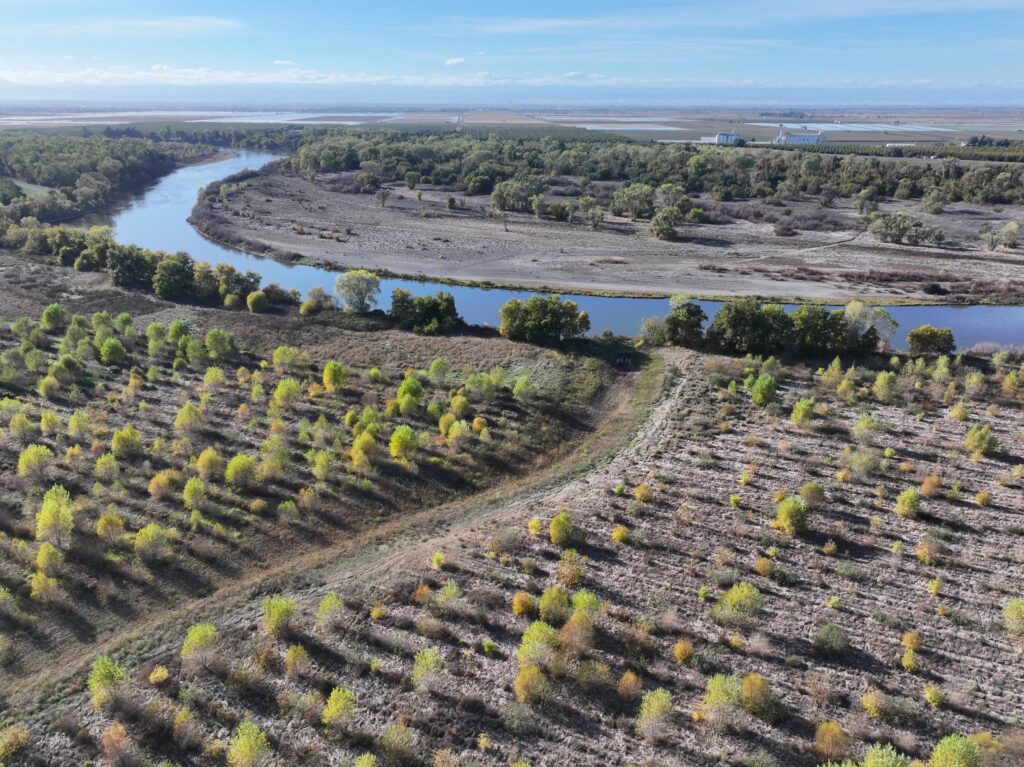
Rentner: We now have several generations of folks who have worked on conserving rivers and wetlands in California. But one thing that really stands out to me is that River Partners is less focused on the mechanical parts and more on the systems. We are here to make water quality better. We are here to reduce flood risk. We are here to make wildlife populations that persist. We are here to repair the problems where we went too far.
We know the impact of the damage we’ve done to the landscape, so now we can focus on commencing repair at commensurate scale. Not undo everything. Not all of it has to be undone. Not pretend humans don’t belong in these systems. But repair where we’ve overreached.
Q: How is our understanding of what was lost in California informing River Partners’ restoration?
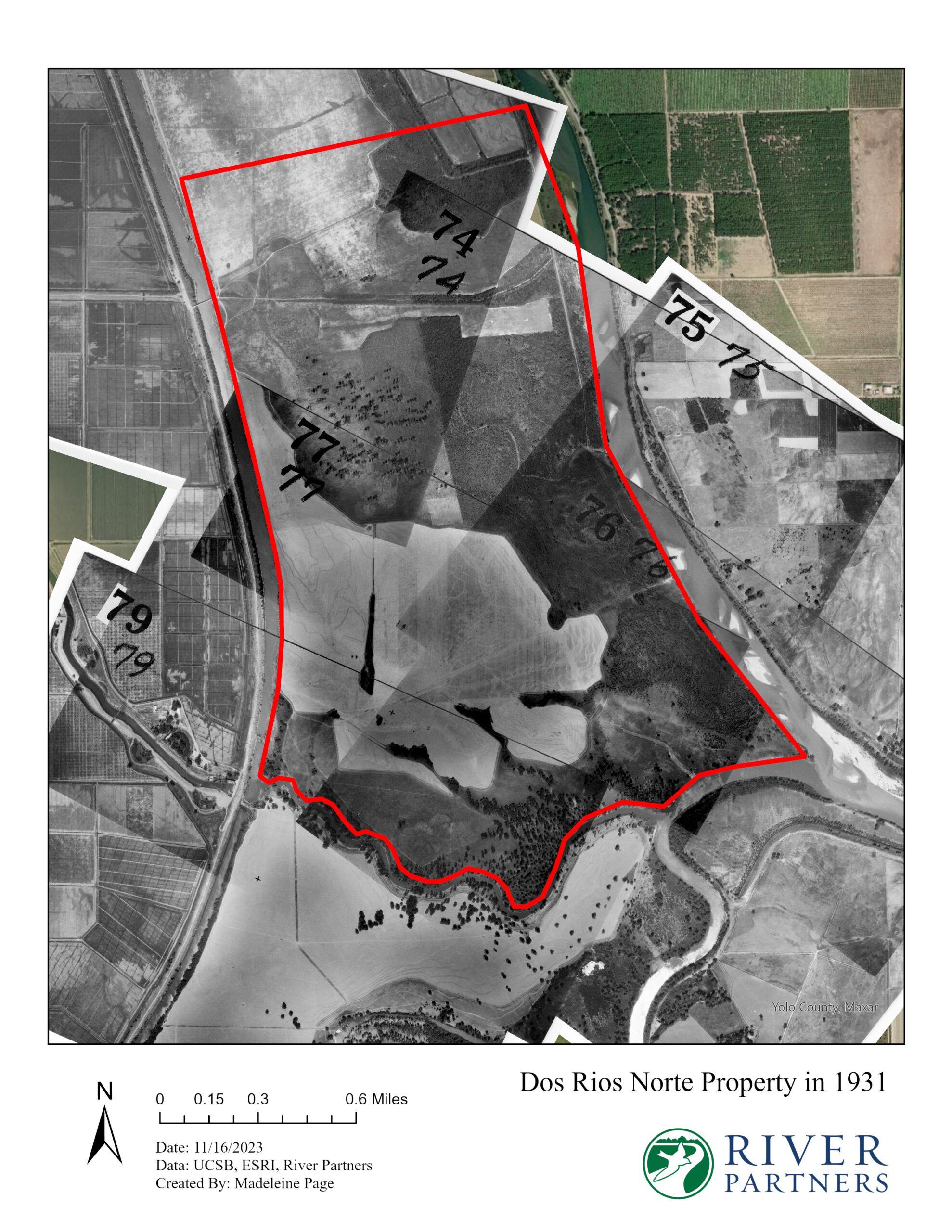
Rentner: Historical ecology studies always show us how big, how dynamic, how interesting, how biodiverse this landscape had been before we simplified it tremendously. When you see maps of rivers meandering across entire valley floors, you realize how narrow our modern imagination has become. We’ve cemented the blue lines of streams as county boundaries and city boundaries. For some reason we believed the river not moving was true when we set up all of our political demarcations across the landscape.
What’s even more striking when you look at recent ecological studies of California’s Central Valley is that we changed everything. We made dry soils wet and we made wet soils dry. That level of transformation happened really fast, at massive scale. Any serious attempt to restore lost functionality to our river systems has to wrestle honestly with that reality.
Q: River Partners recently surpassed 20,000 acres restored since 1998. How do you think about scale beyond this milestone?
Rentner: We’ve always used wildlife response as a kind of gold standard. If bird, fish, or insect, or mammal populations are healthier and more resilient, we know we did something right. Based on that science the targets are clear. We need 100,000 acres of riparian restoration by the end of the century to truly reverse declining wildlife populations. Many groups have called for this restoration to happen by the end of the century, like the Central Valley Joint Ventures 2020 Implementation Plan, in which Point Blue Conservation Science did a really amazing treatment of riparian bird populations across western North America and then set down some targets for acreage of restoration.
But River Partners asks, “Why wait till the end of the century?” Let’s not muck around here. River Partners set our internal target to 70,000 acres by 2040. This assumes that others are working too—and together, if others come up with about half of what we achieve, that gets us to 100,000 acres decades sooner. That would be tremendous.
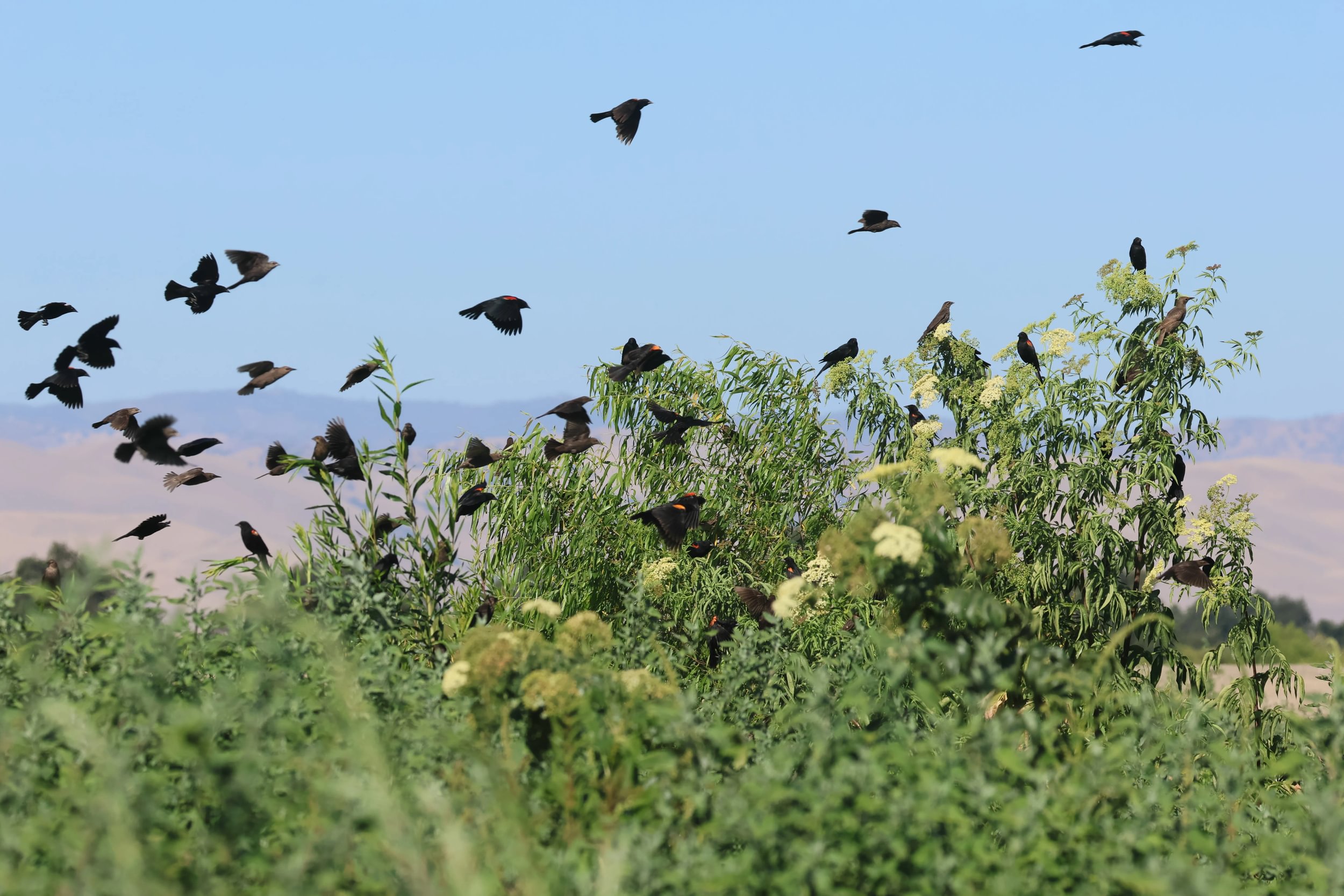
We would see changes in wildlife populations that would inspire a new generation of people. We would see the effects in the diversity of birds that people love to see in their backyards. The birds that used to be common for our grandparents would come back. The migratory birds would come back too, and bring information and nutrient exchange across the surface of the planet from the Arctic all the way to the tip of Argentina. We would see really tremendous changes for wildlife and for ecosystems all over the western hemisphere.
Q: And the benefits extend beyond wildlife?
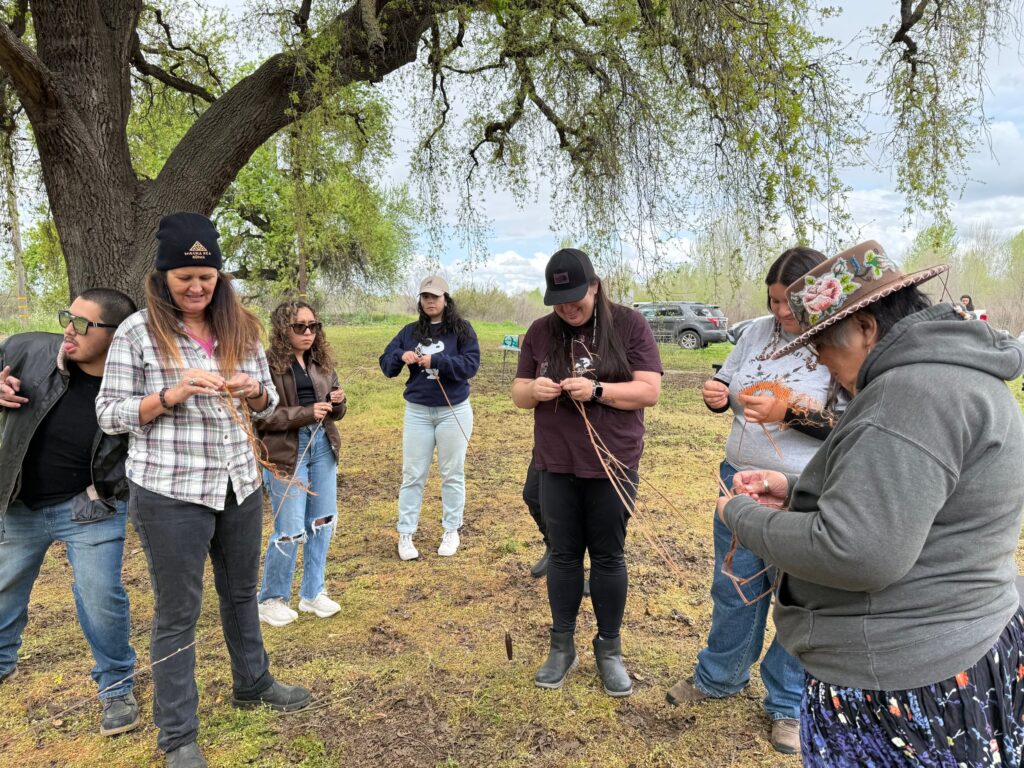
Renter: Absolutely. If it’s done thoughtfully, is multi-benefit. The story with multi-benefit is that as we kept planting trees and inviting water back on the land to create habitat for wildlife, different groups came to us to tell us what we were doing was also good for another issue. For example, we didn’t know what we were doing was going to be good for flooding, but the flood engineers came and told us it was. Then we didn’t know it was going to be good for groundwater, but then the groundwater engineers came and told us it was. And now cultural restoration practitioners and Tribal partners are coming to us and telling us how important it is for them. Their families are reconnecting with their culture because they are regaining access to land, water, and plants we’ve restored.
Take flooding alone. In places like Stockton, which is one of the most at-risk communities in the whole U.S. for flood damages, the annualized flood damages are estimated at over a billion dollars. Meaning, if there’s a big flood in Stockton and you take that and spread the damage out over many years, it will be $1.2 billion annualized. If we spend even half of that on ecosystem recovery, we make up for the cost in avoided damages almost immediately. When you add water supply benefits on top of that, the return on investment just starts to multiply.
We just have to shift our thinking from paying for the damages after they happen and investing in avoiding the damage in the first place.
Q: You often talk about partnerships as essential to scaling. Why is that?
Rentner: Because we won’t get there alone. Scaling isn’t just about acres, it’s about people, institutions, and economic structures that allow this work to last.
A lot of organizations care deeply about their landscapes but don’t have the financial or administrative infrastructure to scale. It took River Partners almost 30 years to build a space where we can manage that complexity. Our role increasingly is to help others—through partnership—get there too. That’s a different way of thinking about leadership. It’s less about owning outcomes, more about enabling them.
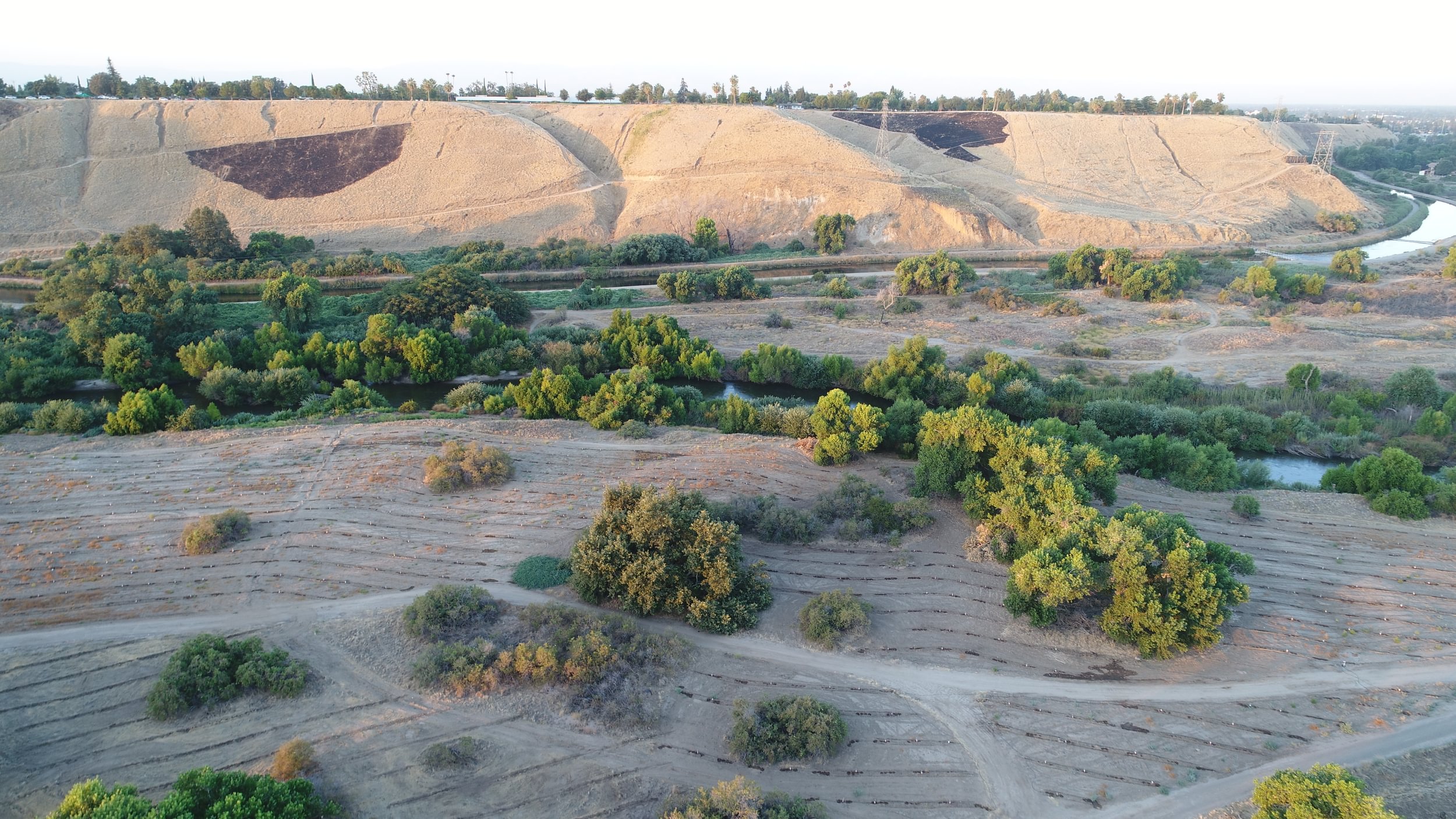
Think about River Partners’ work at Panorama Vista Preserve in Bakersfield and those amazing community leaders who said, “We need to preserve our river for a lot of good reasons, and we know we have some heavy lifting to do.” Well, that preserve is almost 1,000 acres, so it’s a lot of work—work to manage the land, secure funding to restore it, complete all the analysis and permitting to bring it back to life. But they were a small non-profit, with no paid staff, and to manage a multi-million-dollar grant to do a portion of this restoration was outside of their means. So, River Partners teamed up with local community leaders to compete for the funding and then execute the restoration in partnership. We did some heavy lifting that grew capacity for everyone, in addition to restoring the river. Today Panorama Vista Preserve is a model of nature restoration that community leaders are seeking to expand throughout the Kern River Parkway.
We get to make the big outcomes only because of invitation and partnership. We’ve found a way to play more of a services role and encourage amazing people to come along and do good things. In all reality, the only reason any of this happens is because local communities see the work and want to be a part of it. And we figured out how to open our arms even more to get others to help us chew on that 100,000 acres by 2040 target.
Q: What’s at risk if we fail to scale now?
Rentner: Everything we depend on. Our food systems, our homes and communities, our economic stability. Just a couple of giant natural disturbances could wreck entire arms of California’s enormous agricultural productivity. Just a couple big floods and you could lose entire segments of agricultural productivity, whole communities devastated. If we don’t stem the wave of extinction of all of our pollinators, bring back the health of our soils, find ways to get carbon back into the ground so that soil can absorb more water, and keep us wetter longer and moderate our temperatures and our weather patterns, we just get closer and closer to that catastrophic risk. Every big weather pattern that’s anomalous or different has that risk. That plagues me, thinking about the damages to communities and families. This is also happening globally, and the disasters get worse every year.