
 March 24, 2026
In partnership with state natural-resource agencies, River Partners, a nonprofit river restoration organization based in Chico, is restoring a pair of sites along a critical ecological corridor between Redding and Red Bluff that spans two Northern California counties.
River Partners is leading two projects along the Sacramento River at Battle Creek. The Rancho Breisgau floodplain and Battle Creek Ranch restorations will help boost salmon recovery, wildlife habitat, water resources, and local communities through improved access to nature.
Key partners in the restoration include the U.S. Bureau of Land Management (BLM) and California Wildlife Conservation Board (WCB). River Partners is also partnering with local Tribes, adding to the area’s decades-long legacy of collaborative conservation.
River Partners President Julie Rentner believes that working with a diverse group of partners on these efforts will help guide the work and lead to multi-benefit solutions and positively impact wildlife and communities.
“The Battle Creek watershed is vital for a healthy Sacramento River ecosystem and salmon recovery,” said Rentner. “And this type of partnership in restoring critical landscapes is an absolute win-win for the ecology and will help keep the region thriving.”
Together, these projects will contribute to the restoration of continuous riparian habitat from the Sacramento River toward Lassen Volcanic National Park. Community benefits include regional tourism, a stronger outdoor recreation economy, and environmental resilience.
Rancho Breisgau
Located at the confluence of Battle Creek and the Sacramento River in Shasta County, the Rancho Breisgau Unit is part of BLM’s Sacramento River Bend Area of Critical Environmental Concern. The total restoration acreage for the project is 306 acres, and the 130-acre first phase launched in 2023, with restoration and maintenance scheduled for completion in October 2027.
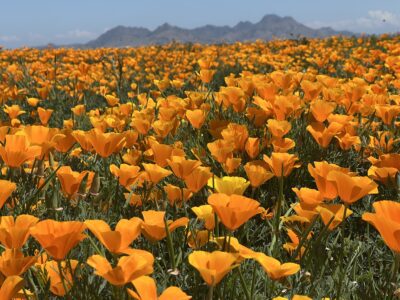
Restoration efforts here will improve water quality, fish habitat, and habitat connectivity; enhance climate resilience and biodiversity; and improve habitat for critically endangered wildlife species like the endangered Swainson’s hawk, Western yellow-billed cuckoo, valley elderberry longhorn beetle, and struggling salmon and steelhead.
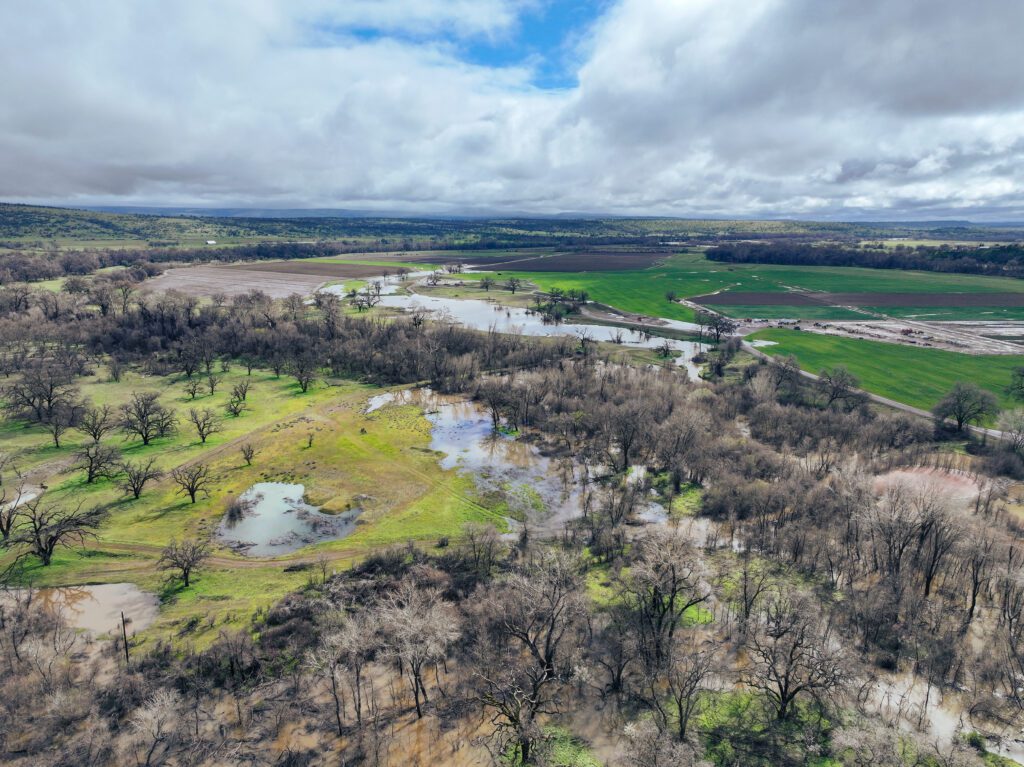
And when visitors visit Rancho Breisgau, some of the benefits they’ll enjoy include hiking, wildlife viewing and photography, fishing, and, where permitted, hunting.
“BLM manages the Rancho Breisgau Unit to provide the public with access to the Sacramento River and its recreational opportunities like hiking, wildlife viewing, fishing, and hunting,” said a BLM spokesperson. “We encourage people to take advantage of this public land while restoration work continues to improve the habitat and natural resources that make this area worth visiting.”
BLM emphasizes that parking at the site is quite limited. To avoid any inconvenience, it’s recommended that visitors park outside the main gate off Gover Road and walk onto the property (Google Map pin). The gate may be locked at any time, so plan ahead to help ensure a smooth visit.
Battle Creek Ranch
River Partners acquired the historic 1,721-acre property in Tehama County in November. Made possible through a $15.05 million grant approved by the WCB, the acquisition will conserve the last unprotected lands along lower Battle Creek, completing a decades-long effort to conserve all properties along the waterway’s entire 7.5-mile lower reach.
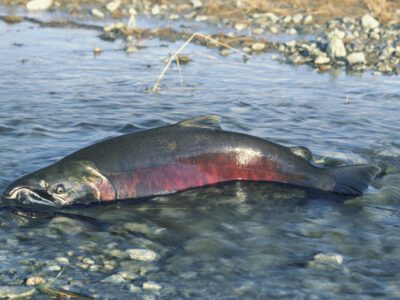
Battle Creek is the Sacramento River’s most important salmon and steelhead stream, supporting all four salmon runs, and its restoration is critical to the long-term survival of endangered winter-run populations. Historically, the ranch diverted thousands of acre-feet of water annually, which will remain in the creek to support fish populations through improved habitat and increased flows to keep water temperature colder and prevent harmful bacteria from forming.
A completed restoration will retire irrigation-water diversions; return water to Battle Creek; and restore grasslands, oak woodlands, and riparian habitat. This would help create habitat for salmonids, raptors, songbirds, and mammals, and improve floodplain function and biodiversity.
“Battle Creek is one of the most important salmon streams in the Sacramento River watershed,” said Jennifer Norris, Executive Director of WCB. “Investments like these help restore habitat, return water to the creek, and support the state’s efforts to recover salmon while strengthening the health of the entire river system.”
Battle Creek Ranch is not currently open to the public during restoration planning and implementation. Because the project will include habitat restoration, infrastructure changes, and water-management improvements, partners ask the public to respect interim access restrictions. This will help ensure a successful restoration and that the site can eventually provide long-term public benefits. Once restoration is complete, River Partners envisions walking and hiking trails managed in partnership with state or federal agencies.
Drone photos and video of the Battle Creek and Rancho Breisgau restoration areas are available for media use at this link. Please credit River Partners.
About River Partners
River Partners brings life back to California’s rivers. Founded in 1998, the nonprofit harnesses the power of restored riverways to create a thriving future for the state’s environment and communities. Blending modern farming practices, cutting-edge science, and diverse alliances, River Partners reforests and reconnects entire river landscapes, critical wildlife corridors, and vast ecological regions at a bold pace and scale. The organization’s statewide efforts result in lasting, tangible wins for wildlife, flood safety, climate resiliency, water conservation, healthy communities, and local economies. River Partners has the largest on-the-ground restoration footprint of any nonprofit or firm in the western U.S., having led hundreds of large-scale projects across more than 20,000 acres throughout California.
About U.S. Bureau of Land Management
The U.S. Bureau of Land Management (BLM) manages about 245 million acres of public land located primarily in 12 western states, including Alaska, on behalf of the American people. The BLM also administers 700 million acres of sub-surface mineral estate throughout the nation. Our mission is to sustain the health, diversity, and productivity of America’s public lands for the use and enjoyment of present and future generations.
About California Wildlife Conservation Board
Established in 1947, the Wildlife Conservation Board (WCB) protects, restores, and enhances California’s spectacular natural resources for wildlife and the public’s use and enjoyment. WCB works in partnership with Tribes, conservation groups, government agencies, and the people of California to safeguard biodiversity and expand access to nature.