
 June 24, 2026
Two years ago, California did something it hadn’t done in over a dozen years when it added Dos Rios (just west of Modesto in Stanislaus County) to its ranks of state parks.
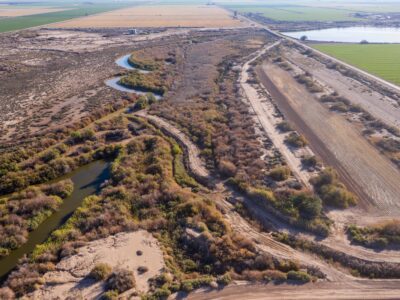
River Partners spent a decade transforming former farmland at the confluence of the San Joaquin and Tuolumne Rivers into what is now a 2,100-acre restored floodplain and riparian habitat, adding recreational opportunities like hiking, biking, birdwatching, fishing, kayaking, river access, and photography. At the helm when Dos Rios was officially announced as the newest state park on Earth Day in 2024, California State Parks Director Armando Quintero continues to be inspired by what it provides for wildlife and offers to human communities.
Overseeing 280 California State Parks is a daunting task, but if anyone is equipped for the job, it’s Quintero, who was named State Parks Director in 2020. His passion for the deep, innate human connection to nature bubbles to the surface, and he isn’t shy about expressing his heartfelt sentiments when talking about his work and how state parks across California impact nearby communities.
Considered a blueprint for River Partners’ future multi-benefit restoration efforts, Dos Rios State Park served as a model and inspiration for two future state parks in California, both along major waterways in the Central Valley, as announced this spring by Governor Gavin Newsom.
Quintero reminds us that water is a fundamental issue in California and that it would behoove more Californians to increase our understanding of the water picture in our state. A good place to start is in a place like Dos Rios State Park.

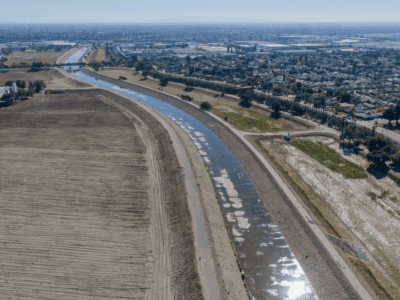
“When you look at the big communities in the Central Valley—Modesto, Fresno, all the big Central Valley towns—almost all of them are right at the juncture of big rivers coming out of the Sierra Nevada and then meeting either the Sacramento or San Joaquin Rivers,” he said. “We have big urban areas close to these two river intersections and very little in the form of formal recreational opportunities at these nearby waterways. All around the world, when you have major rivers meeting, those are spectacular places, and California is nothing less.”
What should people know about Dos Rios State Park, and why is it such a special place?
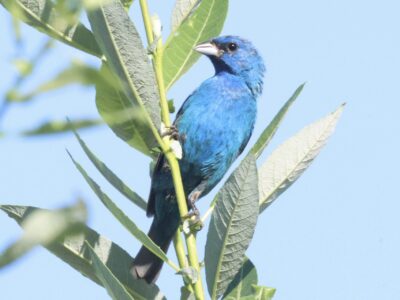
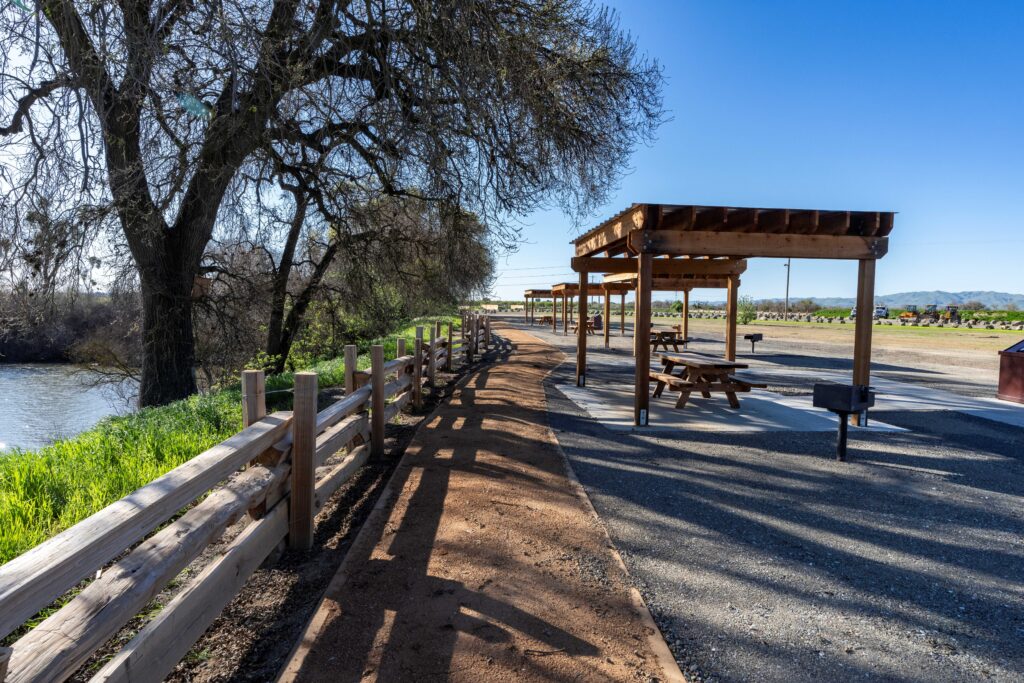
Quintero: There are so many reasons at this moment in our state’s history. When you look at California State Parks on a map, it looks like a necklace around the edges of California, and there’s very little public parklands in the Central Valley area. Dos Rios was a critical selection on the part of River Partners in that it’s 15 minutes away from Modesto, a city with one of the highest concentrations of low-income households in the state. You have the Tuolumne River, which originates in Yosemite National Park, and the San Joaquin River, one of the two largest rivers in California. For well over 100 years, that confluence was the site of major agricultural production. River Partners purchased this area to restore that landscape to its native vegetation, and they did a tremendous amount of work there. The work River Partners did was innovative in that they applied agricultural techniques to get the propagation of native plants to take off, take over, and become a natural landscape over time. And it was successful. It’s amazing when you take a place, and you return the natural vegetation; you don’t have to do much else. The native wildlife species that like those areas just come back. Native birds are coming back to that region, otters, beavers, coyotes, deer, endangered riparian brush rabbits, all these organisms are returning to this landscape. And now at Dos Rios, you have a site where people can fish and hike; you’re right across the river from the San Joaquin Valley National Wildlife Refuge. In the winter at Dos Rios, you can experience the most incredible sky full of birds and migratory species, and it’s otherworldly. It’s the kind of stuff that you see on National Geographic. And it’s minutes away from Modesto. Dos Rios is an example of what’s possible when land is returned to native habitat.
How has the community responded to the opening of Dos Rios State Park two years ago?
Quintero: When we opened Dos Rios during California State Parks Week two years ago with State Parks, River Partners, and people from the community, there were also a number of schoolteachers and schoolchildren—so that was a bit of a predictor. At the end of the short ceremony, [River Partners President] Julie Rentner symbolically handed a ring of keys to me and Ali (one of the State Park educators who’d volunteered with River Partners at Dos Rios when she was in college) to symbolize handing management of the property over to State Parks. Before Julie did that, a group of kids was up on stage, and they’d all received Dos Rios Junior Ranger badges. We were standing in front of the kids, and when Julie symbolically handed this ring of keys to Ali and me, we backed up and handed the keys to the kids. This was a physical recognition that the future is being handed to these kids. There were about 300 people in the audience, and that moment was met with a flow of tears.
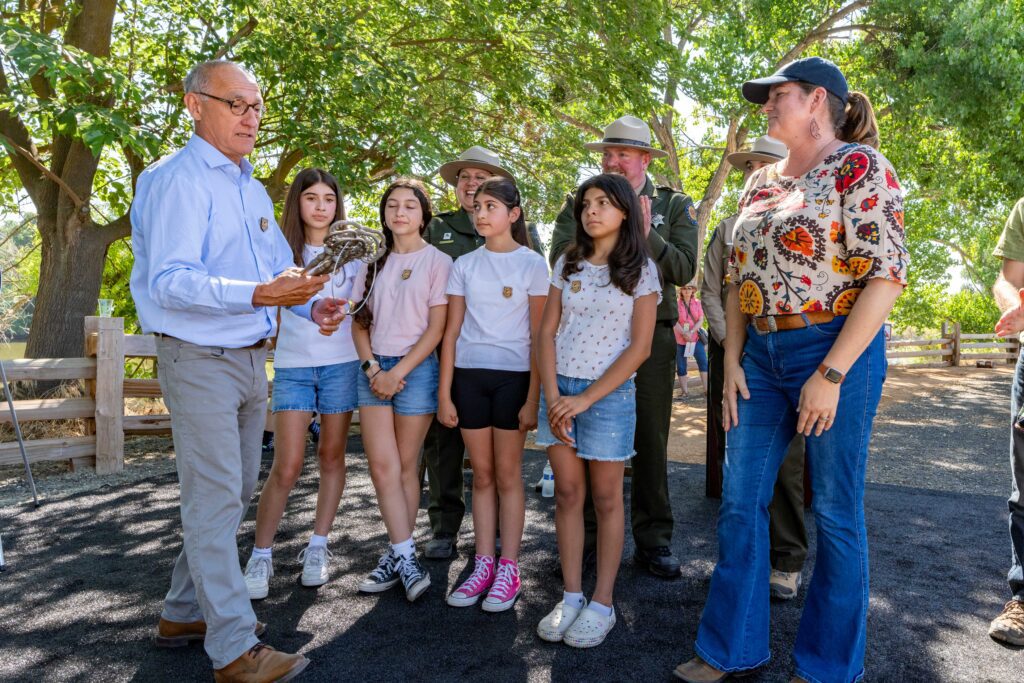
That same day, I was speaking with Diana Avalos (Modesto native and staff for First Partner Jennifer Newsom), and she’d brought her mom to the event. Diana told me that she was raised by her single mother, just 15 minutes away from Dos Rios. With gratitude, appreciation, and a sense of disbelief, she said, “There’s now a state park 15 minutes from where I grew up.” The pride was palpable, the ownership, the sense of belonging. People can get to Dos Rios in minutes and this underscores one of the taglines we use in State Parks now, “This is where you live.”
When I talk to the rangers and the staff who work at Dos Rios, they tell me school buses are there every week. People go there for cookouts and birthday parties, they go there to hike, to birdwatch, to just enjoy the place. The park staff continue to explore new opportunities for engagement for the public. Currently, it’s school groups, schoolchildren and young adults from universities and researchers, folks interested in wildlife, fishing, hiking, canoeing and kayaking, all those things come together, and you don’t have to drive across the state to get there. It is literally a nearby, world-class experience, especially during bird migrations.
How has Dos Rios State Park served as a model for California’s future state parks?
Quintero: I think it rings a lot of bells. This is something that people will discover and develop a sense of ownership. I’ve had several legislators from the Central Valley say, “I want a Dos Rios in my district.” This is from the highest levels of state government. Governor Newsom and his wife, Jennifer, basically came to my team and me and asked, “We need more places like Dos Rios, can you pick some more of these?” We recently announced the addition of three new state park properties, and two of them are on rivers. The third is a small historic site in Southeast Bakersfield called Weed Patch – the Arvin Farm Labor Supply Camp, as people who arrived during the Dust Bowl era to seek work in California.
This will elevate and bring to life, stories about the people coming to California during the Dust Bowl, an important historic site that will now be a state park. It’s going to be a place where people can come and learn about that history, which is connected to the agricultural story of California. California is a confluence of so many astonishing historic moments. This park will expand the context and power of the California Central Valley.

The value of parks and historic sites is measurable. Experiencing nature and history can be powerful experiences. Making sure that these public lands are accessible to local communities and the public is our focus at State Parks. I engage with the world through travel, art, music, and more. My commute from my home to Sacramento is an hour and a half, and every day it is a stunning drive from the coast to the Central Valley of California. I have many photos on my phone that I have taken throughout the hours of the day on this commute. These new parks are places where nature and history come together.
The arts help us experience the world as compositions. The new state park at Dos Rios provides opportunities for visitors to experience two rivers, a floodplain, and the natural systems of one of the most fertile valleys in the world. Here, like in all parks, people get to connect with the landscape and, in this case, the waterscape. Having the experience of exploring and seeing the functioning landscape, especially near where you live, helps make us realize that this is where they live. Connection to the land, its waters, wildlife, and your very own community makes the world a bigger place.
I could not be more excited about the trajectory of State Parks in this era. Our roles are temporary, and political changes offer hope and challenges when it comes to land management & parks. I hope to help solidify the efforts of my State Parks colleagues with partners like River Partners. We need to pay attention and continue to apply the best science, the best minds and hearts and hands as we work together to work on behalf of the health of the Central Valley natural systems and the human communities of this most incredible place in the world.
How do you see River Partners’ leadership and how we work as uniquely positioned for on-the-ground action that benefits communities, ecosystems, economies, and the state’s future?
Quintero: I think of River Partners as incubators. You incubate ideas, you get them initiated, and in a way, you present to the world all these wonderfully nurtured hatchlings, and now the world needs to take these reborn landscapes and help turn them into healthier regions. River Partners does the hard work of getting these lands set aside, the hard work of figuring out how to get this place back on its feet. I remember when I called Julie, and I said, “We’re thinking about making Dos Rios a state park.” And she just flipped. She said, “We’ve been dreaming about that!”
State Parks completed a project in 2009 called the Central Valley Vision. It is an overarching vision of what might be possible in the future. In 2020, I was not aware of this study. I asked the State Parks planning team to develop an inventory of the potential sites in the Central Valley that would make great state parks that are on rivers and are near big cities. Dos Rios was a perfect match. River Partners was the team that put together this perfectly incubated space. And you continue to be a partner with us, which is just great.
What does Dos Rios State Park look like in 10 years?
Quintero: It’s verdant, vibrant, the wildlife is back, we have better understandings of our relationship as communities, and we understand the connection between the health of our communities and the health of the landscapes around them on which we depend for food, water, and wildlife. Dos Rios will be a world that presents itself to the community as a key part of the world, where you can learn about things that connect you to the entire planet. And it’ll be a place where people will take their children with their own memories of Dos Rios and what it was like when they were kids. They’ll go there with their kids, and their kids will ask questions about this world. I think Dos Rios will be a place of wonderful reflections on moments in time in the future that we can say, “This is what we need, we could do this better,” or even, “We did this wrong, we should have done it that way.” I hope Dos Rios will continue to be a tremendous source of pride for the community of Modesto and will be a model for other communities to nurture the sources of pride that are part of their community.
In fact, we are asking the public this very question as we develop the General Plan for Dos Rios State Park. Our goal is to grow Dos Rios State Park in response to what the community wants to see in their park. This is also a park built for the people.
Through this experience, my team and I have learned so much. I feel profound gratitude for all the people involved in these projects. I imagine an extraordinary future for California’s Central Valley.