
 January 13, 2026
New year, new wildlife! River Partners is kicking 2026 off with more wildlife sightings by our fantastic and dedicated science and operations teams. We can’t get enough of these wildlife sightings—they tell us that our restoration efforts are working—and we hope you’re enjoying them, as well.
To learn more about what our staff are seeing in the field, check out the other installments of our “Eyes in the Wild” series here.
Dos Rios State Park (Stanislaus County)
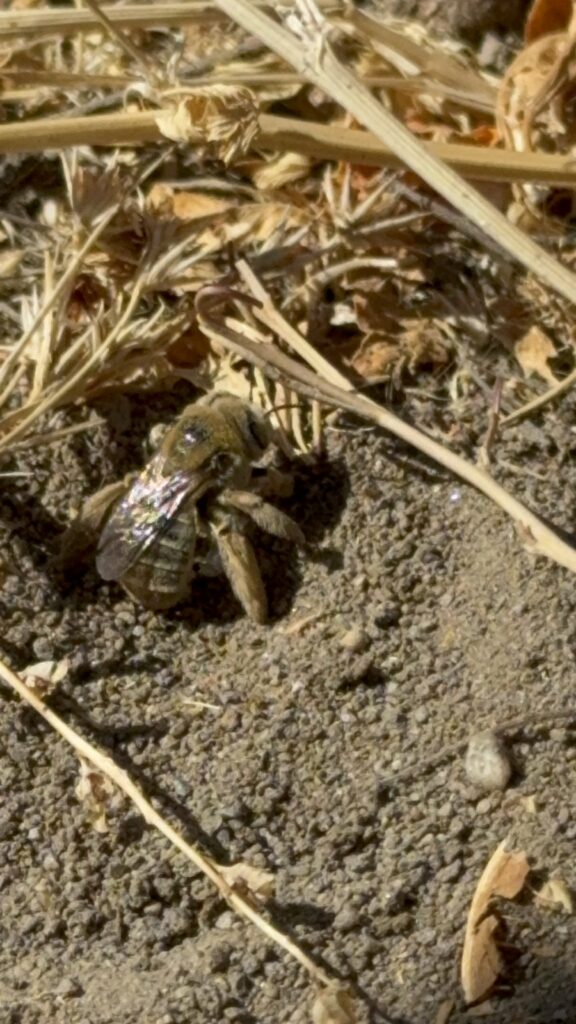
Associate Restoration Scientist Diego Garcia was walking along the banks of the San Joaquin River at the 1,600-acre Dos Rios State Park, our crown jewel restoration in the Central Valley which took over a decade to restore. As he scouted for places to best conduct water monitoring sampling, he came across a sandy area and noticed a few insects that appeared to be burrowing. What he saw was the pallid desert-digger wasp.
Native to arid and semi-arid regions of the western United States, including dry grasslands and sandy washes, this wasp can be found across bare ground or low vegetation and uses its strong, spiny legs for digging. This wasp is probably a female excavating a burrow to lay her eggs. Each burrow is provisioned with paralyzed caterpillars (like moth larvae), which serve as food for a single wasp larva. After laying an egg on the prey, the female seals the nest and abandons it.
Seeing the pallid desert-digger within our restored riparian areas underscores that our restoration helps them and many other species. They benefit from native flowering plants that provide nectar (adults feed on nectar, making them pollinators) and healthy insect communities. Overall, their presence indicates a functioning ecosystem and while they may face local pressures from habitat loss, soil disturbance, and pesticides, their population numbers remain healthy.
Hidden Valley Ranch (Stanislaus County)
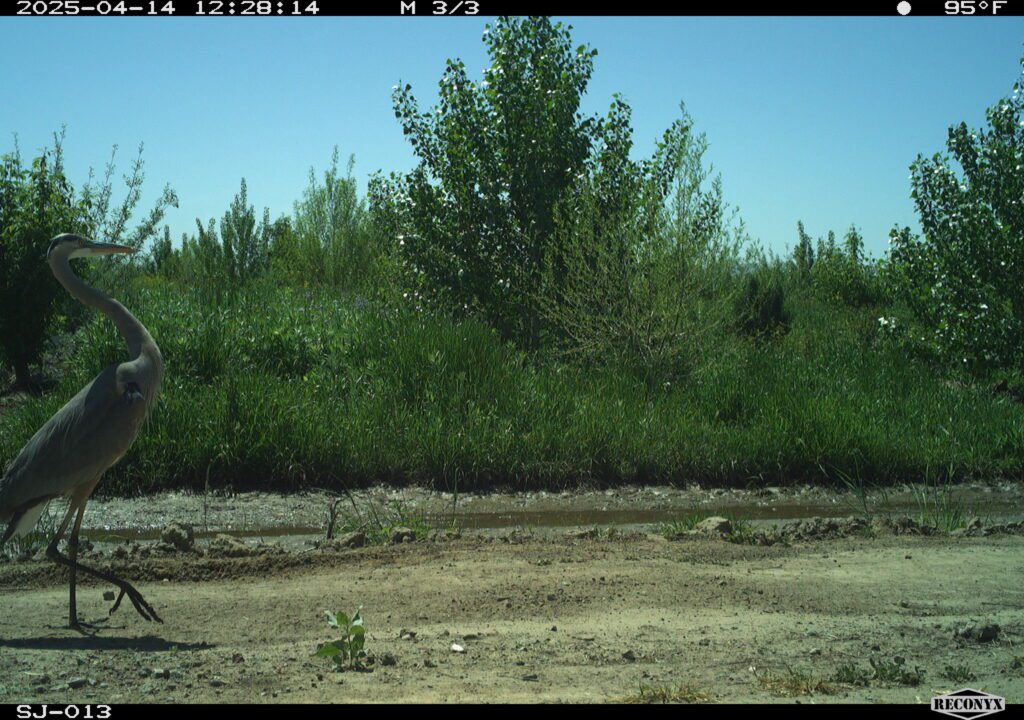
While River Partners’ collective strength is in our staff who are in the field every day to bring life back to rivers throughout California, we do like an assist from technology. Our camera traps capture wildlife sightings around the clock, like this one of a great blue heron. This stately bird was strutting around Hidden Valley Ranch, a 350-acre former dairy we restored in 2024 that is a vital puzzle piece in one of the state’s largest contiguous corridors of floodplain habitat.
The great blue heron is North America’s largest and most widely recognized heron. Known for its S-curved neck and patient, statue-like hunting style, it’s comfortable in both freshwater and saltwater ecosystems and stands between 3 to 4 ½ feet tall with a wingspan that can stretch up to 6 ½ feet. The great blue heron is an opportunistic predator and will eat almost anything it can catch. Its primary hunting method is standing motionless in shallow water, waiting for unsuspecting fish to swim by, but they will also stalk stealthily through reeds. They will also eat frogs, snakes, lizards, insects, rodents, and even small birds. The great blue heron will often use its sharp, spear-like bill to impale larger prey before shaking it to break spines and swallowing it whole!
Current great blue heron populations are stable and widespread. Since they sit at the top of the food chain in many wetlands, they are indicator species—their health reflects the health of the water. However, they’re susceptible to habitat loss and water pollution (like heavy metals or pesticides) that build up in the fish they eat.
San Joaquin River National Wildlife Refuge (San Joaquin and Stanislaus Counties)
Heritage Growers Native Seed and Plant Supply Wildland Seed Collection Assistant Manager Madison Cline was on an early-morning seed-collecting outing with her team at the 7,500-acre San Joaquin River National Wildlife Refuge, where River Partners has restored around 2,500 acres of native habitat. Heritage Growers is our nonprofit native seed farm growing and amplifying source-identified native seed for restoration at large scale. While collecting bur-marigold seeds, an excellent pollinator plant that flourishes in wetlands, river edges, and marshy areas, Cline captured this video of a beaver cruising along in the San Joaquin River.
After nearly being wiped out in the early 1800s during the “California Fur Rush,” when trappers killed hundreds of thousands of beavers statewide for their pelts, protective laws in the mid-20th century allowed them to rebound slowly. Today, they have recolonized many of their natural environments in the Central Valley, though they face new challenges from urban development and industrial agriculture. Thanks to continued conservation efforts by the California Department of Fish and Wildlife and Tribal partnerships, beaver populations continue their upward trend in our state.
Given protection and space, beavers are adaptable and can be found in multiple Central Valley waterways yet hidden in plain sight. Often dubbed “ecosystem engineers,” their dams transformed the Central Valley into a massive mosaic of wetlands, which continue to support the incredible biodiversity of the 10,000-mile Pacific Flyway and provide nurseries for salmon. Other benefits from the work of these busy water engineers include encouraging groundwater recharge (their ponds slow down water, allowing it to seep into the ground), water quality (their wetlands naturally filter waterways before it hits the main river channels), and wildfire breaks (lush, wet meadows created by beavers can act as natural firebreaks in dry grassland areas).
Panorama Vista Preserve (Kern County)
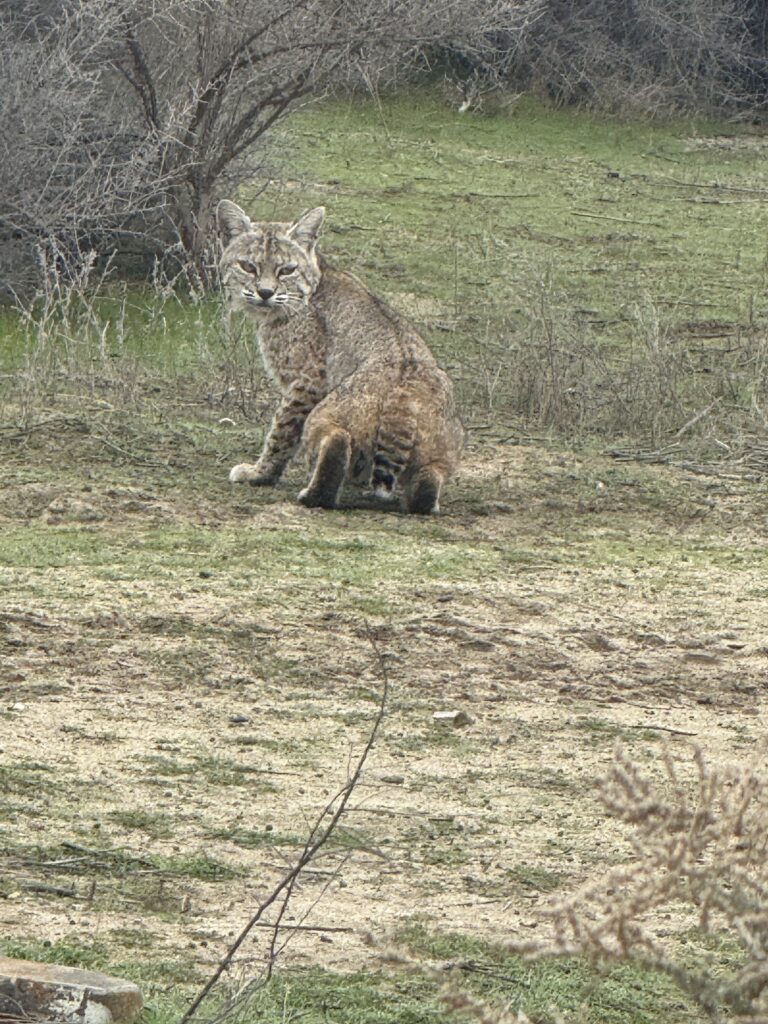
Field Technician Alex Villalobos was collecting quailbush seed within the 935-acre Panorama Vista Preserve, restored by River Partners north of the Kern River in Bakersfield. While collecting this important seed for Heritage Growers, he spotted a gorgeous bobcat in the area and snapped this photo.
The bobcat has distinctive features—from its short, stubby (or bobbed) tail and the distinctive ruffs of hair on their cheeks to the small black tufts of hair at the tips of their ears to help enhance their hearing. Smaller than a mountain lion and about twice the size of a large house cat, these wild felines can weigh between 15 and 35 pounds.
In the Central Valley, the bobcat is a highly adaptable survivor. While the valley’s landscape has been heavily modified for agriculture and urban development, bobcats continue to thrive by utilizing edge habitats (the spaces where wildland meets agriculture) and taking advantage of the abundant prey found near farms and orchards. Central Valley bobcats have adapted to their open, agricultural environments, often using irrigation canals, riparian corridors, and the edges of orchards as cover. In the prodigious agricultural fields here, bobcats serve as natural pest control, hunting primarily California ground squirrels, gophers, and meadow voles that frequent farm edges.
Hunted for their fur at one point, a statewide ban on bobcat hunting and trapping began in 2020, allowing bobcat populations to stabilize. It’s now become one of the most stable wild cat species in California. Current challenges persist, however, like rodenticides, habitat fragmentation, and genetic isolation.