
 February 9, 2026
As our work restoring floodplains and giving life back to rivers continues, we also lean on our technology to accomplish even more. In this month’s edition of Eyes in the Wild, we’re looking at four different mammals, from the Northern Sacramento Valley to the Imperial Valley, all captured on camera traps we deployed out in the field. And we learn from each one, helping to shape our restoration efforts.
To learn more about what our staff are seeing in the field, check out the other installments of our “Eyes in the Wild” series here.
Colusa Unit of Sacramento River Wildlife Area (Colusa County)
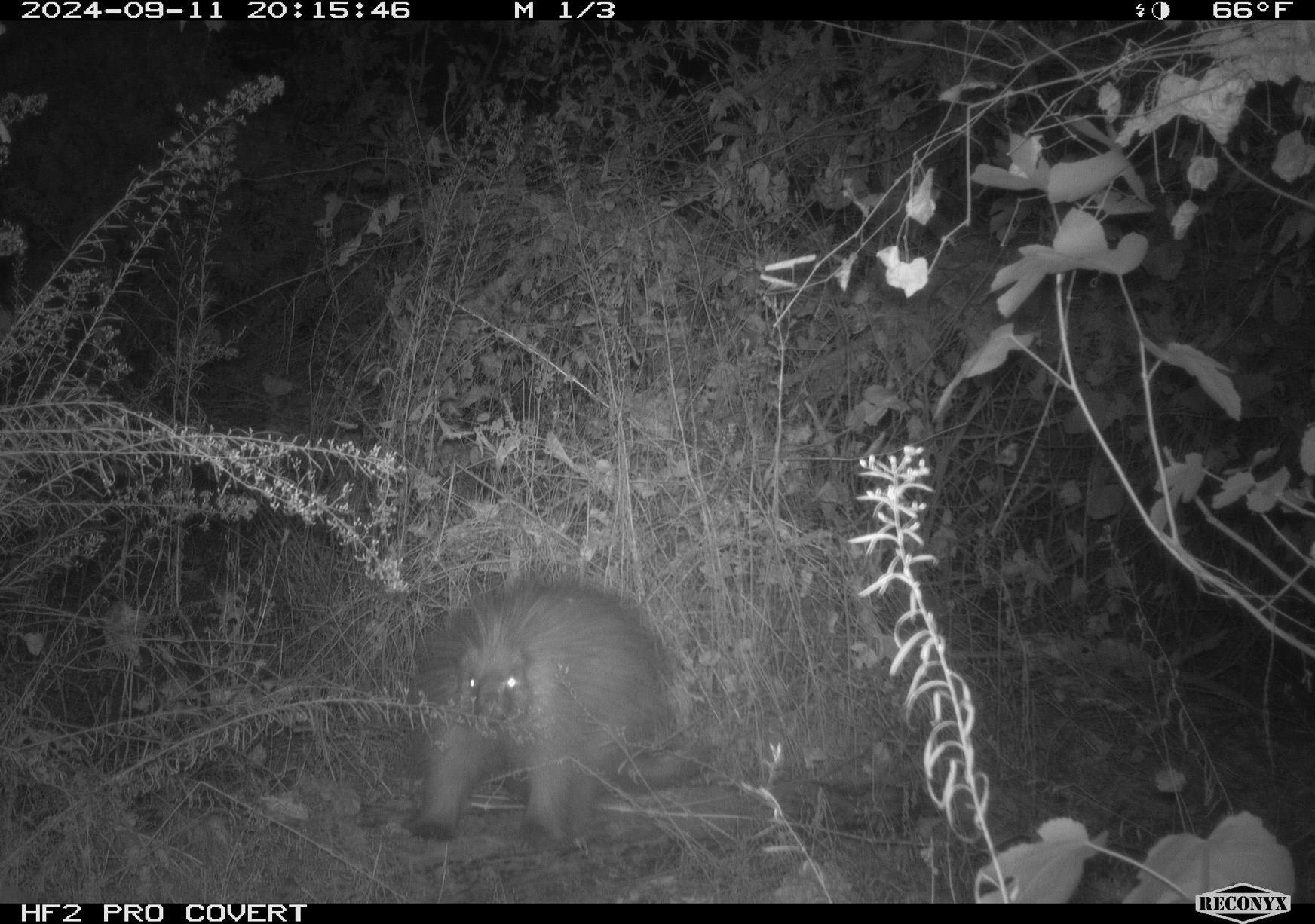
River Partners’ camera traps are set up at our own current and future restoration sites as well as previously restored areas. Through our longstanding and valued partnership with the California Department of Fish and Wildlife (CDFW), we’ve been studying wildlife at numerous sites along the 3,900-acre Sacramento River Wildlife Area, like the Colusa Unit in Colusa County. This is the location of future restoration efforts by River Partners and is also where a camera trap captured this North American porcupine navigating a dense riparian corridor right along the Sacramento River.
The North American porcupine is the continent’s second-largest rodent. It’s renowned (and feared) for its coat of 30,000 needle-like quills, which are actually modified hairs equipped with microscopic barbs. While they technically cannot “shoot” these quills, they do detach easily upon contact to deter curious and would-be predators. Porcupines happen to be expert climbers and spend much of their lives in trees, using powerful claws and pebbly-textured footpads to grip tree trunks and branches. These herbivores are uniquely adapted to survive California’s winters by feeding on the inner bark of trees, though they prefer the lush, green vegetation restored floodplains offer during the spring.
Currently, porcupine populations in California are a topic of growing concern. While not officially listed as endangered, researchers note significant declines across the state’s northern interior. They’re highly sensitive to habitat fragmentation and the loss of mature riparian forests. Because they reproduce slowly—typically having only one offspring, or porcupette, per year—maintaining healthy river corridors is essential for their long-term survival. Porcupines are one of the many wildlife species that benefit from our riparian forest and floodplain restoration.
Crows Landing (Stanislaus County)
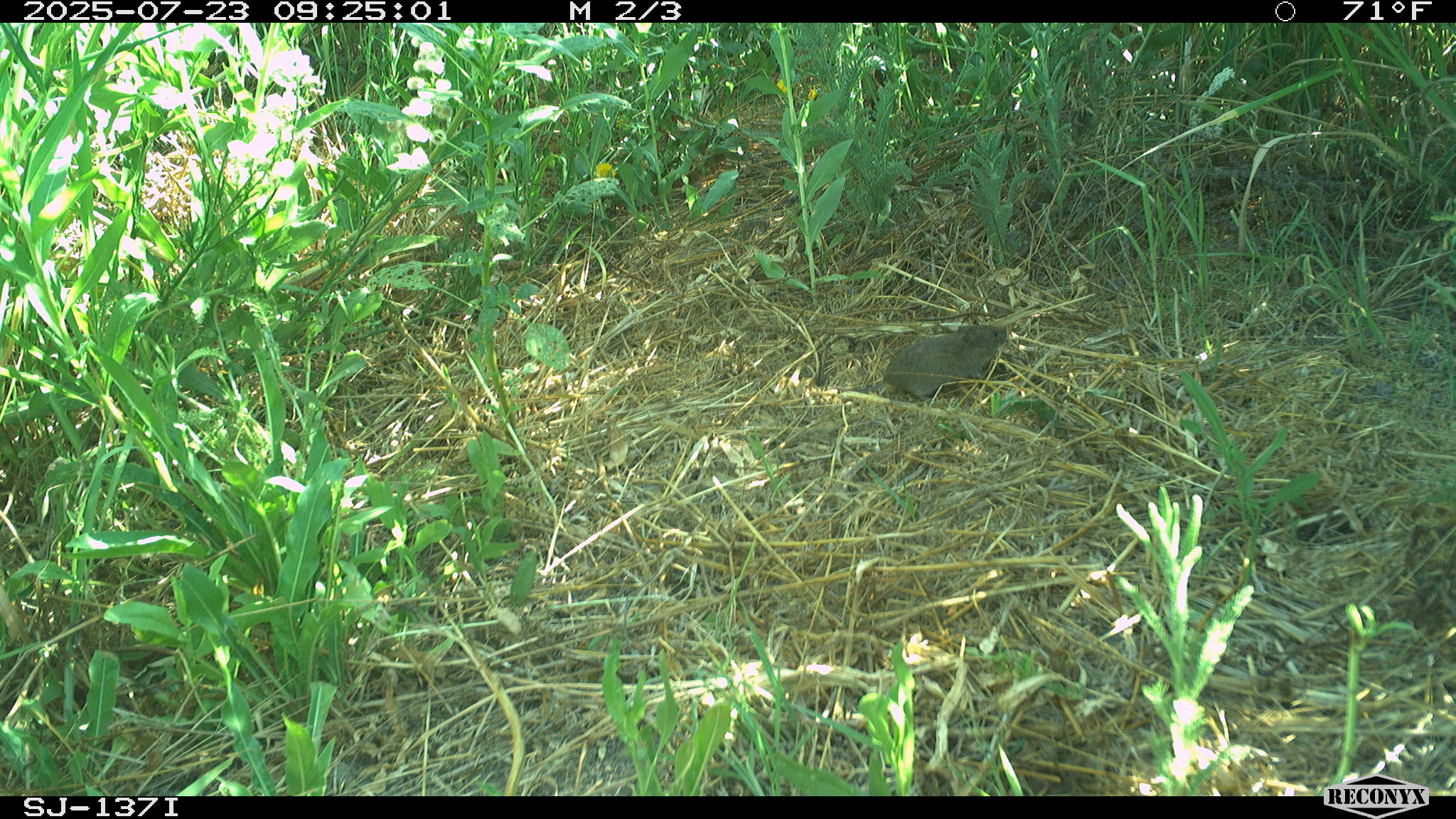
While our restoration focus is often on large acreages of riverside habitats and riparian forests, we appreciate that sometimes it’s the smaller creatures that help keep these ecosystems moving. One of these critters is the California vole, photographed at Crows Landing, a 235-acre former dairy we’re restoring along the San Joaquin River in Stanislaus County.
This stout little rodent is built for life in the undergrowth. Unlike the common house mouse, the California vole features a cylindrical body, a blunt nose, and a tail that’s quite a bit shorter than its torso. These architects of the valley floor meticulously clip grass to maintain “runways”—hidden paths that connect their burrow systems. They adhere to a strict herbivore diet, grazing on roots and shoots around the clock. And their high reproductive rate—up to ten litters annually—makes them a popular food source in the Central Valley for everything from great horned owls and red-tailed hawks to coyotes and gopher snakes.
California vole populations are stable and widespread, categorized as a species of Least Concern. However, they serve as vital indicators of habitat health and a thriving food web. So, while they are resilient, they’re also highly sensitive to habitat fragmentation and the use of chemical rodenticides. Because so many predators rely on them, protecting the vole’s grassland habitat ensures the health and survival of a wide range of wildlife species in the Central Valley.
Imperial-Wildlife Area, Finney-Ramer Unit (Imperial County)
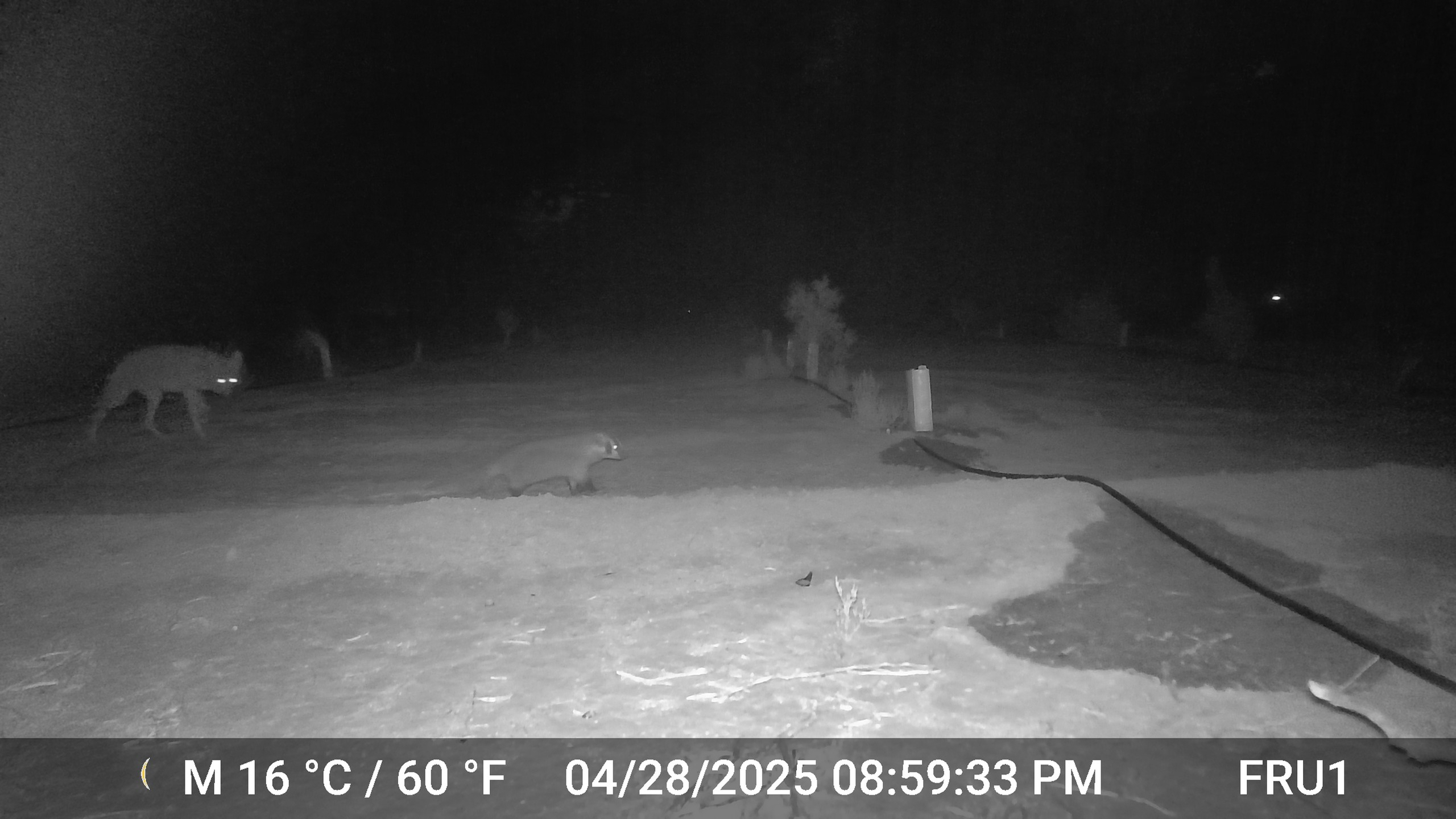
A coyote and American badger hunting together at night. Quite a sight, huh? That’s what one of our camera traps captured at the Finney-Ramer restoration site that we’re leading with CDFW and California Conservation Corps, south of the Salton Sea. Since we introduced the badger and the coyote in a past blog post, let’s explore how this tandem form a sophisticated, mutualistic hunting partnership.
The collaborative hunting agreement between the American badger and coyote is a fascinating example of “collaborative hunting.” While the scene in the photo may look like two friends hanging out at night, it’s actually a calculated hunting strategy that leverages the unique physical mechanics of two very different and effective predators.
Who does the work here? The American badger typically performs the most physically demanding labor, using its powerful forelimbs and shovel-like claws to breach complex underground tunnel systems in search of prey. Meanwhile, the coyote secures the perimeter, employing its superior speed and height to monitor the many escape hatches of potential prey in a burrow that the badger can’t see while its head is in the dirt.
So, which animal benefits more from this arrangement? Research shows that coyotes hunting with badgers catch prey about one-third more often than they do when hunting alone—it simply waits for the badger to flush the prey out of the hole and saves huge amounts of energy by not chasing prey across open ground. And while the badger’s benefit is less dramatic, the coyote’s presence prevents prey from attempting its getaway above ground, often forcing the rodent back into the tunnel where the badger is already digging for an easy catch.
San Joaquin River National Wildlife Refuge (San Joaquin and Stanislaus Counties)
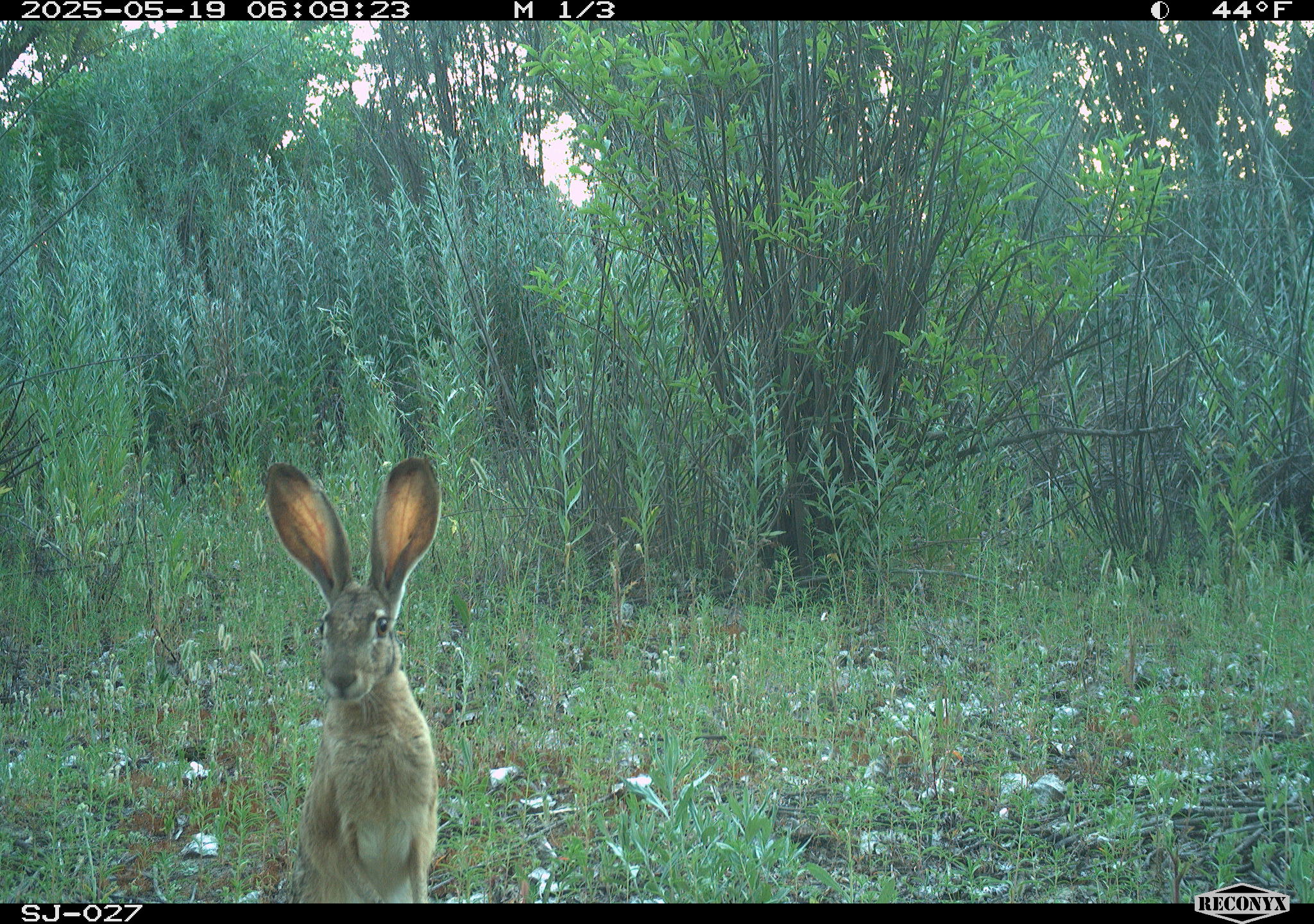
It was a chilly May morning at the 7,500-acre San Joaquin River National Wildlife Refuge, where River Partners has restored around 2,500 acres of native habitat. Something caught the attention of this black-tailed jackrabbit at the Vierra tract within the Refuge, when it reared up in front of our camera. It’s possible that this alert hare was foraging through vegetation that provides the critical mix of open running space and protective cover they require for survival.
As one of North America’s largest hares, the black-tailed jackrabbit is characterized by its remarkably long, black-tipped ears that help regulate their body temperature in the Valley heat. Unlike true rabbits, jackrabbits do not use burrows. Instead, they rely on “forms”—shallow depressions in the ground—to hide. When spotted, these cute rabbits transform into elite athletes and can reach running speeds of 40 mph, zigzagging along the way, and leap more than 10 feet in the air to avoid becoming a meal. As generalist herbivores, they graze on a wide variety of grasses, forbs, and shrubs, and their presence indicates a healthy, connected landscape.
Current black-tailed jackrabbit populations in California are generally stable and widespread, in stark contrast to the endangered riparian brush rabbit (RBR), which also makes its home in small sections of the San Joaquin Valley. Jackrabbits can breed nearly year-round, producing multiple litters of up to six young. However, they’re susceptible to habitat fragmentation and emerging threats like Rabbit Hemorrhagic Disease (RHDV2), a highly contagious and often fatal disease, causing blood-stained noses, fever, and rapid death, which similarly affects RBR.