
 January 26, 2026
Saul Ayon, Mayor of the City of McFarland, and Robert Jeff, Vice-Chairman of the Tachi Yokuts Tribe
Recent storms and record rainfall across California served as a clear reminder that California’s flood risk is growing. Rivers ran high, emergency responders were active, and communities across the state were once again forced to pay close attention to where all that water would go.
For those of us in the Tulare Lake Basin, the message was familiar. For generations, people living in and around the basin have carried the same fear: not just wet shoes and soggy yards, but floods capable of devastating homes, businesses, schools, and sacred Tribal lands. Every big storm brings the same dread—Will this be the one?
Too often, it is. Families are forced to evacuate, sometimes multiple times. When the floodwaters finally recede, we’re left scraping mud off our living room floors, dragging ruined furniture to the curb, and wondering how much more we can take.
At the same time, the Central Valley needs this water. Flooding happens when water has nowhere to go. Restoring riverways in flood-prone areas gives water space to spread, slow down, and refill our depleted aquifers—instead of worsening floods by forcing it away. The Tachi Yokuts, who have lived interdependently since time immemorial with Tulare Lake, saw the dramatic floods in 2023 bring a “reawakening” of the lake which signified to the tribe and many others that it’s time to rethink how the basin is managed. The 2023 floods reminded everyone in no uncertain terms that we need water, and that we’re most vulnerable to floods when we do not allow the basin to recharge in strategic ways.
And the science doesn’t sugarcoat it. Floods in the San Joaquin Valley are projected to be 300% to 500% more frequent and more intense as the climate shifts. One monster storm could unleash $1 trillion in damage across the Central Valley—and, worse, cost lives. Even so-called “smaller” floods can wipe families out financially. Who can keep paying potentially thousands of dollars each year for flood insurance and still bounce back after every disaster?
We don’t have the luxury of waiting.
Downpayment on the Valley’s Future
For once, there’s a real opening to do something big. Last November, Californians overwhelmingly approved Proposition 4—a $10 billion, first-of-its-kind climate resilience bond. And in September, lawmakers approved the first installment that was initiated by Senator Melissa Hurtado whose district includes Bakersfield, McFarland, and a huge swath of the flood-prone Tulare Basin: $21.5 million to kickstart what’s called multi-benefit floodplain restoration along rivers in Kern, Kings, and Tulare counties.
It’s not the whole answer, but it’s a start.
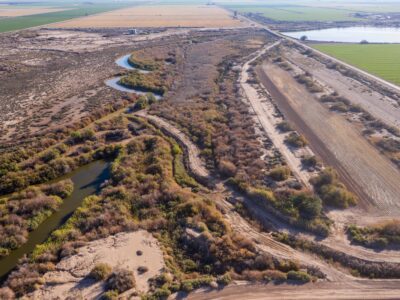
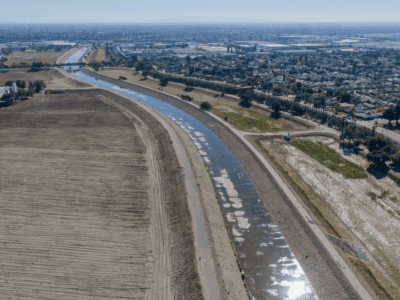
Here’s the idea. Instead of trying to contain rivers and creeks at all costs, we give them room where it pays off. By restoring stretches of waterways like Poso Creek near flood-prone McFarland or the Kings River which by some estimates caused $1 billion in flood damage in 2023, we create space for water to spread out, slow down, and sink back into our badly overdrawn aquifers.
For McFarland, this approach can bring direct relief to the east side of the city, where many struggling families live in FEMA-designated floodplains. Recurring Poso Creek floods have plagued the area since the 1990s and even claimed a life during the 1998 El Niño storms. The resulting insurance costs and lack of investment have kept out housing, grocery stores, and essential services. Reducing flood risk would ease those burdens and open the door to growth and jobs, benefiting McFarland as well as nearby communities like Pond and Alpaugh.
And the benefits don’t stop at flood safety. Restored floodplains recharge groundwater—the economic lifeline of Valley communities. They improve water quality. They create habitat for threatened fish like salmon and other wildlife. They support good-paying restoration jobs. They even provide new recreation areas for families who’ve never had enough parks; the San Joaquin Valley has the fewest parks per capital anywhere in the state.
This isn’t just theory. Farmers, environmentalists, irrigation districts, and community leaders are lining up behind it. In a state where water fights usually go nowhere, that’s progress.
Proof It Works
For real proof, take Dos Rios Ranch. Now California’s newest state park, 1,600 acres of restored floodplain near Modesto along the San Joaquin and Tuolumne rivers helped mitigate flood risk during dramatic 2023 floods, recharged groundwater, and created thriving wildlife habitat.
With Prop 4 dollars, we can grow that success across the Central Valley. There are dozens of shovel-ready projects across the Valley—in McFarland, Bakersfield, Visalia, Porterville—just waiting for funding. They could start tomorrow—and with a project backlog totaling in the tens of millions of dollars, Prop 4 funding could be put to work right away.
The Tulare Basin has always been last in line when it comes to state investment. Even within the Central Valley, we’ve been shortchanged on flood protection. Proposition 4 changes that. It directs dollars toward the communities most at risk—those that have carried the weight of neglect for too long.
This isn’t charity. It’s fairness.
Resilience Over Fear
For decades, life in the Tulare Basin has meant living with a mix of fear and resignation. We’ve all heard the same weary refrain: clean up, rebuild, wait for the next one.
Proposition 4 gives us a chance to break that cycle. To believe in something different.
Californians stepped up last year. Lawmakers stepped up in September. Now it’s time for the state to keep pushing, with everyone’s help, to ensure Prop 4 delivers not just a downpayment, but the full investment the Valley deserves.
Our future depends on it.
Banner Image: Flooded fields and structures caused by floodwaters from storms reformed Tulare Lake in California. This aerial view shows the eastern side of Tulare Lake. Once the largest freshwater lake west of the Mississippi River, Tulare Lake was largely drained in the late 19th and early 20th centuries. Photo taken May 12, 2023. Credit: California Department of Water Resources