
 June 22, 2026
By Vicki Gonzalez and Sarit Lachinsky
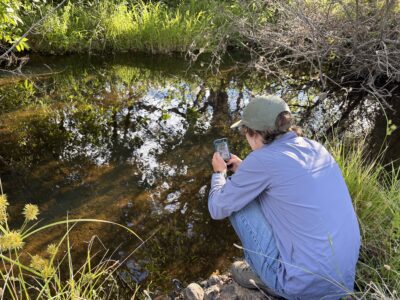
When River Partners scientists collected 1,200 soil samples at our restoration sites throughout the San Joaquin Valley last year, we knew we’d get a lot in return. The samples were collected for environmental DNA (eDNA) analysis, which would give us an idea of what actually lives in these areas and then ultimately how River Partners plans and implements our future restoration projects. The results came back, and we were amazed both at the sheer volume of results (3,000 different species in a single teaspoon-sized sample) and at the breadth of life the samples picked up. River Partners Senior Scientist Dr. Sarah Gaffney and eDNA Explorer CEO Julie Stanford joined CapRadio’s Insight program to talk about what eDNA technology is, why sampling is done when and how it is done, and what the results showed us.
“We found some invasive plant species that we didn’t know were in the area — we want to go out and actually try to see if we can see those on the ground, do some early detection and rapid response. We found some really cool animals like the California tiger salamander, the western spadefoot [toad.] These are species of special concern. We saw a badger in some of our Kern [County] sites. Badgers are very elusive and come out at night, so it’s hard to find them on a camera sometimes.”
~ River Partners Senior Scientist Dr. Sarah Gaffney